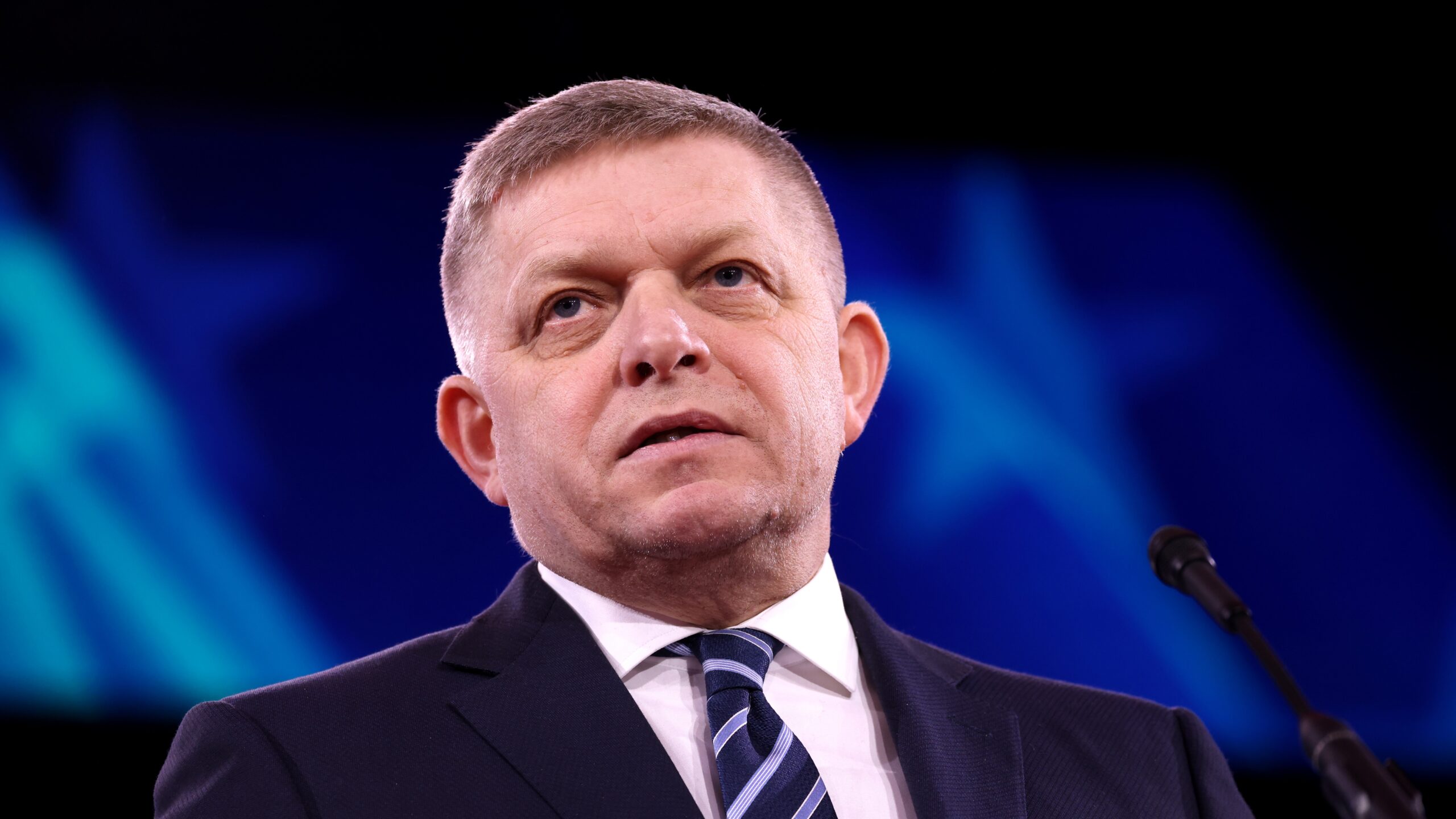
Slovak Prime Minister Robert Fico speaks at the CPAC at National Harbor, Maryland in 2025
By Gage Skidmore from Surprise, AZ, United States of America – Robert Fico, CC BY-SA 2.0, https://commons.wikimedia.org/w/index.php?curid=160960848
Slovakia will file a lawsuit against the European Union’s decision to phase out Russian natural gas imports, Prime Minister Robert Fico said on Tuesday, January 27th, following a similar announcement from neighbouring Hungary.
Both are landlocked central European countries heavily reliant on Russian fossil fuels.
The two countries previously used their veto powers to obtain exemptions from EU energy sanctions against Russia.
But other member states decided to ban all imports of Russian gas before the end of 2027 under a mechanism requiring agreement from only a qualified majority of countries—circumventing opposition from Bratislava and Budapest.
“We are filing a lawsuit,” Fico told a media briefing a day after the measure got final approval, saying that “ideology and hatred towards Russia” was making Slovakia lose “everything.”
Slovakia plans to coordinate its legal efforts with Hungary, though the two countries cannot file a joint lawsuit, he said.
Hungarian Prime Minister Viktor Orbán on Monday reiterated his intention to sue the EU over the Russian gas ban.
In a Facebook post, he called the ban a threat to “utility price reduction,” his signature policy aimed at capping household energy prices.
“There can be no compromise on this,” Orbán said.
Hungary previously indicated it would challenge the decision on the grounds that it was “essentially” a sanction, which requires unanimous approval from EU member states.