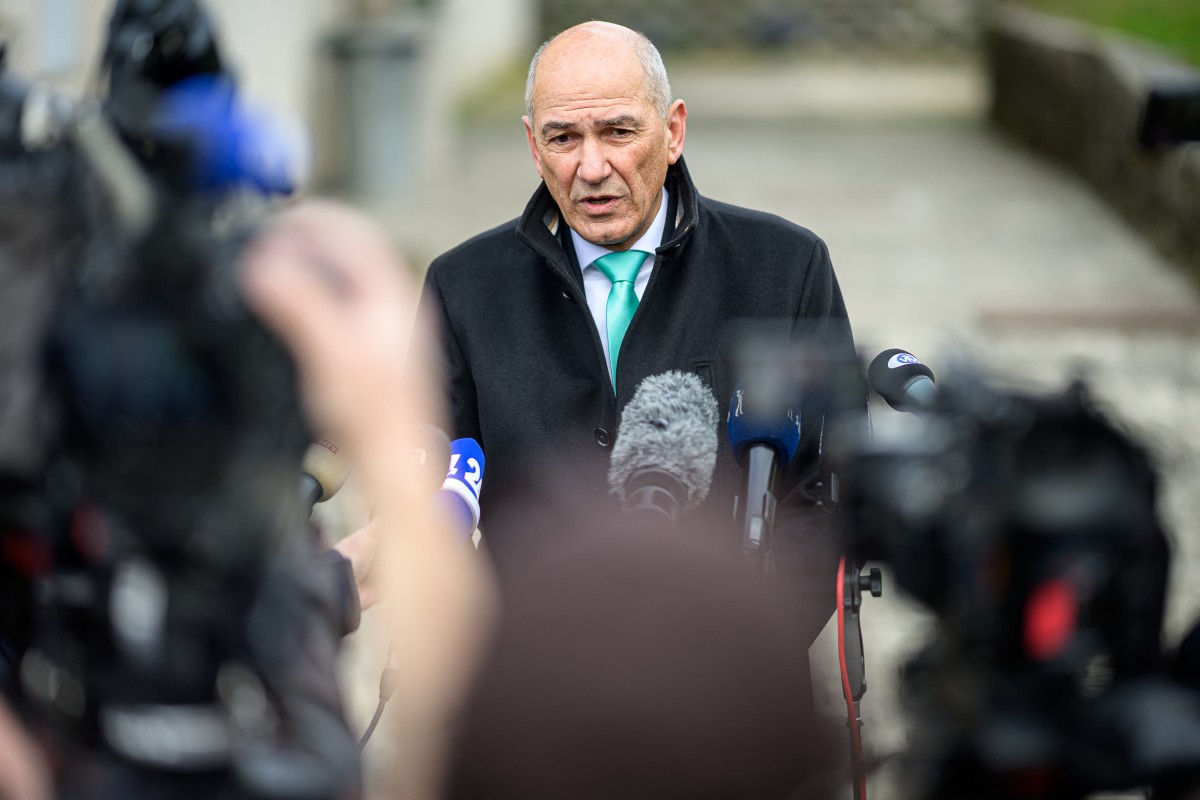
Slovenia’s opposition leader and national-conservative former Prime Minister Janez Jansa gives a statement after casting his vote during the general election in Arnace on March 22, 2026.
JURE MAKOVEC / AFP
Slovenia inaugurated its newly elected parliament on Friday, April 10th as the country enters a period of political uncertainty, with coalition negotiations to form a government still stalled following last month’s tightly contested election.
The election resulted in a narrow victory for the liberal party of Robert Golob, who is seeking a second term as prime minister. His party secured 29 seats, just ahead of the conservatives led by former prime minister Janez Janša, who won 28 seats. Neither bloc, however, has enough support to secure a governing majority on its own, even with potential allies.
This fragmented outcome has turned two smaller parties into potential kingmakers, increasing the complexity of coalition talks. Despite winning the election, Golob has struggled to build a stable governing alliance. He has proposed forming a broad national unity coalition, arguing that Slovenia must be prepared for possible global economic instability linked to the ongoing Middle East conflict.
However, progress in negotiations has been limited. Even some of Golob’s potential allies have expressed doubts about the likelihood of a stable agreement. Matjaž Han, leader of the Social Democrats, said after recent talks that a centre-right coalition now would be easier to form.
Janša, a three-time head of government, has so far refused to formally engage in coalition discussions. Nevertheless, analysts believe the current parliamentary deadlock could open the path for his return to power, potentially for a fourth term.