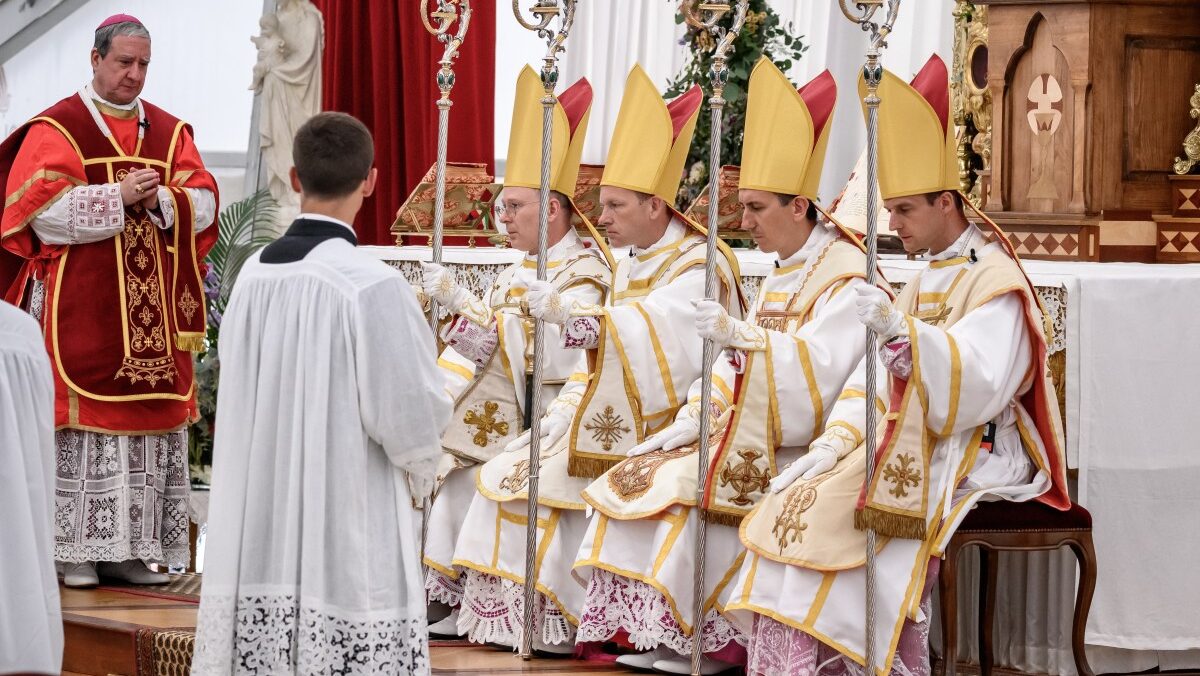
The four newly consecrated SSPX bishops on July 1, 2026
Fabrice COFFRINI / AFP
The Vatican has formally declared that the bishops and priests of the Society of St. Pius X (SSPX) are in schism and excommunicated after the group defied Pope Leo XIV by consecrating four new bishops without papal approval, while clarifying that lay Catholics who “formally adhere” to the movement are also excommunicated.
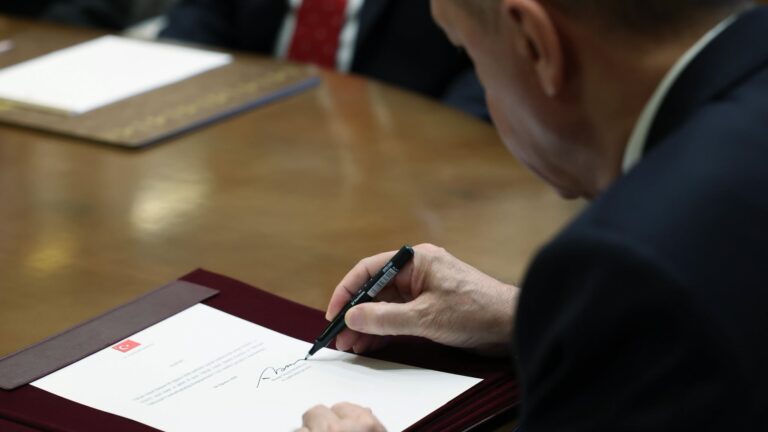
In a decree issued on Thursday, the Dicastery for the Doctrine of the Faith confirmed that the two bishops who carried out Wednesday’s ordinations in Écône, Switzerland, along with the four newly consecrated bishops, incurred automatic excommunication by committing “an act of a schismatic nature.” The decree was signed by Cardinal Víctor Manuel Fernández, prefect of the dicastery, one day after the ceremony took place despite a personal appeal from Pope Leo XIV to cancel it.
The Vatican said the illicit episcopal consecrations constituted the “delict of schism,” echoing the judgment made by St. John Paul II after Archbishop Marcel Lefebvre ordained four bishops without papal approval in 1988. In his apostolic letter Ecclesia Dei, John Paul described such disobedience as “a practical rejection of the Roman primacy” and therefore “a schismatic act.”
The new decree goes further than previous warnings by stating that “the sacred ministers belonging to the Priestly Fraternity of Saint Pius X are in schism and must therefore be considered schismatics,” making clear that all SSPX priests and bishops are now regarded as excommunicated.
It also addresses the position of lay Catholics, stating that those who “formally adhere” to the SSPX are likewise to be considered schismatics and excommunicated.
However, the Vatican has long distinguished between committed members of the movement and Catholics who occasionally attend an SSPX Mass.
A 1996 explanatory note by the Pontifical Council for Legislative Texts, which the new decree explicitly adopts, says “formal adherence” requires two elements. First, a person must freely and consciously embrace the substance of the schism by placing loyalty to the SSPX above obedience to the pope. Second, they must publicly express that choice, with the clearest sign being exclusive participation in SSPX religious life while no longer taking part in the life of the Catholic Church.
The same document stresses that merely attending SSPX liturgies from time to time is not enough to incur excommunication. It says occasional participation, without sharing the movement’s rejection of ecclesiastical authority or doctrine, does not constitute “formal adherence,” and that individual cases must be judged according to a person’s intentions and conduct.
The Vatican also warned Catholics not to take part in celebrations or activities organised by the SSPX. It said the society’s clergy administer the sacraments unlawfully, adding that confessions heard by SSPX priests and marriages witnessed by them are invalid. At the same time, it said the Church would welcome back anyone wishing to return to full communion with Rome.