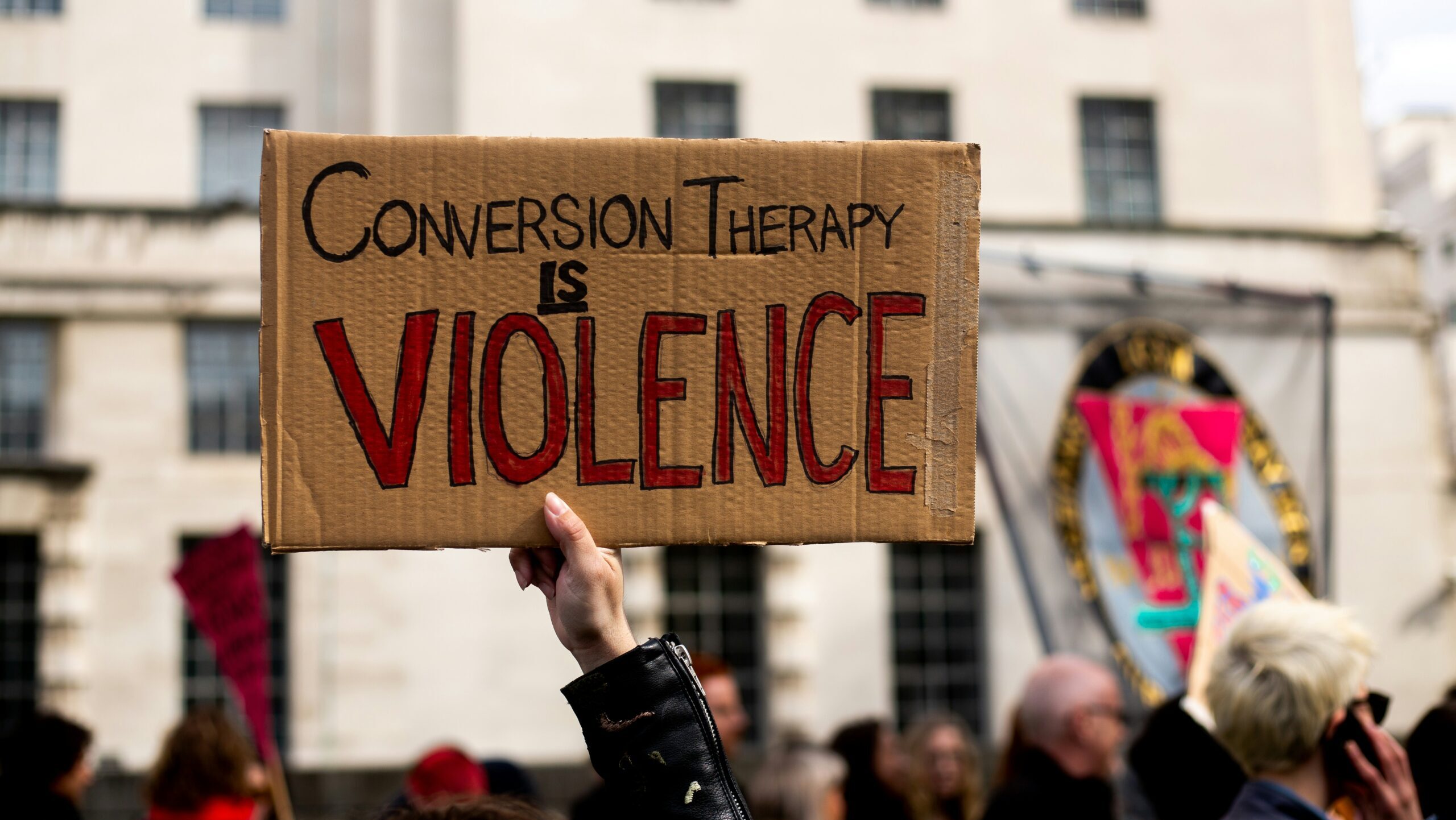
An issue as serious as the potential banning of ‘conversion practices’—a move which critics warn could criminalise legitimate conversations between parents and their own children—should surely be approached with the utmost care.
Yet those pushing for it to be outlawed have been accused of making “disingenuous” and “misleading” claims, motivated—of course—by their own politics.
Conservative think tank MCC Brussels said on Tuesday that the European wing of the International Lesbian, Gay, Bisexual, Trans and Intersex Association (ILGA) lobby group had “deliberately” presented “flawed data” and “lumped together a whole range of behaviours under the banner of ‘conversion practises’” to create the image of a continent-wide crisis. It criticised a 2023 LGBT survey for collapsing an “enormous range of experiences into a single category,” including, on one end of the scale, outright violence and, on the other, ‘intervention’ by family members.
What’s more, MCC Brussels pointed the finger at mainstream media organisations—including Euronews—for “uncritically amplify[ing] the claims.”
How does conversion therapy affect the EU and its citizens?
— euronews (@euronews) February 6, 2026
Almost a quarter of all EU citizens have been subjected to some form of conversion practices, according to the latest ILGA Europe report.#EuropeInMotion breaks down the latest figures. pic.twitter.com/UWeMyoJ0R2
The timing of all this is significant, since the Parliamentary Assembly of the Council of Europe, a human rights body separate from the EU, representing voters from 46 countries, at the end of January approved a resolution—introduced by a UK Labour MP who believes that “some women have a penis”—urging countries to introduce a ban on conversion therapy.
The EU also appears to itself be moving towards banning ‘conversion therapy,’ including transgender conversion therapy—that is, therapy to preserve someone’s original gender identity. Hadja Lahbib, the EU commissioner for equality issues, said towards the end of last year that it was targeting these practices, but that “we can’t [ban] because that would be stepping on member states’ competence”—not that this has stopped Brussels in the past.
MCC Brussels visiting research fellow Ashley Frawley this week stressed that “citizens and policymakers across the EU deserve clarity about what ‘conversion therapy’ actually means—and what it does not,” adding:
Blurring the line between abuse and disagreement may serve activist narratives, but it does not protect young people. On the contrary, it risks doing profound harm to families, clinicians, and the very individuals these organisations claim to defend.