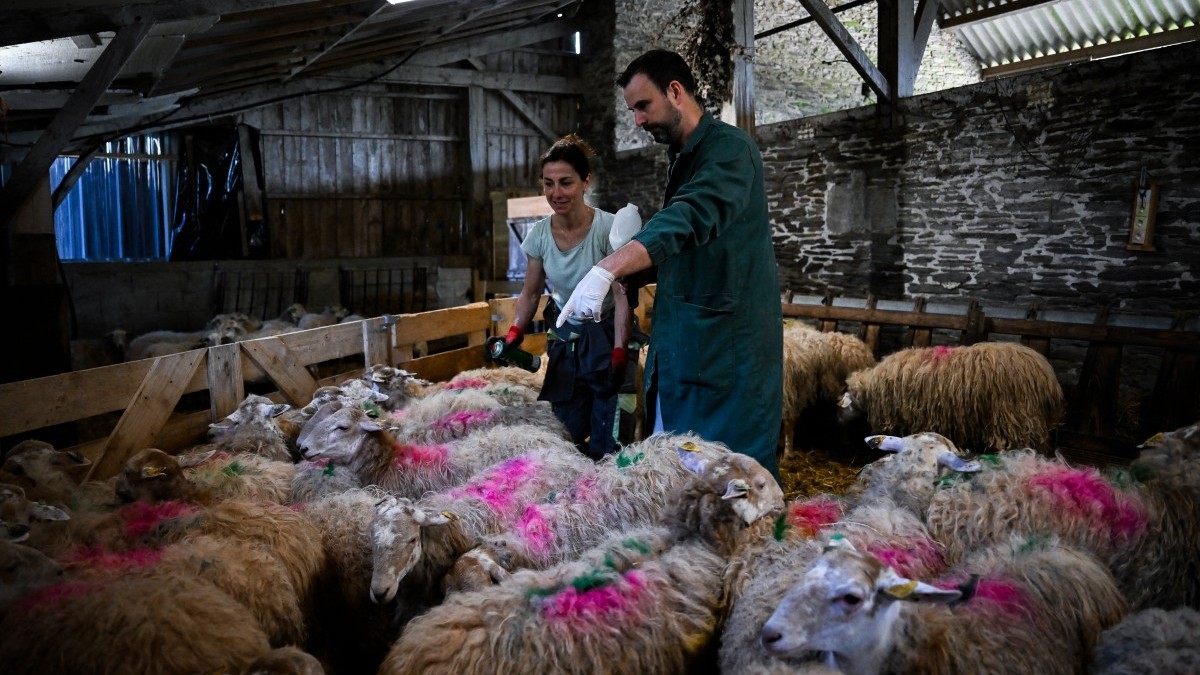
Sheep farmer Chrystelle Quointeau (L) and veterinarian Mickael Martin (R) vaccinate sheep against bluetongue disease in a farm in Haut-Corlay, western France on August 12, 2025.
Lou Benoist / AFP
The European Union is preparing to rewrite the rules governing the food supply chain, with a proposal scheduled for 2026 that, according to Brussels, aims to protect farmers from selling below production cost.
The announcement comes after months of massive protests across Europe, an atmosphere of electoral tension, and growing pressure to seal trade agreements with blocs such as Mercosur and countries like Morocco—developments that deeply unsettle Europe’s agricultural sector.
Agriculture Commissioner Christophe Hansen has promised that the revision of the directive on Unfair Trading Practices (UTP) will address one of the most repeated grievances from farmers: selling below the cost of production. Farming organisations have long demanded that this practice be placed in the category of “unconditionally prohibited,” as is already the case in countries such as France and Spain. At present, the EU directive distinguishes between “black” practices—always illegal—and “grey” practices, which are allowed if both parties agree.
Not everyone welcomes the initiative. Eurocommerce, the EU’s retail lobby, criticises the Commission for acting before the current regulation’s evaluation is completed, which is due in November. In June, the Special Committee on Agriculture also failed to reach a consensus on whether to maintain or abolish the colour-classification system, reflecting divisions among member states.
Meanwhile, EU institutions are pushing forward a “fast-track solution” to strengthen the cross-border enforcement of the directive and to curb international purchasing alliances that drive prices down. The Council reached an agreement in April, the AGRI Committee of the European Parliament adopted its position in July, and the plenary could give the green light in September to start final negotiations.
The devil is in the details: the reform may shields farmers from selling at a loss, or, in practice, could consolidate a market model open to massive imports from countries with much lower costs, laxer environmental and labour standards, and more aggressive state subsidies. Morocco and Mercosur thus emerge as the potential big winners.