EU Commission President Ursula von der Leyen gives her annual State of the Union address during a plenary session at the European Parliament in Strasbourg, eastern France, on September 10, 2025.
Sebastien Bozon / AFP
The European Commission has opened a political front with its proposal for the multiannual budget for the 2028–2034 period, valued at more than two trillion euros. What Brussels presents as a “necessary modernization” of the EU’s financial architecture is seen by many governments, MEPs, and regions as an unprecedented attempt at concentrating power.
The magnitude of the reform is unprecedented. The proposed cuts to agricultural and regional aid—two of the historical pillars of the European budget—have been interpreted as a direct assault on strategic sectors and institutional balance.
As the Commission centralizes strategic planning and imposes conditions on funding, the European Council, representing member-state interests, is sidelined, with new budget models leaving little room for negotiation.
The European Committee of the Regions president, Hungarian Socialist Kata Tüttő, described the initiative as a “big ugly bill” with a “Trumpian transactional spirit.” In her view, the plan offers national capitals a framework of “nationalization and flexibility” in exchange for accepting a centralized fund for defense and competitiveness that, in practice, would ignore territorial needs and the principle of subsidiarity.
Parliamentarians across the political spectrum have expressed fury at the plans. Romanian Siegfried Mureșan of Commission President Ursula von der Leyen’s European People’s Party (EPP) denounced that the scheme “does not respect the democratic role of Parliament” and that the European chamber would be relegated to a symbolic role in implementing national plans. His Socialist colleague Carla Tavares was even more blunt: “There is not a single redeemable aspect in the Commission’s proposal.”
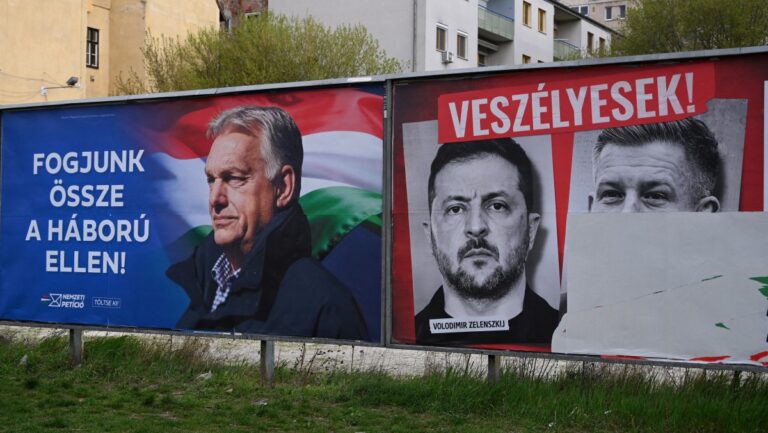
Hungarian President Viktor Orbán already in July described the budget as unacceptable, criticizing it for prioritizing Ukraine over the needs of member states and EU citizens. He pointed out that farmers in particular would suffer cuts in subsidies so that Brussels can free up funds for Kyiv and Europe’s rearmament. “Some 20% of the money would go to Ukraine, and the EU would spend the rest to prepare for war,” the PM explained. “This budget is about an EU that’s currently in war with Russia, on the territory of Ukraine.”
Von der Leyen avoided addressing the controversy in her State of the Union speech. However, defending the proposal fell to Stéphanie Riso, director-general for budget and principal architect of the new plan. Riso insists that both Parliament and the regions “will continue to have the same role as today,” attributing the criticism to a mere “misunderstanding.” In her view, the new design offers more flexibility and, therefore, greater room for maneuvering during annual negotiations.
However, the details reveal a more profound shift. The Commission clarifies that the new framework will only finance projects aligned with EU priorities: competitiveness, green and digital transition, common defense, and migration policies. Everything else—including areas that traditionally absorbed a large share of European funds, such as agriculture, regional cohesion, or conventional industry—will be left out or face drastic cuts. “We must focus on EU priorities, and if you don’t focus on them, you won’t be funded,” she stated.
This change, in practice, amounts to placing conditions on the member states. It will no longer be enough for a government to design a project of national interest agreed upon with its domestic partners; it will have to fit it into the priorities set by Brussels. The Commission calls this “simplification” and presents it as progress toward a single set of rules for accessing funding. Still, it represents an ideological filter that pushes the continent’s economy toward a forced transition.
The message is clear: only those aligned with the EU agenda will receive financial support. In other words, Brussels distributes the money and decides which sectors it must invest in. For many, this amounts to a covert surrender of budgetary sovereignty, turning the budget into an instrument of political transformation rather than a tool of balanced support for national economies.