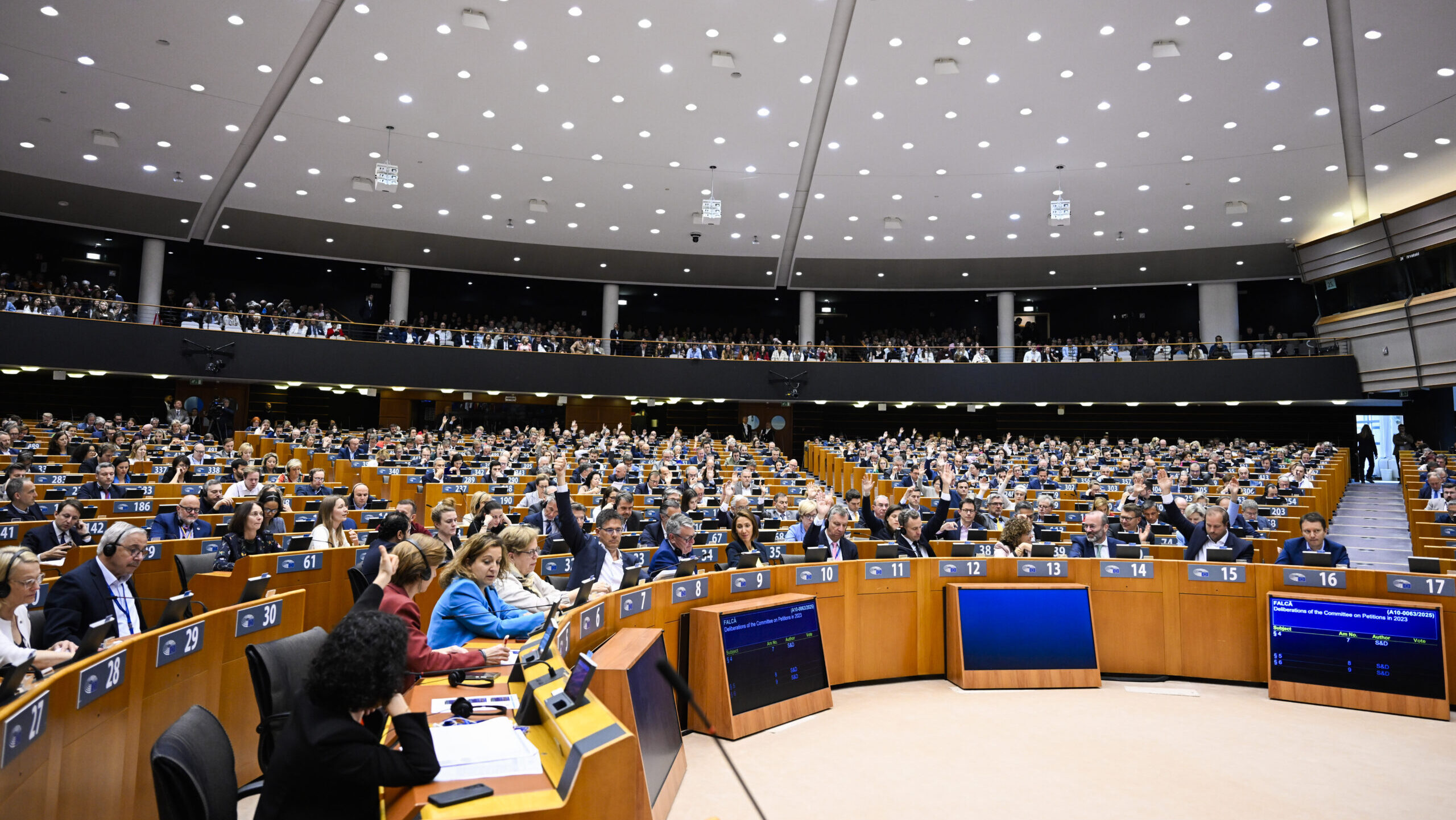
Photo: Laurie Dieffembacq © European Union 2025 – Source : EP
In a major shift, the European Parliament has voted to sharply scale back one of the EU’s key climate policies—cutting red tape and costs for most importers.
On May 22, MEPs overwhelmingly approved changes to the EU’s Carbon Border Adjustment Mechanism (CBAM), a policy designed to impose CO2 emission costs on products imported from third countries.
The key change: companies that import less than 50 tons of CO2 per year will now be exempt from the charge—freeing 90% of businesses, mainly small and medium-sized enterprises (SMEs), from the levy.
Although the declared climate goals remain—the CBAM will still apply to 99% of emissions from imported iron, steel, aluminum, cement, and fertilizers—in practice, the new rule drastically reduces the fiscal and administrative burden on a large number of Europe’s businesses.
The decision was supported by 564 MEPs, with only 20 votes against and 12 abstentions. However, the debate revealed deep divisions among parliamentary groups regarding the scope and nature of the adjustment.
The Patriots for Europe (PfE) group had proposed several amendments that went further in challenging the EU’s green agenda. Although some of their proposals gained significant backing, they were blocked by mainstream parties, including the liberals (Renew), social democrats (S&D), greens (Verts/ALE), and a large segment of the European People’s Party (EPP).
PfE’s rejected proposals included a mechanism to protect EU exporters from carbon costs and foreign retaliation, a halt to phasing out free CO2 allowances for EU firms, and the option to suspend the CBAM entirely if it harmed competitiveness or if greener technologies were unavailable. All were voted down.
This shows that while the Parliament is ready to ease some of the Green Deal’s most burdensome rules, deeper reforms still face stiff ideological resistance. This is not merely a technical or budgetary matter, but rather a struggle over the strategic direction of EU economic policy: whether it should continue to be governed by abstract climate targets, or be rebalanced towards social and industrial reality.
The simplification approved this week, however, marks a turning point. It is the first correction to an environmental policy widely perceived as excessive, technocratic, and detached from the priorities of workers and business owners. It also represents an indirect endorsement of the positions held by patriotic and sovereigntist movements within the Parliament, even if their concrete proposals were not adopted.
While the Parliament stopped short of adopting PfE’s full platform, the vote still signals a crack in the EU’s once-rigid green orthodoxy.