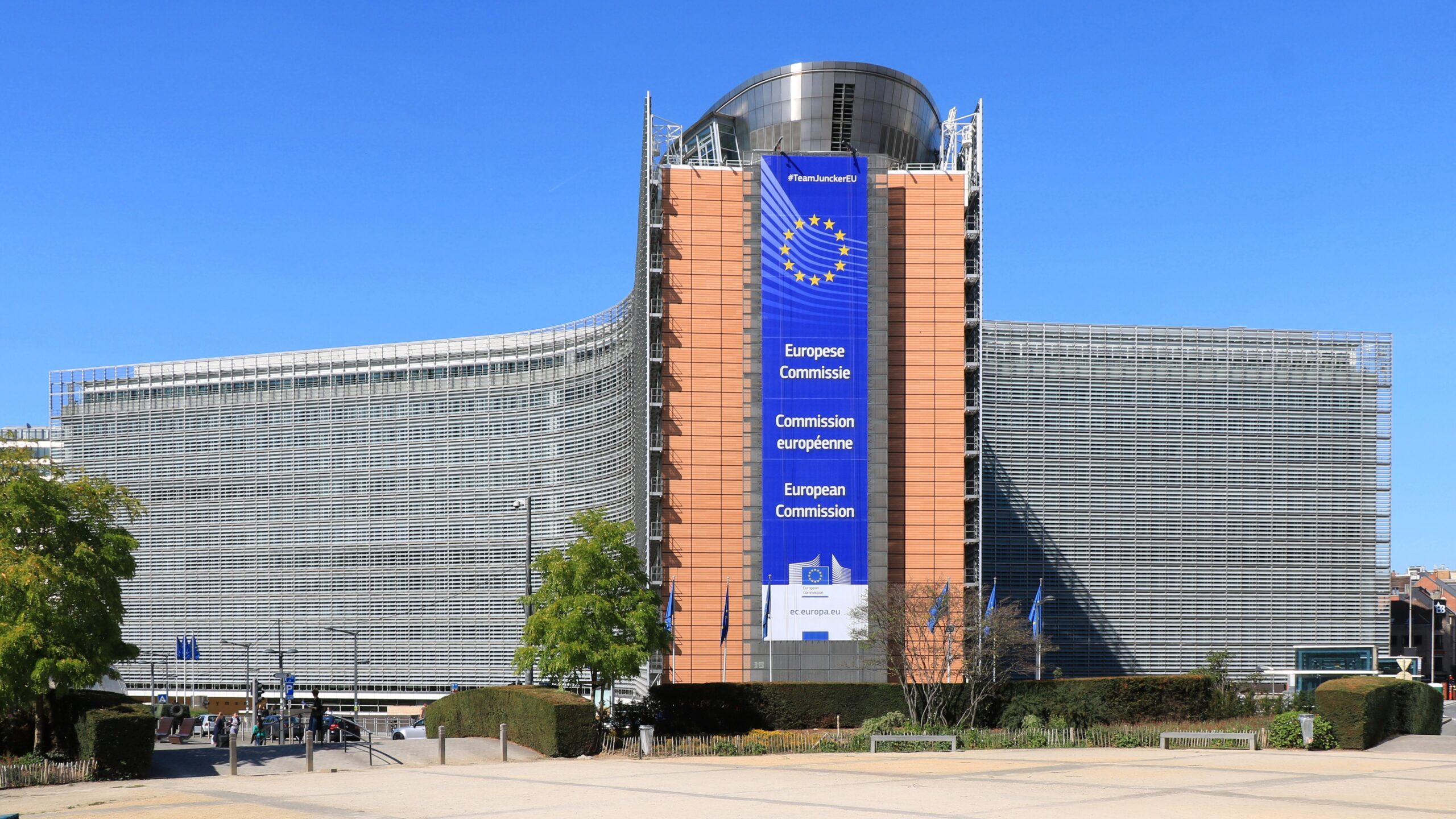
The Berlaymont building in Brussels, seat of the European Commission
By EmDee – Own work, CC BY-SA 4.0, https://commons.wikimedia.org/w/index.php?curid=91781296
On Wednesday, December 10th, experts gathered at the Hungarian House, invited by the Hungarian Institute of International Affairs (HIIA), to discuss the controversial new multiannual financial framework of the European Union and the risks of total control by the Commission.
Under a seemingly technical title—‘Decentralizing the MFF– Alternative Proposals on the EU’s 7-Year Budget’— the session ended up revealing a troubling diagnosis: the European Union is transforming the Multiannual Financial Framework (MFF) into an unprecedented instrument of political centralization, to the extent that several experts suggested that, if this trend continues, the current one could be the last truly intergovernmental MFF.
The position of the critics of the new MFF was based on the premise defended by former Commission President Jacques Delors, who conceived the MFF as a mechanism to balance the interests of the Member States with those of the bloc articulated by the Commission. However, the experts present agreed that the new budget proposal breaks that historic balance.
Economist Philip Pilkington, Senior Research Fellow at HIIA, explained that the new MFF represents “an increase of nearly 80% compared to the previous framework”, a figure unrelated to the actual evolution of the European GDP. In his view, this expansion stems from the Commission’s decision to integrate the Next Generation EU instrument structurally, even though it was conceived during the pandemic as an extraordinary and temporary fund. Pilkington recalled that the original regulation defined that programme as an exceptional response to the health shock and never as a permanent basis for the budget.
From there, his criticism became even more forceful: “They are asking us to double the spending with half the transparency.” He compared the seven chapters and more than thirty subprograms of the current MFF with the proposed structure, reduced to four major headings and barely sixteen subcategories. This simplification, he argued, “dilutes core programmes such as the CAP within broad and opaque blocks”, hindering democratic scrutiny and altering the technocratic spirit with which the MFF was born.
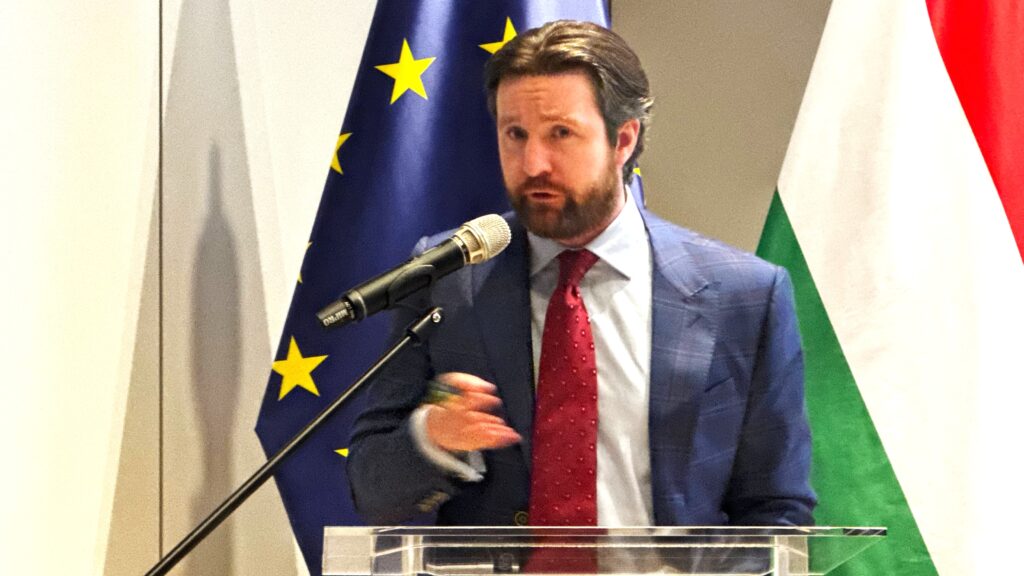
Pilkington also warned about the rise of the Commission’s new “own resources”: a collection of micro-taxes —ETS, CBAM, tobacco taxes, or part of corporate taxation—which, far from easing national contributions, reduce them by only about 10%. In his opinion, these instruments “have no real economic justification” and point towards a deeper political evolution:
They are the embryo of a European tax system of its own, without any public debate on its implications for state sovereignty.
Concerns over the shift of power towards Brussels were not limited to the economic sphere. Researcher Csaba Stefán analysed the growing use of rule-of-law mechanisms within MFF negotiations. He noted that the annual reports prepared by the Commission lack solid methodology and serve as the basis for proposing fund suspensions without sufficient guarantees of impartiality. “When the body that drafts the reports is the same one that recommends sanctions, institutional balance is broken,” he stated. He proposed the creation of an independent body under Council supervision to restore credibility to the process.
The political dimension expanded further with the intervention of Ágnes Vass, who presented a comparative analysis of Central Europe’s reaction to the new MFF. She explained that countries such as the Czech Republic, Slovakia, or Poland share concerns about budget centralisation, the loss of regional autonomy, and the risk that Brussels could gain intervention capacity in strategic areas without adequate checks. Although Poland, for example, would receive more funds nominally, Vass pointed out that “the real volume would shrink once inflation is taken into account”, which fuels internal scepticism.
The debate shifted to another plane when demographer Paul Morland introduced a factor that, in his view, will determine the viability of any future MFF: Europe’s demographic crisis. He argued that “if Europe is not capable of having children, there will be no economy to sustain” and criticised the Commission for continuing to treat declining birth rates as an unavoidable variable.
Pilkington returned to this point in the later discussion, recalling that since 2015, 61% of Europe’s economic growth has come from immigration, a model “politically fragile and economically insufficient”. Both experts stressed that a budget aiming to sustain long-term growth must include incentives for birth rates, designed at the national level but co-financed at the European scale, without imposing a centralised definition of family or social policy.
Institutional implications were not overlooked. Several panelists recalled that the proposal includes an extraordinary crisis mechanism capable of activating up to €400 billion in loans if approved by the Council and Parliament. Pilkington described this instrument as “a panic button inside the budget”, opening the door to rushed decisions under conditions of uncertainty or political pressure.
The experts made clear that the tensions are not merely technical. The Commission considers this MFF a “strategic instrument of political ambition”, a phrase analysts interpret as a deliberate shift towards a more centralised model. At the end of the roundtable, Morland warned that institutions that expand their power without strengthening their legitimacy “end up digging their own grave.”The future of the European project will not be decided through a single budgetary document, but it is increasingly clear that the design of the MFF is no longer a technical question reserved for specialists. It is rather the mirror reflecting the Union’s existential tensions. If the Commission persists in its strategy of fiscal expansion and reduced transparency, the question will not be what the next MFF contains, but whether Member States will still accept negotiating it at all.