Photo: MCC Brussels
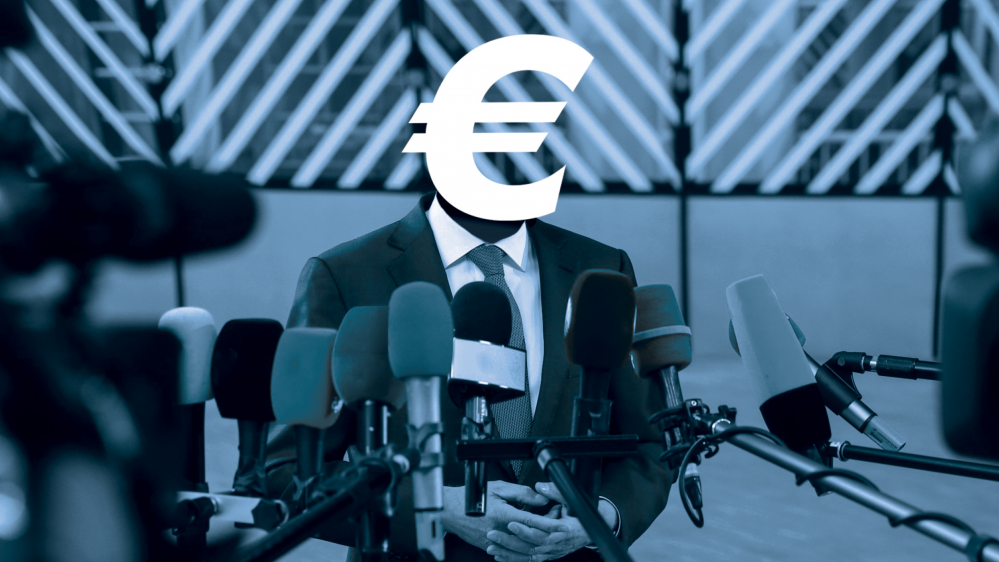
Brussels has been spending at least €80 million of taxpayer funds every year on mainstream media outlets for pro-EU messaging and the promotion of the European Commission’s liberal agenda, according to a shocking new report published by MCC Brussels, a conservative think tank that also exposed the EU’s €650 million censorship push last month.
These figures—adding up to close to €1 billion over the past decade—are “likely a conservative estimate,” the report’s author Thomas Fazi explained, as they only include direct EU schemes formally dedicated to ‘media support.’
The report does not investigate indirect funding schemes such as advertising or communication contracts awarded to intermediaries for redistribution, as happened before the 2024 EU elections when the Commission funneled €132 million to friendly media in utmost secrecy.
“Strangely, this issue has received relatively little attention over the years, despite clearly undermining the supposed independence and neutrality of the media—and arguably going a long way in explaining the strong pro-EU slant of Europe’s mainstream press,” Fazi explained.
🧵 NEW: Brussels’s €80M/year 'Media Machine'
— MCC Brussels (@MCC_Brussels) June 4, 2025
A new MCC Brussels report by @battleforeurope reveals how the EU uses media funding to systematically shape the narrative across the bloc
Key takeaways 👇 pic.twitter.com/Ybm8aVM3sV
As British publicist and self-described left-wing sovereigntist, Fazi has authored several books, such as The Battle for Europe: How an Elite Hijacked a Continent—and How We Can Take It Back (2014); Reclaiming the State: A Progressive Vision of Sovereignty for a Post-Neoliberal World (2017); and The Covid Consensus: The Global Assault on Democracy and the Poor—A Critique from the Left (2023).
With meticulous work, Fazi scoured through thousands of publicly available but notoriously murky records of media funding schemes from the EU Commission and Parliament to uncover “a vast ecosystem” of biased collaboration between Brussels and media outlets both within the EU and in neighboring countries.
In the end, Fazi identified hundreds of EU-funded initiatives, ranging from straightforward promotional campaigns to political hit-pieces branded as ‘investigative journalism’ and ‘anti-disinformation’ efforts, all designed to foster a media environment favorable to the EU’s political agenda.
Fazi also found that this massive effort to amplify pro-EU narratives is often hidden behind fashionable buzzwords, such as the promotion of “European values,” fighting “disinformation,” or fostering “citizen engagement” and “media pluralism”—even though it does the exact opposite.
Under all these lies a clear strategic objective, Fazi writes, “to shape the public debate, marginalize dissenting voices, and promote European integration.”
Euphemisms such as the creation of “a European public sphere” mask what is, in effect, a top-down attempt to manufacture a European demos—a unified political consciousness that, under current political and cultural conditions, remains more an ideological aspiration than a democratic reality.
Europe’s largest news wire agencies occupy a pivotal role, acting as “central nodes” in the EU’s propaganda network that allow narratives crafted at the top to cascade verbatim across hundreds of mainstream outlets.
The situation raises serious questions about media credibility, as even without direct editorial interference, the structural dependence on EU grants naturally fosters self-censorship and narrative alignment, Fazi warned. This, in turn, weakens the media’s most critical function when it comes to scrutinizing the very institutions providing its funding.
Perhaps equally troubling is the international aspect of the EU’s propaganda machine, which the author likened to the strategies historically associated with intelligence fronts such as USAID. With tens of millions of euros funneled into select media outlets abroad, Brussels has been relentlessly advancing EU-NATO geopolitical interests disguised as protecting democratic values.
Summarizing his findings, Fazi said the evidence presented in his report points to an uncomfortable reality:
Rather than simply supporting a free and pluralistic media landscape, the EU is systematically investing in shaping a “friendly” media environment that reinforces its own legitimacy and political goals.
This phenomenon calls into question the very notion of media independence in Europe today—particularly when the line between journalism and institutional propaganda becomes so thin as to be almost imperceptible.
Have you ever read or heard a report about the EU that felt more like a press release or advertisement than real journalism? As it turns out, that impression might not be far from the truth.
— Thomas Fazi (@battleforeurope) June 4, 2025
In my latest report for @MCC_Brussels, I blow the lid open on Brussels’s media machine:… pic.twitter.com/J1xt03KN5Z