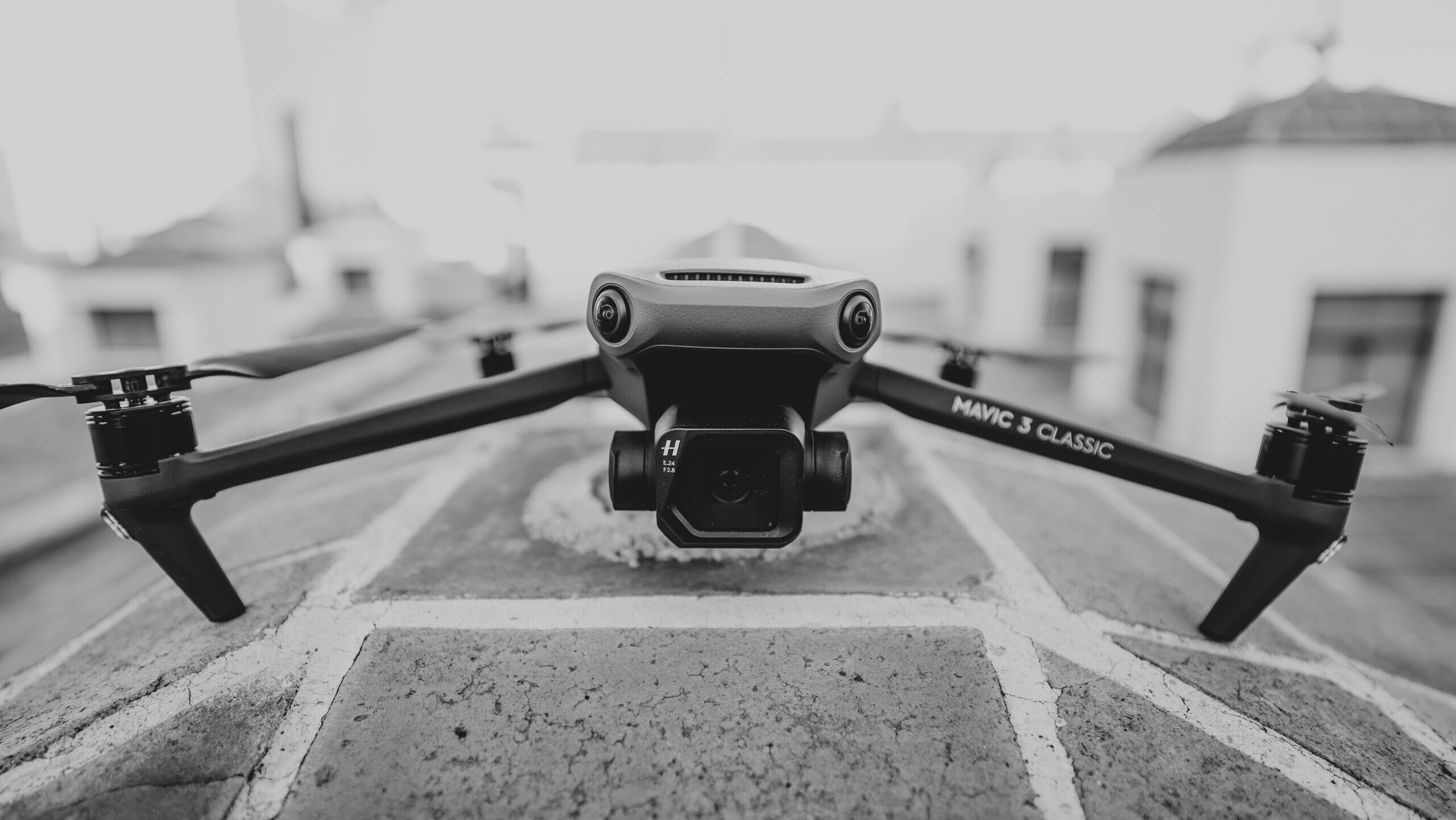
The European Commission has once again placed common defense at the core of its political agenda. Under the rhetoric of ‘urgency’ and ‘shared responsibility,’ Brussels announced on Thursday the development of a European ‘drone wall,’ a project which, according to Ursula von der Leyen, will “protect all member states.”
Yet the initiative comes at a time when fear—nurtured for months by media outlets and institutional spokespersons—has become the main instrument used to justify an ever-increasing centralization of power in matters of security and defense.
For months, the Commission President has insisted that “Europe’s defense is our responsibility,” making this message the cornerstone of her political discourse, both in the State of the Union address and at the recent European Defence and Security Conference.
According to von der Leyen, “Russian drones are increasingly violating European airspace,” making it “imperative to act in a coordinated, precise, and swift manner.” Her argument, reinforced by alarmist headlines across European media, paints an image of a continent under siege—threatened not only by Moscow but by a supposed global instability that would require a centralized technological response.
The narrative of a permanent threat has allowed Brussels to push forward a 2030 roadmap involving the mobilization of hundreds of billions of euros in loans and EU funds for joint military projects. The SAFE program, promoted by the Commission, offers €150 billion in loans for joint defense procurement, while sixteen countries have already requested budget flexibility to increase their military spending—potentially reaching €800 billion by the end of the decade.
The problem is that many member states do not want Brussels meddling in their defense budgets. National sovereignty in military affairs remains a sensitive issue, and the idea that the Commission could oversee, coordinate, or even impose conditions on national projects raises concerns in capitals such as Paris, Berlin, and Warsaw. “So far, there have been very few successful cases in which defense projects involving several member states have been carried out jointly,” admitted Defence Commissioner Andrius Kubilius, recalling the difficulties of the FCAS next-generation fighter jet program and the Franco-German MGCS tank.
Nevertheless, Brussels insists that a “common supervisory structure” is necessary to accelerate progress and avoid duplication. In practice, this would mean granting the Commission a much stronger role in the planning and execution of defense spending, an area traditionally reserved for national governments.
The announcement of the drone wall must be read within this broader context. EU High Representative for Foreign Affairs and Security Policy Kaja Kallas stressed on Thursday that the project “does not concern only the eastern flank” and that all member states must “understand that Europe’s defense encompasses the entire Union.” Originally conceived as an initiative to protect Baltic and border states from Russia, the project has since evolved into a continent-wide plan that, according to von der Leyen, could also be used to “respond to natural disasters, combat organized crime, or detect arms trafficking.”
Notably, the Commission has made no mention of using this infrastructure to curb illegal immigration—a point that has drawn skepticism among several Members of the European Parliament. “It’s not the same as an anti-missile or anti-drone shield in Israel, for example,” said one MEP, “because Europe’s geographical scale and terrain make such a system much less feasible.”
Despite these reasonable doubts, the shift in rhetoric is far from accidental. By broadening the definition of ‘threat,’ Brussels can expand its field of action and justify new technological and surveillance investments. In this vein, von der Leyen has argued that Europe must “become a defensive technological power” and “remain at the forefront” in areas such as drones, artificial intelligence, and cyber defense. Her plan envisions a European military-industrial ecosystem, financed directly and supported by a network of defense-oriented start-ups.
The European Parliament has already called for defense funds to be managed under “European criteria” rather than national ones—further advancing the idea of progressive military integration. Such integration, under the pretext of collective security, risks consolidating a central power in Brussels with competencies that would have been unthinkable only a few years ago.
As Kubilius himself put it, “Battles are won by generals, but wars are won by industries.” Perhaps this line best captures the emerging paradigm: a Europe where defense is not merely protection—but also a business and an instrument of power.