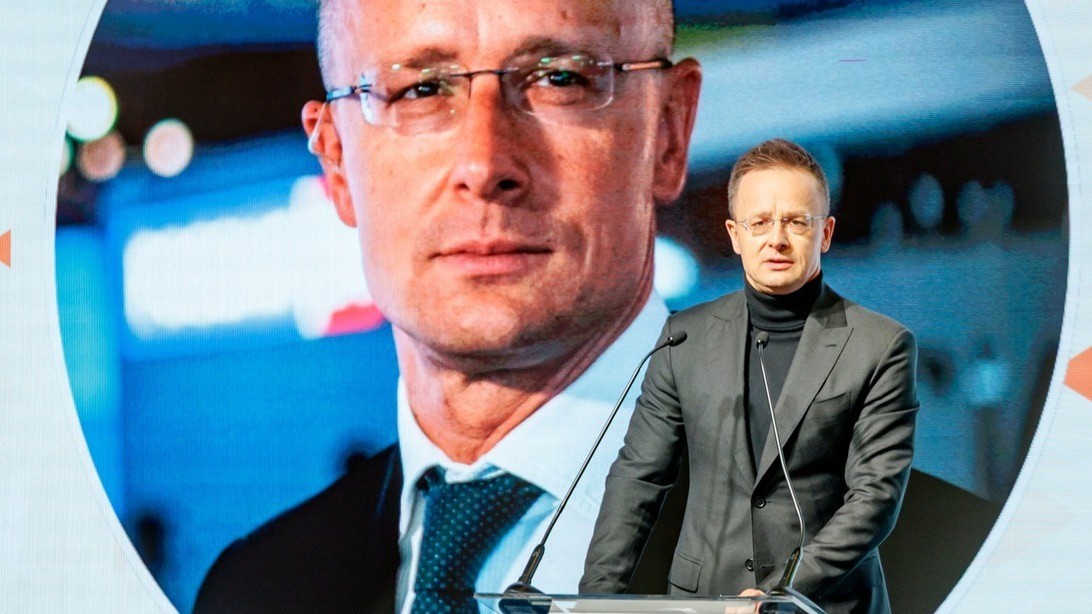
Hungarian Foreign Minister Péter Szijjártó speaks at the Budapest Global Dialogue on February 10, 2026.
Hungarian Institute of International Affairs on Facebook, February 10, 2026
The reconfiguration of the world order is no longer an academic hypothesis but a process already under way. That was the shared premise—expressed with different emphases—of the opening debates of the Budapest Global Dialogue 2026, organized by the Hungarian Institute of International Affairs under the theme Back from the Brink.
Far from the declinist tone common at many European forums, the conference opened with a clear thesis: the collapse of the old liberal order entails not only risks, but also strategic opportunities for states capable of reading the historical moment with realism and without ideological inhibitions.
The most explicit message came from the address by Hungary’s Minister of Foreign Affairs and Trade, Péter Szijjártó, who described without ambiguity the emergence of “a world with entirely new rules, methodologies, and balances,” in which nothing will be as it was before.
For Szijjártó, the key lies not in clinging to institutions that no longer reflect reality, but in adapting to a more fragmented international order—one that is bilateral and grounded in national interest. His diagnosis is that the European Union has become progressively isolated from the main centers of global power due to a chain of mismanaged crises—financial, migratory, sanitary, and military—and to an excessively ideologized strategy.
In his view, Europe’s strategic mistake has been the attempt to preserve an institutional and regulatory framework that no longer corresponds to the realities of global power. Against this backdrop, he called for a turn toward realism and national sovereignty, stressing that “the future will be bilateral and sovereign, not supranational or ideological,” in an international environment where states that retain strategic autonomy and multiple channels of dialogue will be best positioned.
The Hungarian minister argued that Hungary has managed to transform this adverse context into a comparative advantage. In contrast to a European approach based on sanctions, moralism, and automatic alignments, Budapest has pursued a foreign policy “open in all directions,” maintaining channels of dialogue with the United States, Russia, China, and Turkey.
In a world moving toward multipolarity, Szijjártó maintained, that capacity for dialogue translates into real sovereignty and room for maneuver, emphasizing that mutual respect and pragmatism are replacing the old multilateral dogmas.
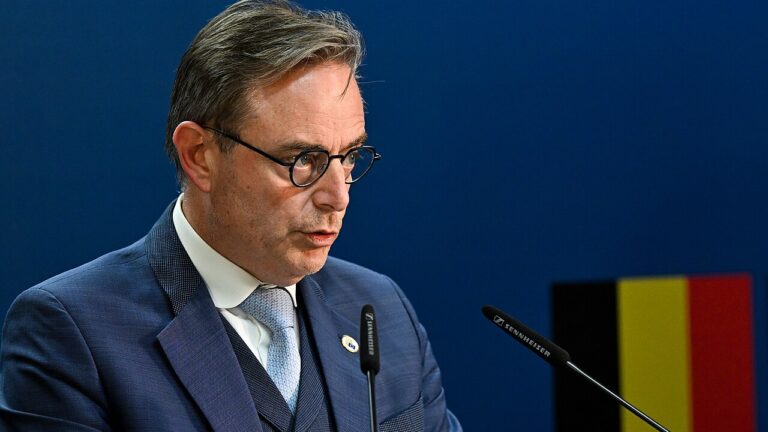
That same line of argument was echoed in the opening panel on sovereignty and global contestation. Balázs Orbán, the political director of the Hungarian prime minister, framed the current moment as the end of the “global neoliberal order” and the beginning of an “age of nations,” in which even mid-sized states can thrive if they safeguard their decision-making capacity. Orbán insisted that the conflict is not only geopolitical but also internal—between transnational elites and national societies increasingly disconnected from Brussels’ agendas.
Unlike many international forums, the debate on values in Budapest was not presented as an abstract exercise, but as an element directly linked to political stability. Several speakers agreed that the erosion of Western cultural consensus has weakened both Europe’s internal cohesion and its external projection—a line of analysis frequently developed by Sohrab Ahmari, U.S. Editor of UnHerd.
Participants argued that the restructuring of the world order does not reward actors who refuse to define themselves, but those who know who they are and what interests they defend. In this sense, Hungary presented itself to an international and intercontinental audience not as an eccentric exception, but as a political laboratory for early adaptation to a post-liberal environment: less faith in “global governance,” greater attention to the balance of power, energy security, and democratic legitimacy.
The overall tone of the event was not triumphalist, but it was unmistakably strategic. The new world order offers no automatic prosperity; it demands difficult decisions and a break with deeply entrenched habits in European politics since World War II and the construction of the Washington–London–Brussels axis of power. For the organizers of the dialogue, the real danger is not change itself, but the inability to confront it.