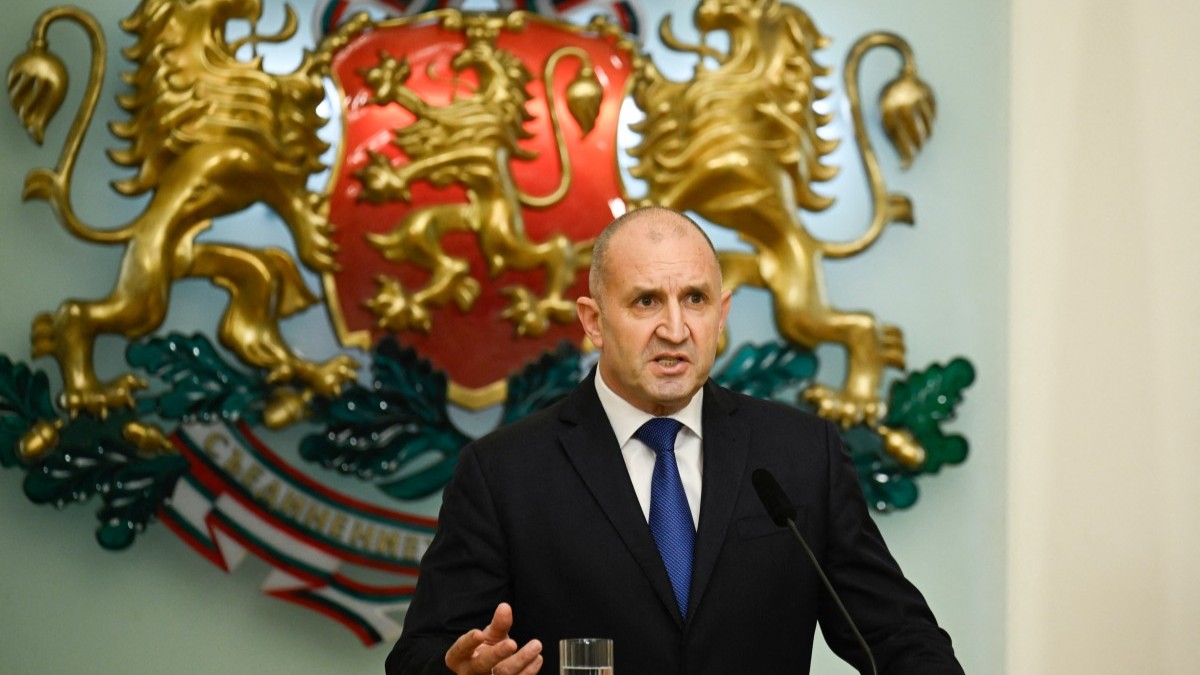
Bulgaria’s President Rumen Radev addresses the nation to announce his resignation in Sofia on January 19, 2026.
Nikolay Doychinov / AFP
Bulgarian President Rumen Radev officially handed in his resignation on Tuesday, January 20th, triggering a new chapter in the country’s prolonged political crisis and fuelling expectations that he will enter the spring parliamentary elections as the head of a new political movement.
In a televised address to the nation on Monday evening, Radev confirmed his decision to step down before the end of his mandate, stating that Bulgaria needed profound political renewal after years of instability, corruption scandals, and public disillusionment.
“Today, I am addressing you for the last time as president of Bulgaria,” he said, adding that he was ready to join “the battle for the future of Bulgaria alongside all of you—the dignified, the inspired, and the unyielding.”
His resignation comes after the collapse of the centre-right-led government in December, following mass anti-corruption protests sparked by a controversial 2026 draft budget.
The demonstrations—the largest since the 1990s—quickly evolved into broader demands for the withdrawal from politics of long-standing figures such as former prime minister Boyko Borissov, who runs the leading pro-EU GERB party, and businessman Delyan Peevski, who is under U.S. and UK sanctions for corruption.
Radev, 62, argued that the crisis runs far deeper than individual governments.
“Our democracy cannot survive if we leave it in the hands of corrupt figures, deal-makers, and extremists,” he said, blaming what he described as a “conveyor-belt model of governance” that “has the outward features of democracy but functions through the mechanisms of oligarchy.”
During his nine years as head of state, Radev was forced to appoint seven caretaker governments due to fragmented parliaments and failed coalition talks—a situation that has left Bulgaria heading toward its eighth parliamentary election since 2021.
Speculation has intensified that the former air force commander will now seek the post of prime minister, potentially forming a new political party that could become a powerful Eurosceptic force within Bulgaria.
Polls show strong public demand for new political leadership, with Market Links reporting that 44% of Bulgarians trust Radev—one of the highest ratings among public figures. A Radev-led party would likely get somewhere between 20% and 35% of the votes in a parliamentary election.
There is overwhelming support for a new party—this has been made evident in recent parliamentary elections where the turnout has been around 40%.
A Radev-led party would likely align with a growing group of national-conservative governments in Central and Eastern Europe, including Viktor Orbán’s Fidesz in Hungary, Robert Fico’s government in Slovakia, and the political movement ANO led by Czech Prime Minister Andrej Babiš.
While Bulgaria joined the euro zone on January 1st and became a full member of the Schengen Area last year, Radev has openly questioned whether these moves delivered real benefits to ordinary citizens.
“Why did achieving these goals not bring stability and satisfaction?” he asked, arguing that many Bulgarians still feel poor and insecure.
He previously called for a referendum on the timing of euro adoption—a proposal rejected by parliament, which he described as “the final rift between Bulgarians and the political class.”
On foreign policy, Radev has been a pragmatic voice unwilling to follow ideological consensus. He has opposed military aid to Ukraine, calling such support “an investment in a doomed cause” and has criticised sanctions against Russia, warning that their economic cost is borne by all Europeans.
“Ukraine insists on continuing this war,” he said in 2023. “But it must also be clear that the bill is paid by the whole of Europe.”
As Polish conservative politician Ryszard Czarnecki writes in an opinion piece for the Polish weekly Do Rzeczy, a Radev-led government would probably expand the group of Central and Eastern European states that “look at Kyiv from a great distance.”
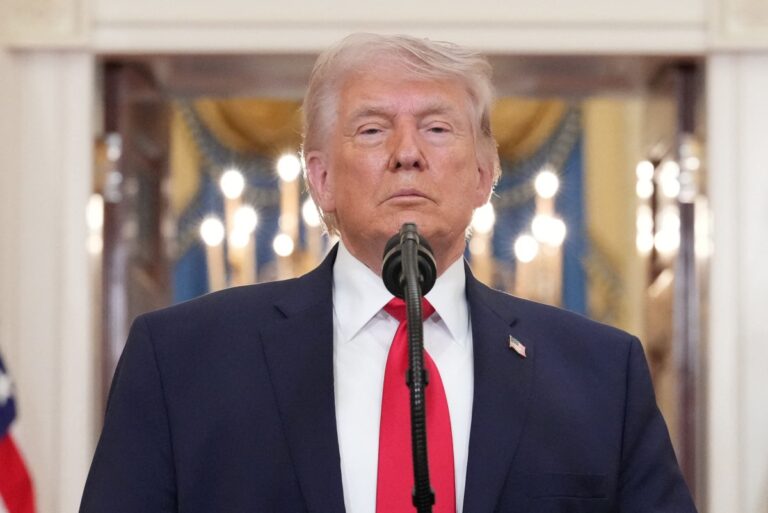
Radev has also spoken favourably of U.S. President Donald Trump’s peace initiatives, saying he believed the American leader to be “a pragmatic businessman who does not accept the devastation of any war.”
Domestically, the former president has embraced socially conservative positions, backing legislation restricting LGBT promotion in schools and opposing the Istanbul Convention on violence against women—a text that promotes gender ideology.
For now, Vice President Iliana Yotova will assume the presidency on an interim basis as Bulgaria prepares for elections expected in late March or April—a vote that could reshape not only the country’s internal politics but its role within the European Union itself.