Gustavo Petro (R) and European Council president Antonio Costa
Luis ACOSTA / AFP
The EU’s latest summit with Latin America was supposed to be about cooperation and peace. Instead, Europe found itself outmanoeuvred, watching quietly as left-wing leaders turned the event into an anti-Western showcase that sidelined Brussels and took aim—directly and indirectly—at the United States.
The fourth summit between the European Union and the Community of Latin American and Caribbean States (CELAC), held this past weekend in Santa Marta, Colombia, quickly proved anything but routine. Instead of quiet diplomacy, the gathering morphed into a political stage where Latin America’s Left seized the microphone, pushing a heavily ideological message and setting the pace while Brussels looked on.
Entitled the Santa Marta Declaration, the final document spans 52 points, from combating drug trafficking to calls for peace in Gaza and Ukraine. But behind this broad checklist lurked sharp divisions. Venezuela and Nicaragua dissociated themselves from the declaration entirely, while Argentina, Ecuador, and Paraguay rejected references to the Gaza conflict, signaling their unease with the ideological tone adopted by several regional partners.
In Brussels, officials are not saying much in public—but plenty are grumbling in private. The tone of the summit, they admit, left more than a few European capitals shifting uncomfortably in their seats. With Ukraine still under fire and the West already stretched thin, the last thing Europe wanted was another talking shop drifting into ideological theatre. “Europe cannot afford to turn these summits into ideological forums that dilute its strategic purpose,” one European diplomat sighed afterwards.
Colombian President Gustavo Petro was quick to hail the summit as a “great success,” railing against “unilateralism”—a neat euphemism for Washington. Similarly, Brazilian President Luiz Inácio Lula da Silva argued that the Mercosur-EU agreement should help build a “multipolar world order.” What that actually means in practice was left artfully vague.
Brussels, meanwhile, looked distinctly unsure of itself. The EU still talks a big game about defending democracy and human rights, yet here it was sharing the table with authoritarian regimes and pretending not to notice. The result was an uncomfortable mix of moral posturing and strategic drift—a Europe that likes to lecture, but can’t decide what it actually stands for when the moment comes.
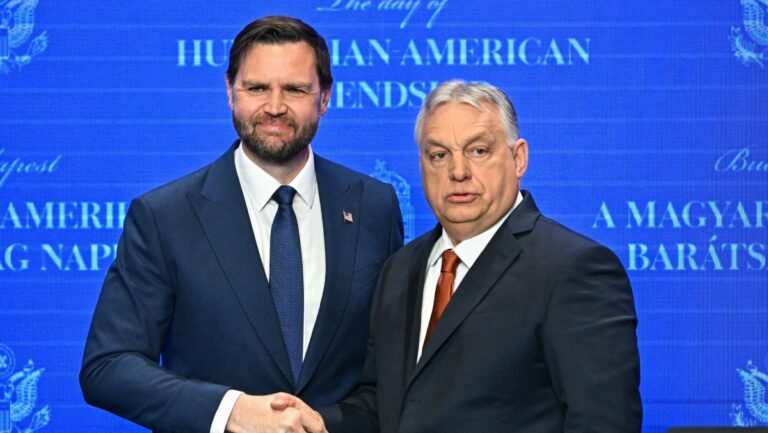
By contrast, countries like Hungary—and even the United States under its renewed realist mood—cut a far more decisive figure. They talk less about lofty “values” and more about hard interests. Faced with an emboldened Latin American left and a European Union tangled in its own rhetoric, this emerging Hungarian-American axis offers something Brussels seems to have misplaced: a clear, unapologetic sense of purpose.
Even the section on Gaza exposed how divided the room really was. Some countries were willing to call Hamas what it is—a terrorist organisation. Others tiptoed around the issue so carefully you could almost hear the floorboards creak, desperate not to upset their Arab partners. The end product was a statement that looked polished enough on paper, yet managed to say very little of anything at all.
The Santa Marta gathering was billed as a fresh start. Instead, it revealed just how far Europe and Latin America have drifted apart—one side speaking the language of ideological crusade, the other mumbling about “partnership” while scrambling for new trade routes and supply chains.
EU leaders came hoping to project authority. They left looking unsure of themselves. Unless Brussels works out what it actually wants—and how to get it—Europe risks slipping into the role of spectator while bolder, more clear-eyed players quietly take the lead.