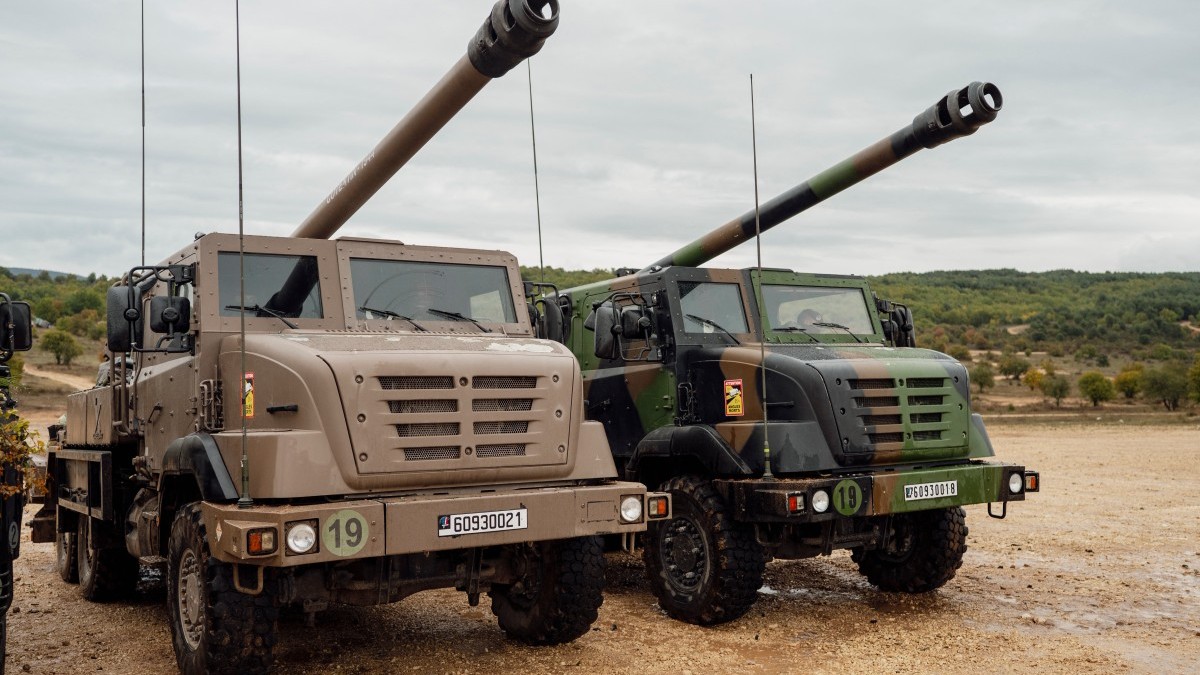
CAESAR vehicles with self-propelled howitzers at an artillery demonstration day at the French Army camp of Canjuers, south-eastern France, on October 20, 2025.
FREDERIC DIDES / AFP
The European Union’s ambassadors have agreed on a loan of up to €90 billion for Ukraine with an unprecedented trajectory: the money will return to the EU in the form of military contracts.
The architecture of the plan, approved on February 4th, and still pending negotiations with the European Parliament, requires that most defence spending financed by the loan be carried out with European companies. In practice, Brussels is funnelling public funds into its own arms industry, using Kyiv as an operational intermediary.
The agreement backs a proposal by the European Commission, based on the mandate granted last December by EU heads of state and government, and will be financed through the issuance of joint debt backed by the EU budget, according to the Council of the European Union.
As part of the deal, Hungary, Slovakia and the Czech Republic, countries that had strongly opposed any additional aid to Kyiv, will be completely exempted from all financial obligations, including annual interest payments.
Of the €90 billion, €60 billion will be allocated to military equipment and to supporting investment in Ukraine’s defence industry, while the remaining €30 billion will cover macro-financial assistance to keep the services and public administration of the war-torn country running.
The political and economic core of the package lies in the geographical conditionality attached to spending. When the funds are used to acquire defence equipment, purchases must be made within the EU, Ukraine, or countries of the European Economic Area and the European Free Trade Association—Norway, Iceland, Liechtenstein and Switzerland—except in cases of urgency or unavailability.
In addition, there will be a limited opening for suppliers from third countries linked to the SAFE program or with security agreements with the EU, provided they contribute to the costs of the debt issuance and maintain substantial financial and military support for Kyiv.
The decision fits with Brussels’ narrative of “strategic autonomy,” but it also blurs the line between external assistance and covert industrial policy.
The loan will be financed through common debt—a step that consolidates mutualization in sensitive areas. Ukraine will not pay interest, which will be covered by the EU budget, shifting the cost onto European taxpayers as a whole.
The text must now be negotiated with the European Parliament and will require amendments to the Multiannual Financial Framework so that the Commission can access capital markets. If the timetable holds, the first disbursement could be made in the second quarter of the year.
Supporters of the plan argue that it accelerates supplies to Ukraine, reduces external dependencies and strengthens Europe’s industrial base amid a sustained threat environment. Critics, by contrast, warn of a precedent: the EU takes on joint debt to finance purchases that, by design, flow back to European companies, with Kyiv acting as the manager of demand.
The question is whether this mechanism primarily addresses the needs of the Ukrainian front or whether it effectively functions as a sectoral support policy with a geopolitical label.
At a time of fiscal pressure, persistent inflation and debates over budgetary priorities, the formula chosen by Brussels reshuffles incentives and shifts costs into the long term. The loan to Ukraine is not only a decision of international solidarity; it is also an industrial and financial bet that redefines how the EU conceives war, debt and the role of the state in the economy.