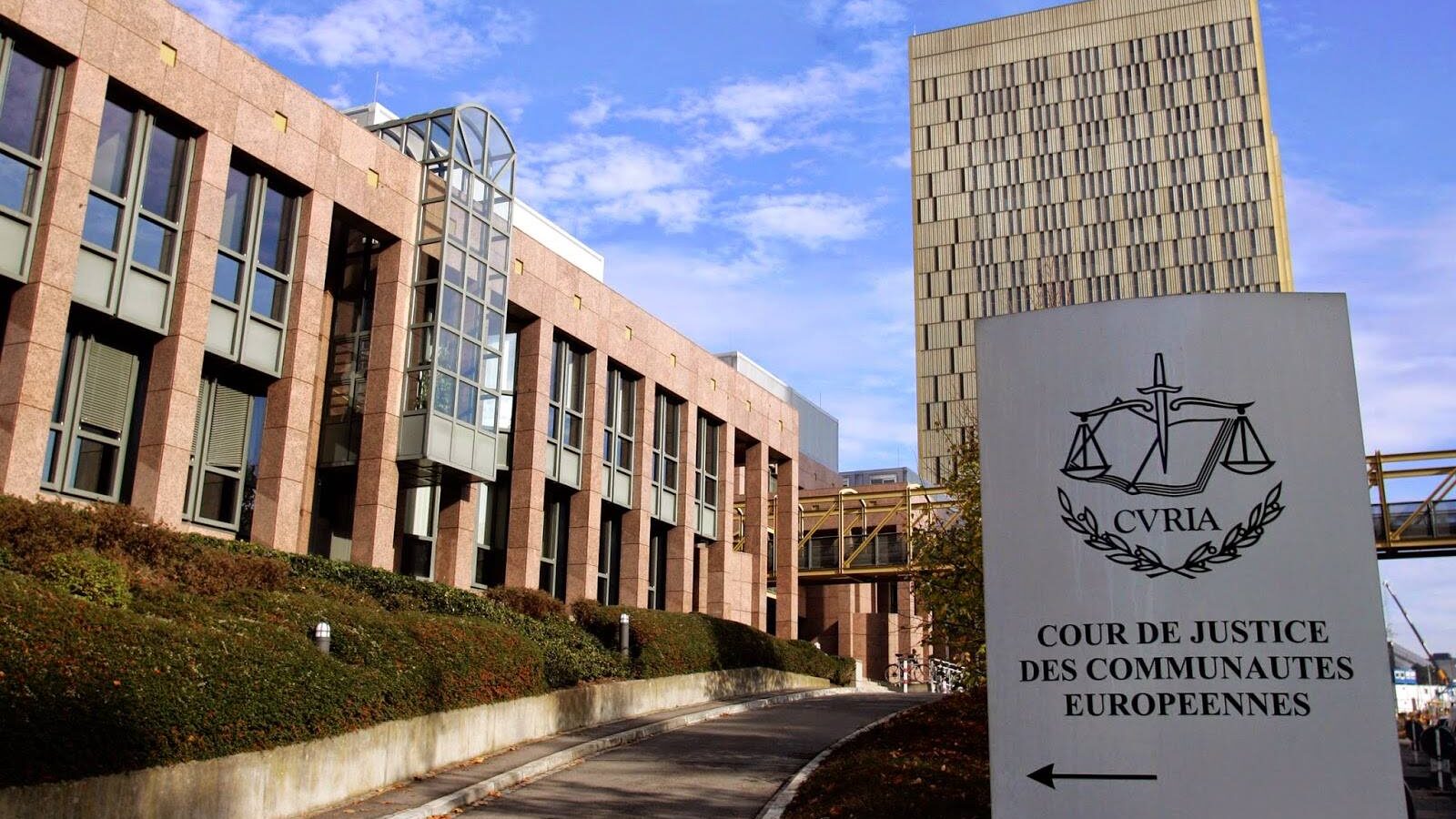
European Court of Justice on Facebook, 10 May 2014
The EU Court of Justice (ECJ) is clearing the way for another infringement case against Hungary over LGBT rights, following the country’s 2021 child protection law that prohibited the promotion of gender transition and homosexuality in primary schools and prime time TV.
According to the preliminary opinion of the ECJ’s Advocate General Tamara Ćapeta, published on Thursday, June 5th—which is usually the first step before concrete legal action is taken—the restriction of pro-LGBT content for minors is a violation of “EU values” and is therefore in infringement of EU laws.
Opinions issued by the advocate general are non-binding, but they serve as a starting point for later cases, and ECJ judges rarely, if ever, deviate from their position in their final rulings. The lawsuit over what has been called an “anti-LGBT law” was initiated by the EU Commission in 20, and was joined by 15 member states.
In her opinion, Ćapeta reasoned that the 2021 child protection act violates fundamental rights such as non-discrimination on grounds of sexual orientation, freedom of expression and information, the right to human dignity, and even “respect for private and family life.”
This last one seems to be the most ironic, given that the law explicitly aims to uphold parents’ sole authority over their children’s sex education and limits the risk of kids being exposed to harmful ideologies without parental consent.
Hungary argues that since the law does not affect the lives of adults, there’s no discrimination whatsoever. “The issue is not about adults in relation to gender, but about children, about who is given authority in sex education: schools or parents,” Prime Minister Viktor Orbán explained back in 2022.
In contrast, the document claims that the law prohibits the “portrayal of the ordinary lives of LGBTI people” in media and that Budapest has not produced any proof of the potential risks associated with such content.
In other words, the ECJ is willfully denying the reality that the sharp rise in transgender-identified teenagers, primarily girls across the West, is at least in part due to it being a social contagion spread not only by social media, but also the positive, normalizing portrayal of gender transition in contemporary shows and movies.
In this regard, the law has not been used to restrict any piece of media that has a gay or lesbian character in it, as the court implies, but only requires TV providers to air movies where LGBT ideology is a central element of the plot after 10 pm.
Besides, the media aspect is secondary to the Hungarian law; its far more important goal is to remove gender ideology from sexual education classes in primary schools, which the AG’s opinion barely touched upon.
Instead, the document goes well beyond objectivity to claim that the Hungarian government’s decision was made “based on a value judgment that homosexual and non-cisgender life is not of equal value or status as heterosexual and cisgender life,” and, therefore, Hungary “has significantly deviated from the model of a constitutional democracy.”
In conclusion, Ćapeta recommended that the EU Court of Justice formally establish infringement, which, if it happens, would give the EU Commission the green light to bring more sanctions against Hungary by freezing more of its EU funds or even by suspending its voting rights.