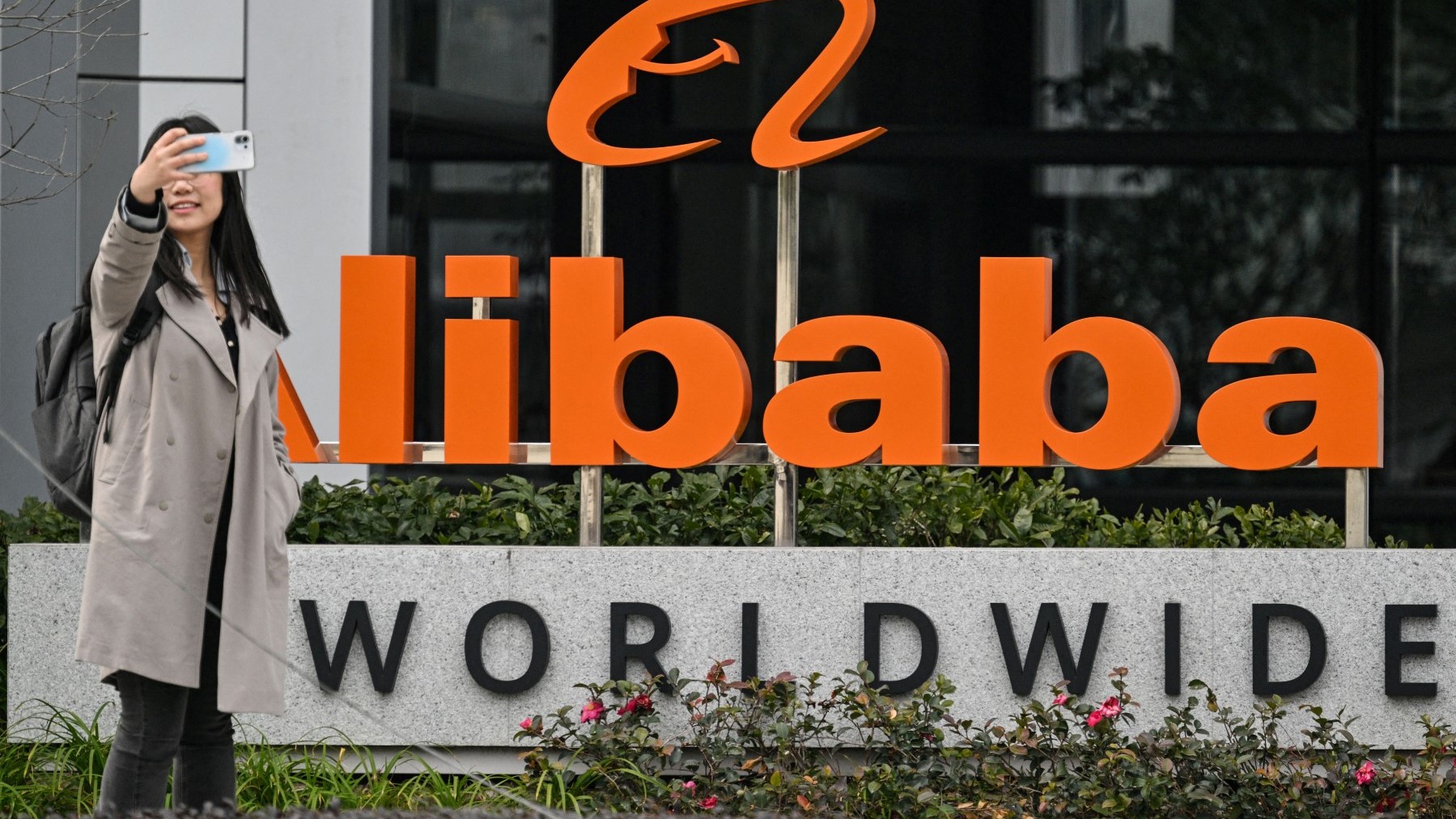
A woman poses for a selfie next to signage for e-commerce giant Alibaba in the Xuhui district in Shanghai on February 22, 2025.
Hector Retamal / AFP
Starting January 1, 2026, Brussels will abolish the customs exemption for parcels valued under €150, marking the beginning of a new phase in the economic confrontation between Europe and China.
The measure, long in preparation by the Commission, targets the Asian e-commerce giants —Shein, Temu, and AliExpress—whose ultra-low prices have reshaped the European market and triggered tensions among between retailers, local manufacturers, and consumers.
The conflict is not new. In recent years, the EU has opened investigations and imposed additional tariffs on strategic sectors such as Chinese electric vehicles, accusing Beijing of heavily subsidising its manufacturers and distorting competition. But the trade dispute is now entering the realm of mass-consumption goods, affecting hundreds of millions of orders every year.
Until now, products imported from third countries with a value below €150 were exempt from customs duties. This loophole allowed platforms such as Shein and Temu to multiply their shipments to Europe at entry costs far lower than those faced by European companies. Brussels considers that the exemption has become obsolete. The Commission argues that it is no longer justified and that it creates unfair competition between non-EU e-commerce operators and the traditional European retail sector.
Beyond the economic impact, European authorities have been warning for years about the growing risk to consumers. The EU’s Safety Gate system for dangerous products shows that three out of four items flagged as hazardous originate outside the EU. Investigations by consumer associations have uncovered irregularities in a high proportion of products sold through Asian platforms.
On Temu, 65% of the tested items had defects; on Shein, the figure rose to 73%; and one in four products was deemed potentially dangerous. Among the irregularities detected were elevated levels of heavy metals in clothing and jewellery, toys containing substances banned in the EU, and cosmetics lacking mandatory ingredient or traceability information. This scenario has fuelled mounting pressure for regulatory action.
The clash over e-commerce comes amid a broader escalation in trade tensions. In 2024 and 2025, the EU imposed additional tariffs of up to 38% on electric vehicles manufactured in China, arguing that state subsidies allowed them to be sold below cost and threatened Europe’s automotive industry. Beijing retaliated by launching investigations into European companies in the food and aerospace sectors. The conflict remains unresolved and serves as a direct precedent for the new regulatory front opening around online retail.
The removal of the exemption is a transitional measure ahead of the launch of the EU Customs Agency and the EU Data Hub, scheduled for 2028. For the first time, every parcel—even those costing just a few euros—will be subject to standard customs duties. The United States has already adopted similar measures, and the United Kingdom plans to introduce its own changes before 2029.
For Europe, the impact will be immediate. Most products sold by Shein, Temu, and AliExpress will become more expensive, the flow of ultra-cheap parcels will slow down, and a new opportunity will open up for local retailers and distributors. The downside is an overall rise in prices and a decline in the availability of bargain products for consumers.
Europe is moving to halt what it sees as the erosion of its internal market. Chinese platforms will remain present, but operating in a more regulated environment and facing costs closer to those of their competitors. For consumers, the shift will be clear: fewer bargains, more controls, and prices more in line with those of traditional retail.