Grok / europeanconservative.com
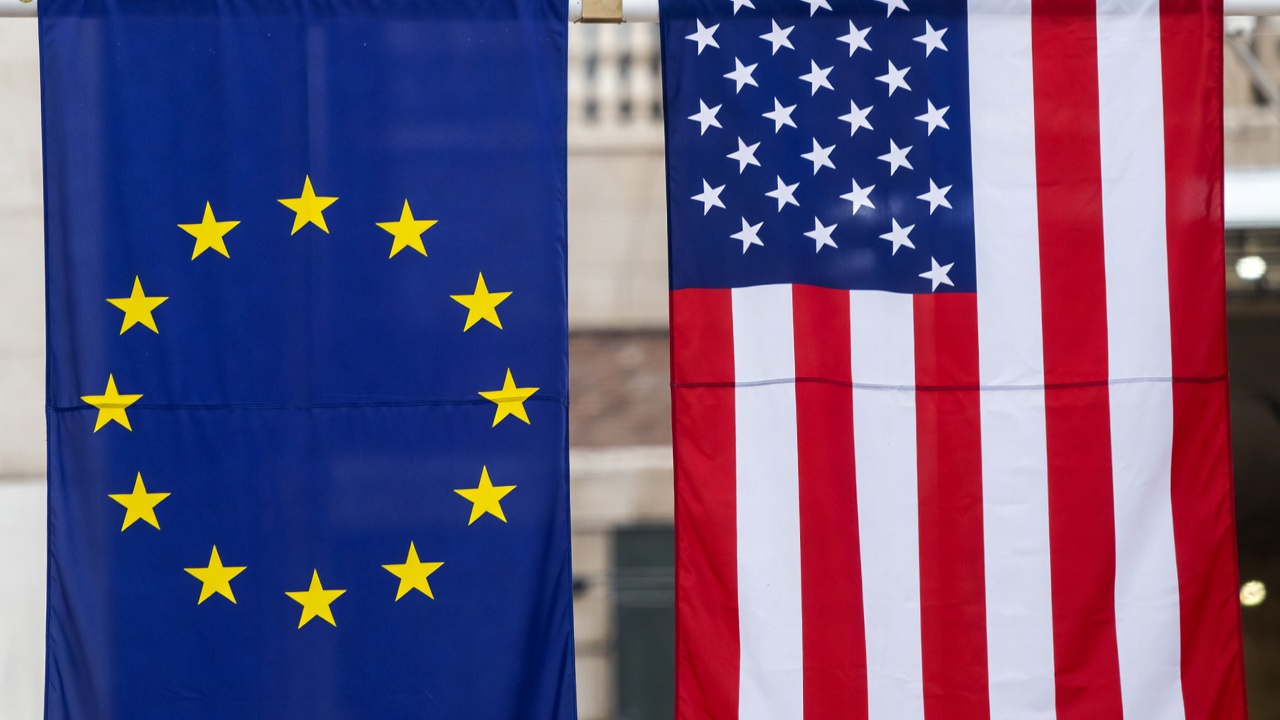
Brussels is preparing for a possible trade confrontation with Washington after the United States linked new tariff threats to its demands over Greenland, a move that has set off alarm bells in several European capitals.
According to EU and parliamentary sources, the European Commission and the member states are assessing the activation of the anti-coercion instrument—the most far-reaching trade tool ever created by the EU—alongside a package of retaliatory tariffs that could affect between €90 billion and €100 billion worth of U.S. exports.
At the same time, the main political groups in the European Parliament are pressing to freeze the ratification of the latest EU-U.S. trade agreement until Washington formally withdraws its Greenland-related threats.
Although diplomacy remains the official priority, the fact that these options are now being openly discussed in Brussels reflects growing concern about a deterioration in transatlantic relations and the increasing use of economic pressure as a political tool between allies.
The latest decisions by President Donald Trump are difficult to defend, even for his most committed allies within the Union.
At the heart of the debate is the anti-coercion instrument (ACI), adopted in 2023 with the explicit aim of responding to cases of economic blackmail by third countries. The mechanism allows the Union to react when a partner uses trade or investment to force sovereign political decisions.
Unlike traditional tariff retaliation, the ACI grants Brussels a much broader range of powers. These include restricting access to the single market, limiting trade licences, and excluding foreign companies from European public procurement.
In practice, this would allow the EU to go beyond physical goods and affect services, investment, and potentially digital and technology sectors in which U.S. companies depend heavily on the European market. What Europe has seen in recent years with the Digital Services Act and the Digital Markets Act would merely be the tip of the iceberg if the instrument were fully deployed.
So far, this tool has never been used. The Greenland crisis, therefore, represents the first real test of whether the EU is prepared to employ an instrument designed precisely for situations of high-level political pressure.
Running parallel to the ACI debate, the Commission has revived a more traditional option: reactivating a list of retaliatory tariffs covering between €90 billion and €100 billion in U.S. exports. This package was drawn up during previous trade disputes and later frozen following the trade understanding reached with the United States in 2025.
The battle is clearly political. The products included would be carefully selected to generate domestic impact in the United States, targeting sectors and regions with significant electoral weight. Moreover, these measures could be adopted using the EU’s classic trade-defence instruments, without formally triggering the anti-coercion mechanism.
For several member states, this path is seen as a less disruptive first step: sufficiently robust to send a clear message, yet legally familiar and politically more manageable.
The most explicit political response is coming from the European Parliament. A cross-party group of MEPs has called for halting the ratification and implementation of the latest trade agreement with the United States, arguing that moving forward under current conditions would amount to legitimising economic pressure linked to territorial issues.
Parliamentary leaders have warned that granting tariff-free access to U.S. products while Washington questions Danish sovereignty over Greenland would undermine the Union’s own credibility. Some have gone further, calling for any further progress in trade talks to be suspended as long as the threats persist.
Officially, European leaders insist that diplomacy remains the preferred route. Extraordinary meetings have been convened, and officials stress that no final decision has yet been taken on activating the ACI or imposing tariffs.