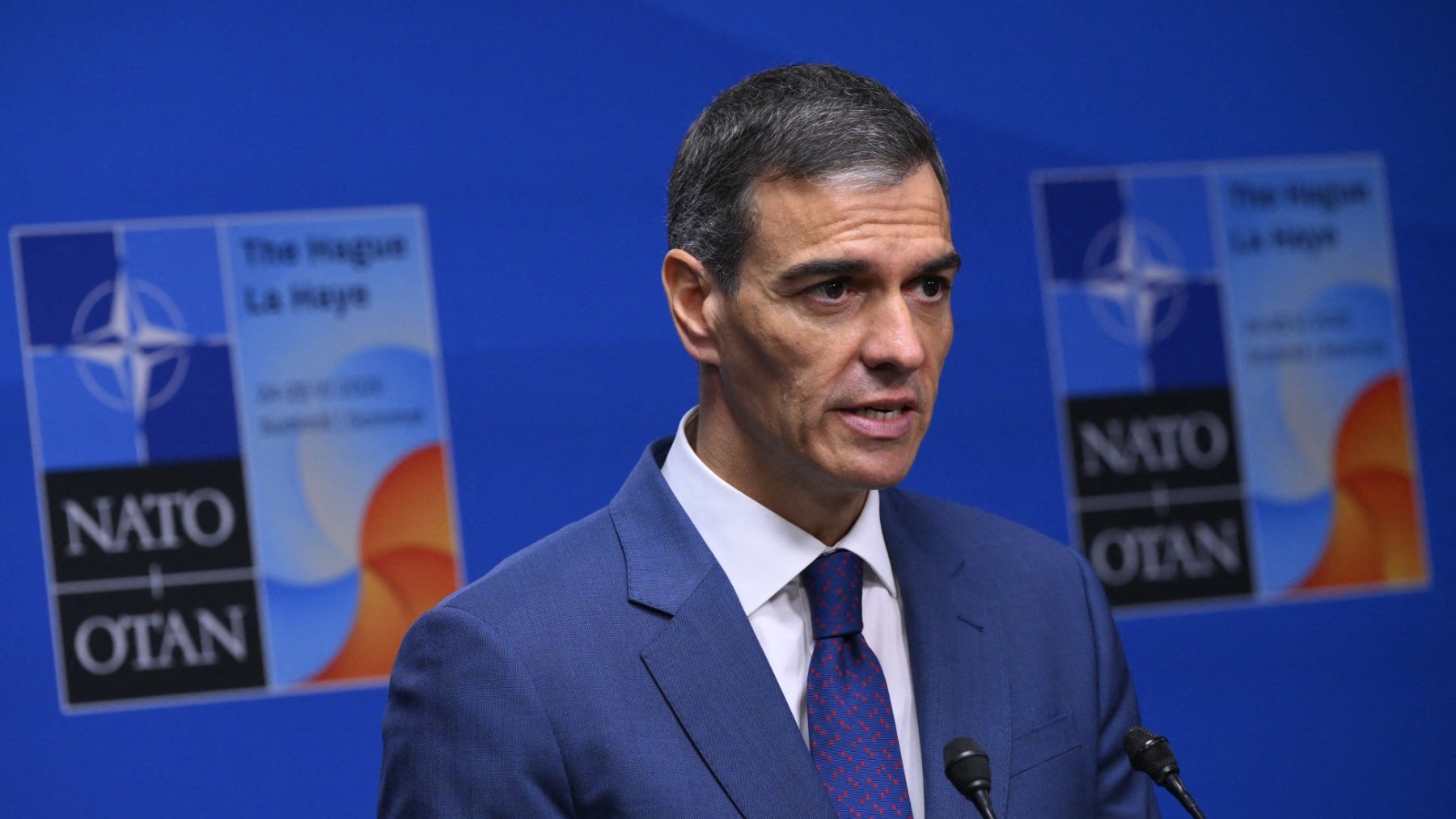
Spain’s Prime Minister Pedro Sánchez addresses a press conference during a NATO leaders summit in The Hague, Netherlands June 25, 2025.
JOHN THYS / AFP
Europe is redrawing its security architecture at great speed. The war in Ukraine, Russian military pressure and growing doubts about the reliability of the United States’ strategic umbrella have pushed many European governments to strengthen their military cooperation.
This process is not primarily emerging from Brussels. To a large extent it is being built through agreements between countries. And within this new web of alliances, Spain is beginning to appear less and less. Or, more precisely, the government of Pedro Sánchez is.
In recent years, defense agreements between European countries have proliferated: bilateral pacts, regional military cooperation groups, joint air defense projects, and rapid deployment forces.
The Heinrich Böll Foundation has counted more than 160 security agreements signed between European states outside the classic institutional mechanisms of the European Union. In most of them, Spain does not appear.
Part of this absence has an obvious explanation. Many of these initiatives are concentrated in the north and east of the continent, where the Russian threat is perceived much more directly. Poland, the Baltic states, Finland or Sweden have developed a very dense network of military cooperation around the Baltic. Spain, located in the southwestern corner of Europe and with strategic priorities more closely linked to the Mediterranean or the Sahel, is not always a natural part of those frameworks.
But that explanation only covers part of the problem.
In other cases, Spain’s absence responds to political decisions taken by Sánchez’s own government, which have ultimately distanced Madrid from some of the most visible initiatives of Europe’s new defense architecture.
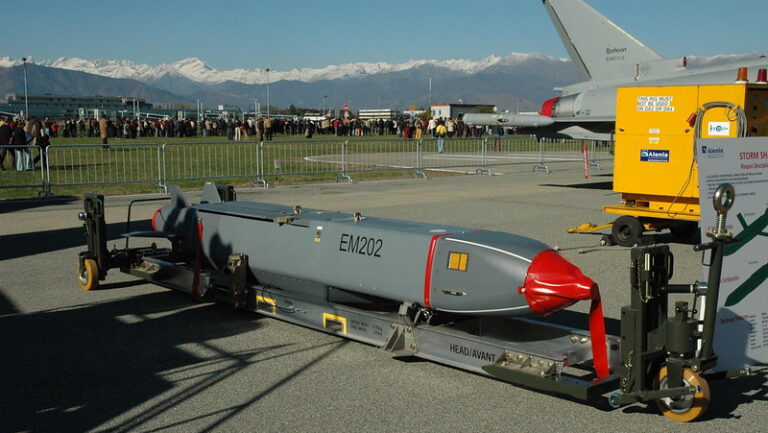
One of the clearest examples is the European Sky Shield Initiative, the joint missile defense system promoted by Germany, already joined by more than 20 countries. Spain decided not to integrate into the program, opting instead to maintain its own approach to air defense.
The decision may have some logic from an industrial or strategic perspective, but it has also had a clear consequence: Spain is not present in one of the most emblematic projects of the new European defense system.
Something similar is happening in the debate over European nuclear deterrence. Faced with growing uncertainty about Washington’s strategic commitment —a concern that has intensified with Donald Trump’s return to the White House— France has begun exploring the possibility of expanding its nuclear capability as a protection mechanism for European partners.
Several countries have shown interest in participating in that expanded deterrence architecture, including Germany, Poland, the Netherlands and Denmark. Spain, by contrast, remains on the sidelines.
The reason is largely political. The 1986 referendum on Spain’s membership in NATO included the commitment not to install nuclear weapons on Spanish territory, and Spanish diplomacy has traditionally maintained a very strong position in favor of non-proliferation. Pedro Sánchez has reinforced that line in various international interventions, where he has explicitly rejected the expansion of nuclear capabilities in Europe.
It is a position consistent with that tradition, but it also means remaining outside one of the strategic debates that will likely shape European defense in the coming years.
Another factor that increasingly weighs on the perception of some allies is the level of military spending. While several European countries, particularly on the eastern flank, are rapidly increasing their defense budgets, Sánchez’s government maintains a much more “cautious” position.
Spanish prudence is in some cases perceived as a lack of commitment. And, at least for now, Pedro Sánchez’s government seems more spectator than protagonist in that process.