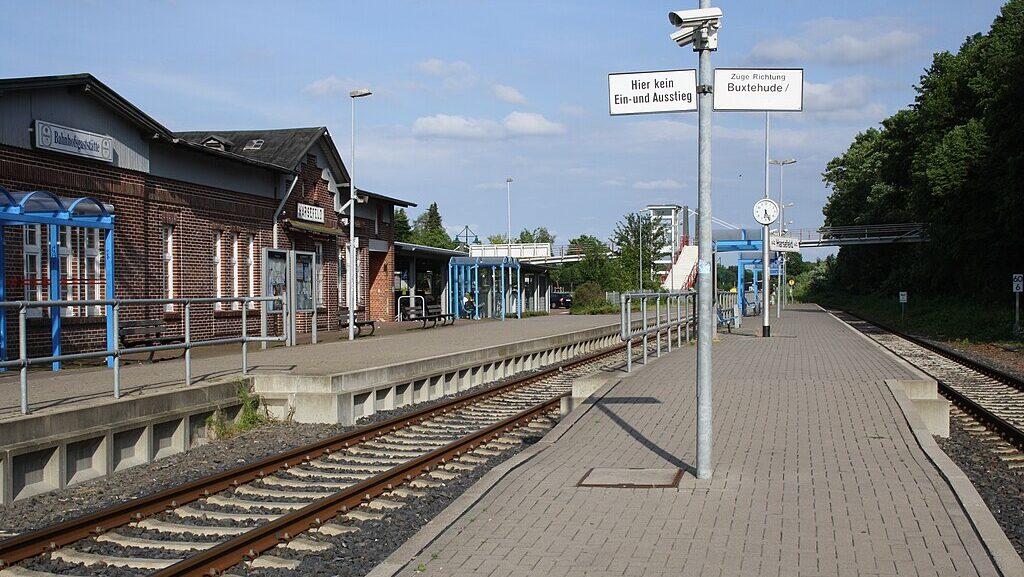
Harsefeld train station
Roehrensee, CC BY 4.0, via Wikimedia Commons
Having been proved incapable of clamping down on a youth gang, police in Germany’s Stade district have instead now launched an attack on citizens who have been forced to take matters into their own hands.
For weeks, reports have been emerging from the town of Harsefeld, which has a population of around 12,500, of 15 and 16-year-old repeat offenders who are “terrorising” locals. They are accused of physical assaults—including against other youths—and of dealing in drugs.
Seeing the issue continue while, as national weekly Junge Freiheit reports, Harsefeld’s police station cannot even be manned around the clock, a group of locals has come together, forming what is effectively a ‘vigilante’ group, and holds regular patrols.
AfD politician Georg Pazderski said locals were having to step up in part because the state “prefers to deal with opinion crimes.”
Jugendgang terrorisiert Kleinstadt!
— Georg Pazderski (@Georg_Pazderski) July 9, 2025
Die Bürger von Harsefeld in Niedersachsen gründen eine Bürgerwehr und sorgen jetzt selbst für ihre Sicherheit – für einen Staat der sich lieber um Meinungsdelikte kümmert.
Wenn der Staat nicht mehr in der Lage ist, die Sicherheit der Bürger… pic.twitter.com/KQSm0iaGAm
Stade police department spokesman Rainer Bohmbach attacked the group as “quite creepy,” saying:
A vigilante group doesn’t help anyone. It’s more likely that we’ll end up in the realm of vigilantism.
Bohmbach also appeared to downplay the extent of the youth gang’s activity, which he described as “about approximately 15 crimes per capita that have been reported to us so far.” He did, however, accept that “there is a high number of unreported cases.”
This story of the state’s inability to deal with illegality—and of citizens running out of patience with this failure—is by no means unique.
In the Netherlands, citizens fed up with migration chaos at the border with Germany have set up their own border checks, as have farmers in Poland.
These movements, too, have been criticised by the state. Polish Prime Minister Donald Tusk said last week that anyone who obstructs movement activities will face consequences, while newly elected conservative president Karol Nawrocki noted that the activity of the locals “means that the situation is not under the control of the state authorities today.”