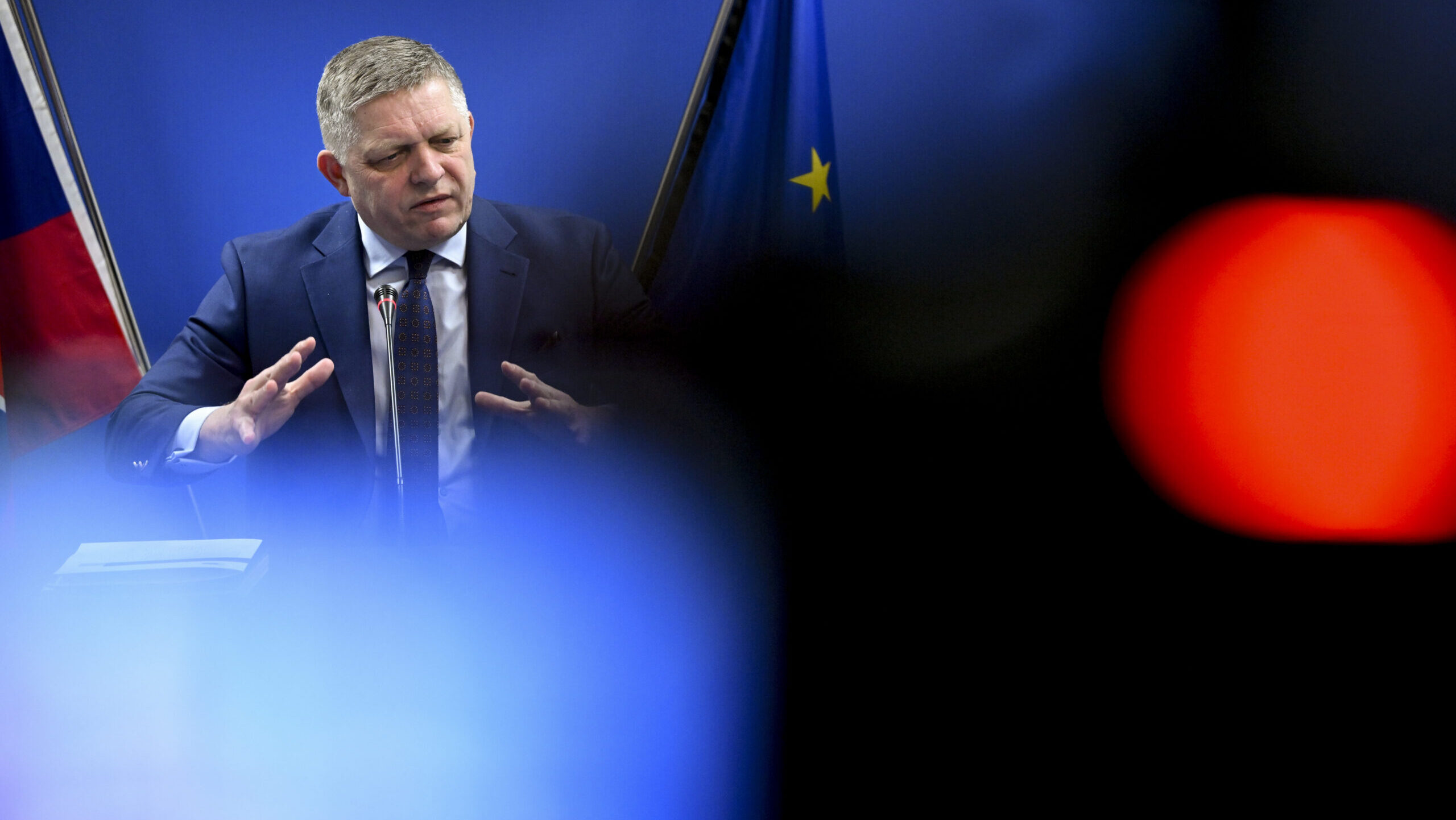
Slovak PM Robert Fico
© European Council 2025
Slovakia’s prime minister has defied EU pressure and refused to back new sanctions on Russia, accusing Brussels of offering empty promises in return for sabotaging his country’s energy security. European Commission chief Ursula von der Leyen had tried to win over Robert Fico by offering EU help with phasing out Russian gas, but the Slovak leader rejected the deal and kept his veto in place.
According to Fico and all his coalition partners, the vague promise of setting up a “Diversification Task Force”—to provide “tailored assistance” in monitoring progress and facilitating cooperation with suppliers and transit countries ahead of the 2028 cut-off date—is not only “insufficient,” but was described as “nothing” compared to the hard guarantees (such as a temporary opt-out or transit price caps) they were looking for.
Because of this, Slovakia upheld its veto on the 18th sanction package against Russia during a foreign ministerial meeting on Tuesday, July 15th, despite the Commission and most other member states being convinced that Fico would drop his opposition thanks to the immense pressure and von der Leyen’s half-hearted offer.
The “best solution,” according to Fico, would be to grant Slovakia a full exemption at least until the end of 2034, when its current contract with Russia’s Gazprom is set to expire. However, the European Commission rejects this “on principle,” Fico said, because it would “negate the essence of the anti-Russian sanctions.”
In his social media post on Tuesday, Fico also commented that von der Leyen’s offer came “only” because of the veto, implying that EU-pitched “assistance” is far from being a genuine effort to understand and help the member states who would struggle the most due to this forced transition.
The EU’s planned Russian energy phase-out by 2028 is designed in a way that needs no unanimous approval to be mandatory for all member states—unlawfully circumventing the option of national vetoes—ignoring the fact that landlocked Central European countries would suffer disproportionately under the major household price hikes.
That’s why Slovakia (along with Hungary, which is in a similar position) had to resort to vetoing the sanctions package instead as leverage. While the EU presented the plans as an effort to “diversify” Europe’s energy imports and end its overreliance on Russian gas, its effect on Slovakia and Hungary would be the opposite, making them more reliant on a single source of Western LNG instead.