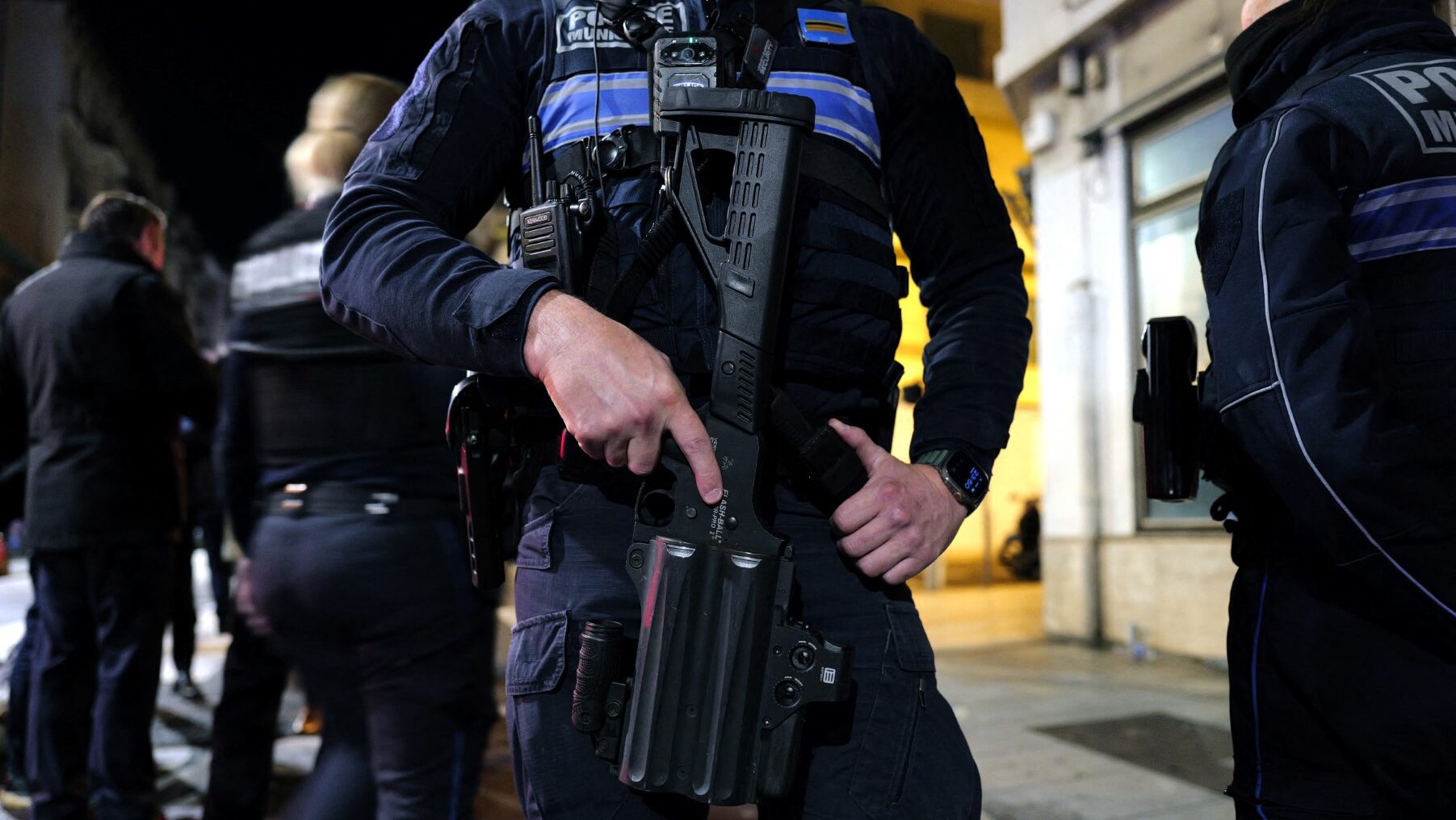
Municipal police forces patrol a street as a night-time curfew for children has been implemented by decree in the southern city of Nice.
Valery Hache / AFP
In France, the image of teenagers strolling through squares and boulevards on summer evenings is becoming a thing of the past. In cities such as Saint-Ouen, Béziers, Limoges, or Nîmes, authorities have imposed nighttime curfews for minors—more reminiscent of wartime or pandemic lockdowns than a European democracy in 2025.
Under these rules, young people cannot be out at night unless accompanied by an adult. The official reason is to curb crime and drug trafficking that have taken over entire neighborhoods. Many residents applaud it, others accept it with resignation, but everyone knows the more profound message: the state admits that the streets are no longer safe, and the only guarantee to keep teenagers away from violence is to lock them up at home.
In reality, France is experiencing a security crisis that worsens yearly. According to Interior Ministry figures, 1,186 homicides were recorded in 2024—more than three per day—along with a 33% increase in murders linked to drug trafficking. Every single day sees around 600 home burglaries and 330 armed robberies. Sexual crimes are also on the rise: in 2023 alone, reports of assaults rose by 8% and domestic violence by 9%.
Crime is not limited to big cities. In total, 173 French municipalities—from Marseille to small provincial towns—suffered serious incidents related to drug trafficking and score-settling in 2024.
It is no surprise that the interior minister recently described drug trafficking as “an existential threat” to the nation. What is surprising is the response: instead of reinforcing the authority of the state and cutting crime at its roots, the government opts for containment measures that restrict citizens’ freedoms. The curfew becomes a band-aid solution, a political gesture meant to “reassure the population”—as some mayors openly admit—but with no tangible results.
Even more worrying is the deliberate avoidance of addressing root causes. Various studies point to an uncomfortable truth: mass, uncontrolled immigration is closely linked to the rise in crime. A recent report shows that the rate of involvement of African foreigners in violent crimes is three times higher than that of French nationals. The evidence is clear in the banlieues of Paris, Lyon, or Marseille, now territories where the police hesitate to patrol and where drug traffickers increasingly recruit 14- and 15-year-olds, offering them quick money and a false sense of power.
The paradox is stark: while political discourse multiplies around gender equality, minority rights, or ‘feminist-oriented urban planning,’ what is obvious is left unsaid: France is a weakened state, incapable of guaranteeing the basic order and security of its citizens. In Nantes, for instance, instead of strengthening police presence against a growing wave of stabbings and sexual assaults, the socialist city council has preferred to invest in “gender analysis of public space,” convinced that wider sidewalks or different lighting will reduce the lack of public safety.
The contrast is brutal. The daily reality is that more than a thousand people are murdered every year in France, and violence, far from decreasing, continues to multiply. Criminologist Alain Bauer sums it up bluntly: “French society is increasingly dominated by a death instinct.” And yet, the message citizens receive is that the solution lies in changing their habits, not in demanding that the state enforce the law.
Critical voices warn that these policies criminalize the poorest families, often living in cramped apartments where it is difficult to keep teenagers locked in. As a result, the “good kids” are punished alongside delinquents, without distinction, and a loss of freedom is normalized, which especially affects the most vulnerable.
At their core, curfews for minors are evidence of failure. Failure of a migration policy that has allowed ghettos to form; failure of a soft judicial system that releases repeat offenders; failure of a state that, instead of protecting its citizens, advises them not to go out at night. Today, France, which has always prided itself on being the homeland of liberty, seems like a country resigned to living with a lack of public safety. And as long as the real causes of this deterioration remain unnamed, the measures will stay the same: locking up the young, turning off the lights, and hoping that violence will somehow disappear.