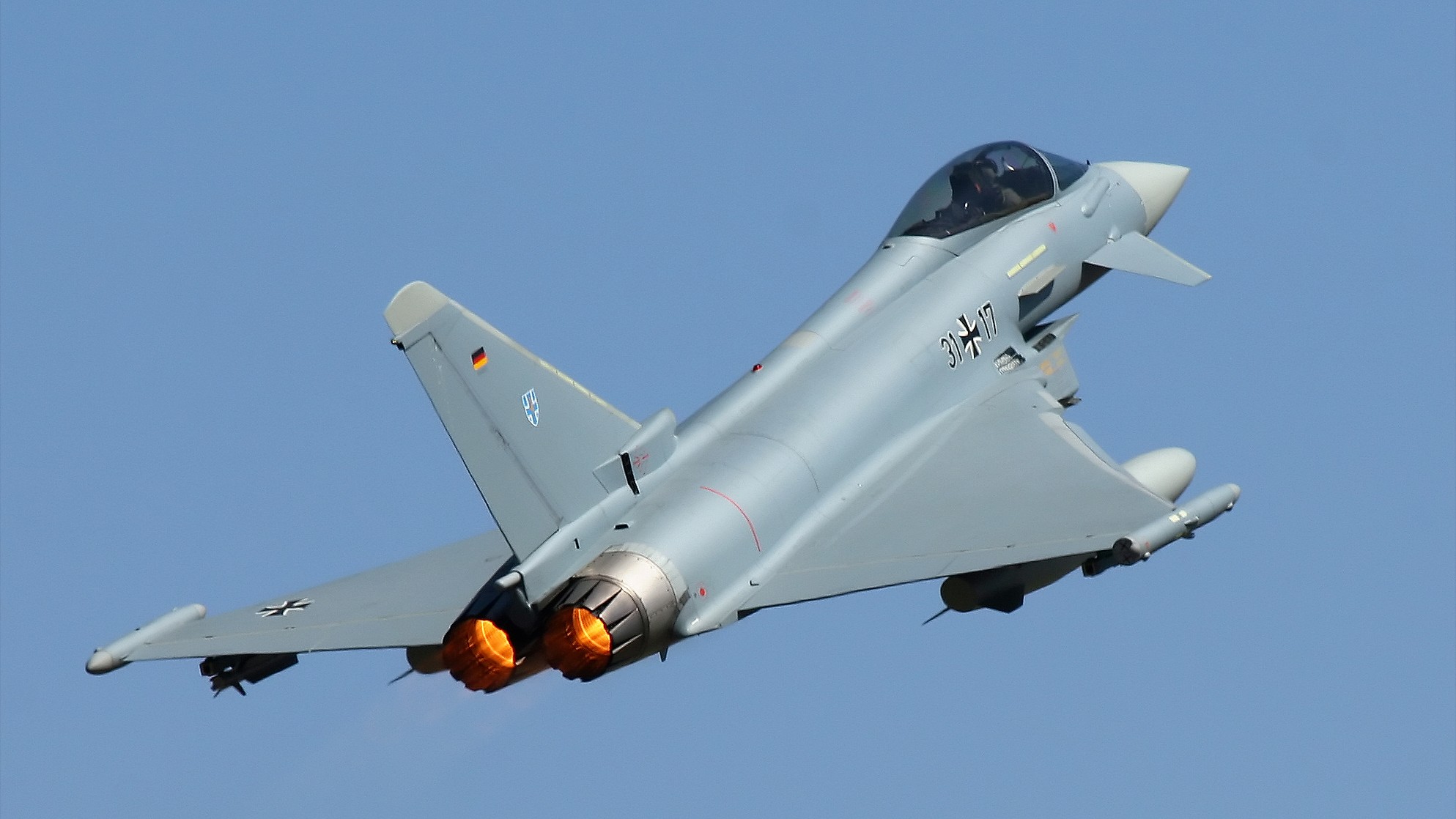
A German Eurofighter during takeoff
By Krasimir Grozev – Own work, CC BY-SA 3.0, https://commons.wikimedia.org/w/index.php?curid=10881998
Two German Eurofighter jets were dispatched on Sunday, September 21st to intercept a Russian military plane flying over the Baltic Sea, prompting Estonia to convene an emergency UN Security Council following the breach of its airspace.
According to Germany’s air force, the Russian Il-20M reconnaissance aircraft had deactivated its transponders and ignored repeated calls to establish contact. The jets took off from Rostock-Laage airbase to shadow the aircraft while it remained in international airspace.
Relations between NATO and Russia have grown tense, with European officials describing a pattern of provocative maneuvers by Moscow.
On Friday, September 19th three Russian MiG-31 fighters entered Estonian airspace over the Gulf of Finland, an act Moscow denies.
When asked about defending European Union member states nations from further Russian intervention, U.S. President Donald Trump stated: “Yeah, I would. I would.”
Estonia condemned the Kremlin’s behaviour and organized an emergency Security Council meeting—the first in 34 years of its UN membership.
Estonian Foreign Minister Margus Tsahkna called the incident “part of a broader pattern of escalation by Russia, both regionally and globally,” noting prior incursions into Polish and Romanian airspace.
Tallinn also requested consultations under NATO’s Article 4, which allows member states to confer with allies if their security is threatened.
Estonia’s Defence Minister Hanno Pevkur said Russia’s actions were intended to draw Western attention away from Ukraine, while Latvian President Edgars Rinkėvičs warned of the potential for “serious conflict.”