Identitarian Movement protest at ARD interview with CDU’s Markus Söder
@IBDeutschland
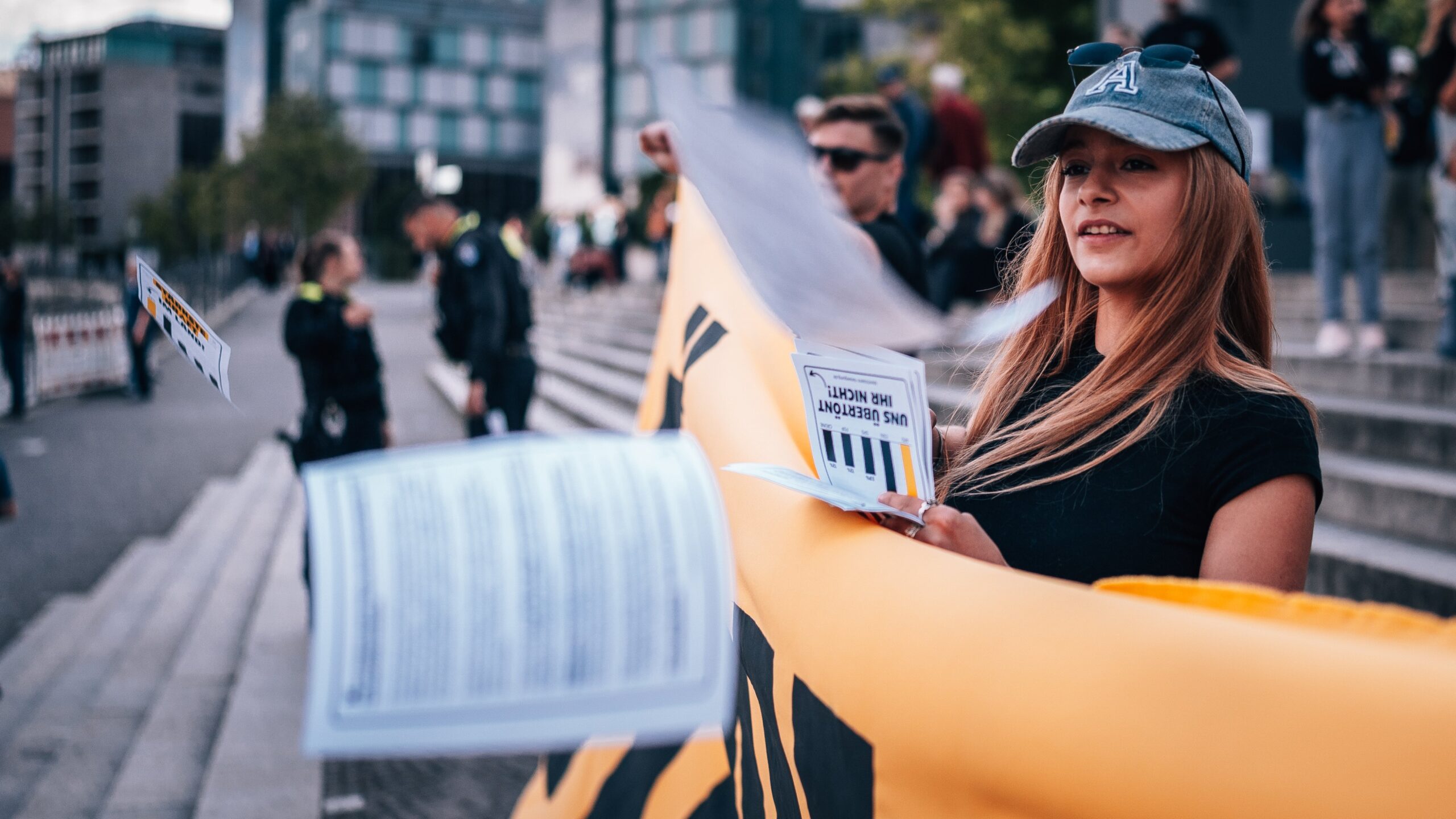
The traditional ARD Sommerinterview with Markus Söder, leader of the CSU and minister-president of Bavaria, was interrupted this past Sunday by a group of activists from the Identitäre Bewegung, an ethnopluralist activist group promoting cultural identity in Europe and opposing Islamization.
Around two dozen demonstrators disrupted the recording by displaying a banner that read “Stärkste Kraft im Land. Uns übertönt ihr nicht” (“The strongest force in the country. You will not drown us out”) while chanting slogans in favor of remigration.
The protest lasted only a few minutes, as police intervened quickly and detained several participants. On social media, the organization itself shared images of the incident. Söder, for his part, made no public reference to the episode and merely posted a photograph of himself eating a döner kebab on his X account. ARD said the interview recording was completed without major incidents and will be broadcast in full.
Stärkung nach dem ARD-Sommerinterview. #söderisst gerne einen Döner, wenn er in Berlin ist 😀🥙 pic.twitter.com/vOrRXstruI
— Markus Söder (@Markus_Soeder) August 24, 2025
The episode comes weeks after far-left activists severely disrupted the Sommerinterview with Alternative für Deutschland (AfD) co-chair Alice Weidel. In that case, the action was organized by the collective Zentrum für Politische Schönheit, which deployed a bus equipped with powerful loudspeakers to sabotage the recording. The noise forced Weidel to lean toward the moderator to hear the questions, and journalist Markus Preiß admitted live on air that the volume had made it very difficult to conduct the interview.
Despite the scale of the protest against Weidel, Berlin police made no arrests, and the demonstrators were allowed to disperse without legal consequences. In contrast, during the Munich incident, officers immediately moved against the Identitarian activists, with several taken into custody. The comparison has reignited debate over a double standard in treating political protests in Germany. While radical left-wing actions are tolerated or downplayed, right-wing and Identitarian groups face a far more forceful police response.
The contrast between the two episodes—similar in the number of participants but with very different outcomes—feeds the perception that the neutrality of public broadcasters and law enforcement authorities is in question. In a year marked by political polarization and looming regional elections, the unequal handling of these demonstrations risks reinforcing the narrative of a judiciary and media applying different standards depending on who is in the spotlight.
The Identiäre Bewegung was identified as a “proven right-wing extremist organization” (“gesichert rechtsextremistische Bestrebung“) by the Federal Office for the Protection of the Constitution (BfV) in 2019 after three years of investigation. That is the same classification Weidel’s AfD was given in May 2025 by the BfV based on a widely criticized report. The AfD has challenged the classification in court, meaning the label is suspended during the appeals process. A decision on the party’s classification is still pending.