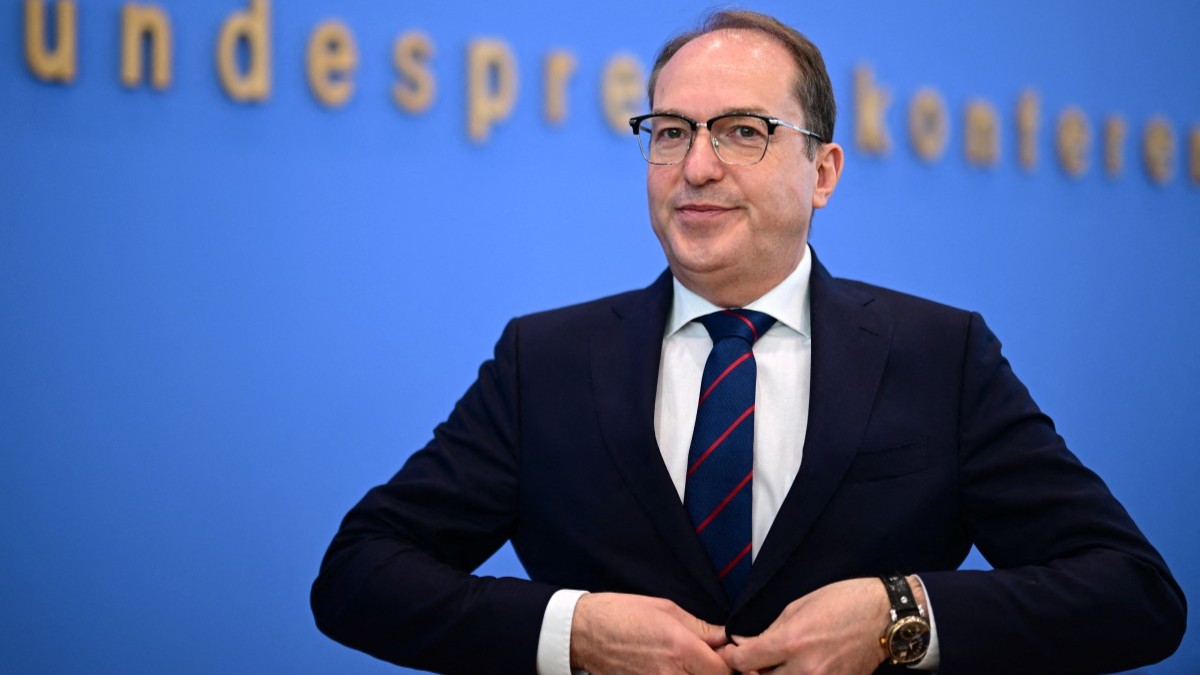
German Interior Minister Alexander Dobrindt leaves after delivering a press conference to present the annual statistics on politically motivated crime in Berlin on May 20, 2025.
Tobias Schwarz / AFP
After repeatedly refusing to change its immigration policy, the German government, through Interior Minister Alexander Dobrindt (CSU), announced on Wednesday, July 2nd, its intention to negotiate directly with the Taliban in Afghanistan to facilitate the deportation of migrants, especially criminals.
This decision marks a drastic shift in German migration policy, which for years has insisted on allowing in hundreds of thousands of refugees.. According to Dobrindt, the country’s “integration capacity” has been “exceeded,” and the asylum numbers are unsustainable: in the past two years, Germany registered 600,000 asylum applications and took in 1.2 million Ukrainians.
The announcement comes amid growing domestic pressure. Centrist parties, led by the CSU, have criticized the migration management of previous governments, especially former Foreign Minister Annalena Baerbock (Greens), who refused to deport even violent Afghan criminals. Baerbock, it should be recalled, traveled to Damascus before leaving office to meet with the new jihadist terrorist government’s head assuring him of Germany needing more Syrian immigrants.
Until now, the lack of bilateral agreements with Afghanistan and Syria has forced Germany to rely on third countries for deportations—an approach Dobrindt considers ineffective. “We need direct agreements with Afghanistan,” said the minister, quoted by Focus+, stressing the urgency of regaining control over migration.
Dobrindt also advocated for drastically reducing the reception limits. The proposal of 200,000 refugees per year, once defended by Horst Seehofer, is now deemed “excessive” by the minister, who insists that Germany cannot continue absorbing migration flows of this scale.
This shift reflects an implicit acknowledgment of the problems generated by the massive influx of migrants since 2015 under Angela Merkel’s leadership, when Germany opened its doors to over a million people, mainly from the Middle East. Integration has proven illusory, with social tensions and rising crime opening the eyes of millions to the undeniable reality of the consequences of mass immigration.
A recent case in Vienna, where four Syrians were arrested for the alleged sexual abuse of a 17-year-old intoxicated girl, has reignited the debate on security and migration. Although it occurred in Austria, such incidents resonate in Germany, where similar cases—such as the murder of young Leonie in 2021 by three Afghans—have shaped public opinion. Another recent case occurred in Spain. Most of these cases are silenced by mainstream media.