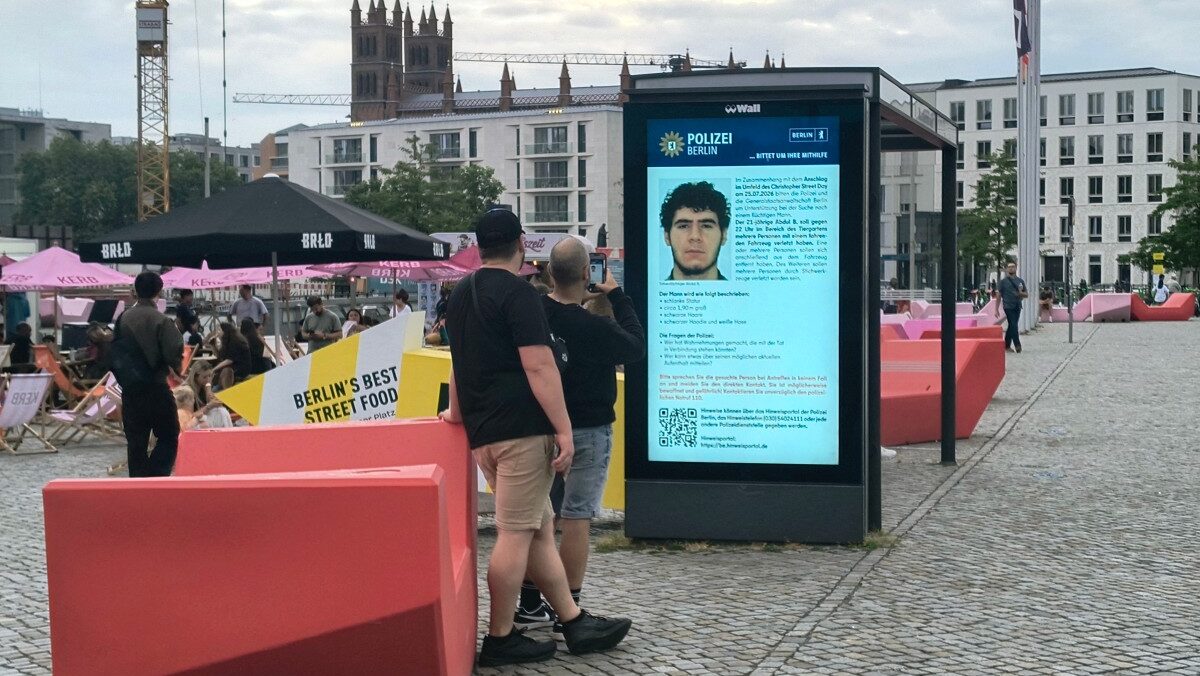
Germany’s domestic intelligence agency believes there are 9,110 violent Islamist extremists nationwide, according to security figures that have been newly highlighted by the German media following Saturday’s deadly attack in Berlin.
The figures, released amid the investigation into the attack on the city’s Christopher Street Day celebrations, show that German authorities identified 28,645 Islamists across the country in 2025. Of those, around 450 are classified as individuals considered capable of committing serious politically motivated crimes, including terrorist attacks.
In Berlin, the city’s domestic intelligence service has identified almost 2,600 Islamists, with more than 900 classified as prone to violence. Among the largest groups are around 350 violent Salafists and approximately 500 supporters of Hamas and Hezbollah, while officials say no verified figure exists for supporters of the Islamic State (ISIS) terrorist group.
The renewed focus on the data comes after 21-year-old Abdul Ballout, who was linked to ISIS, drove a lorry into crowds in Berlin’s Tiergarten district, killing one woman and injuring 29 others.
According to German media reports, Ballout was already well known to the security services. His telephone had been monitored, he was placed under surveillance for a period, and he had been required to participate in a deradicalisation programme. He had previously served a prison sentence for planning an attack.
Conservative journalist Richard Schmitt wrote on X that allowing another 900 individuals willing to kill non-believers to remain in a major city represented “a failure of the state.”
Liberal FDP politician André Byrla questioned why so many high-risk individuals remained in Germany, arguing that the issue was not the country’s laws.
Under German law, dangerous individuals can only be taken into custody if authorities have established sufficient legal grounds for their arrest.
Germany’s domestic intelligence agency has warned that Islamist radicalisation is increasingly taking place online. Extremist groups are using social media to spread propaganda, recruit supporters, and encourage lone actors to carry out attacks.