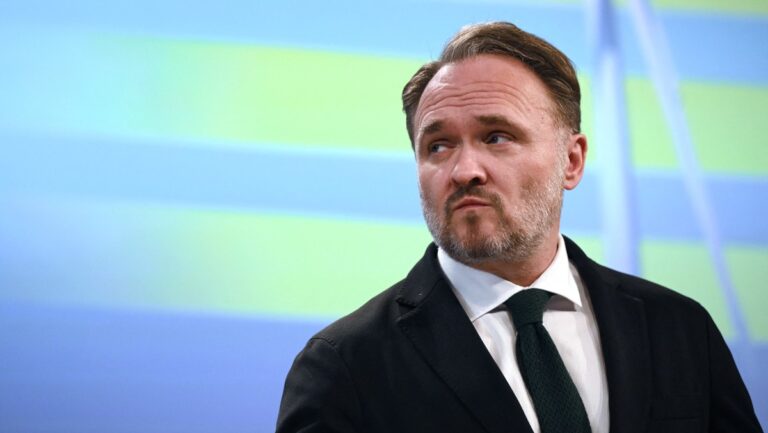
Greek Prime Minister Kyriakos Mitsotakis
Odd ANDERSEN / AFP
Greek Prime Minister Kyriakos Mitsotakis presented an expanded and fully articulated demographic and economic agenda on Wednesday, November 26th, combining significant financial support for families, targeted tax reforms, and new incentives for young workers and entrepreneurs.
In his remarks, the prime minister outlined what he described as Greece’s first comprehensive strategy to confront demographic decline. The government, he said, can allocate €1.76 billion in 2026 to support this strategy, adding that “the protection of the family is at the core of the government’s policy.”
Speaking at the conference “Demographics and Greece in 2040: Family, Economy, Modern Lifestyle,” Mitsotakis said that “for the first time in our country, we have a comprehensive demographic strategy that addresses the problem in all its aspects.” He emphasized that the government’s tax reform “favors families with children,” adding that “the more children a family has, the greater the tax exemptions will be.” He underlined the need to support households raising children: “We must have a sense of what it means to raise children and we decided to support these families,” calling the family “the cell on which social cohesion is based.”
Greece’s low birth rate, he noted, is part of a wider global trend. He cited prosperous countries such as Singapore and South Korea, where birth rates have fallen even further, while stressing that aging is an additional challenge. Within Europe, Hungary is one of the closest examples of a government supporting these programs. Budapest addressed demographic decline with tax cuts for families and incentives to have kids, rather than encouraging immigration, like most of the Western countries.
Talking about the country’s stance on migration, Mitsotakis said, “We will do everything in our power to prevent anyone from entering our country illegally.” Legal migration, however, will continue through bilateral agreements “such as Egypt and India” to meet real labor needs. Migrants who integrate and remain permanently are not a concern, he said, while “economic migrants will return to their countries.”
He added that refugees will be handled differently, citing Sudanese refugees in Thessaly who will work in agriculture after accelerated training programs, but stressed that Greece must first examine the potential participation of citizens who are not currently in the labor force. Asked whether migration could ease demographic and labor pressures, he defended his government’s “strict” approach to illegal immigration.
Mitsotakis described the demographic challenge as having national, economic, and regional dimensions. The comprehensive strategy includes housing programs for young couples, something that has been a big barrier for starting families for the youth. In connection to this, families in urban areas were more likely to start a family because of better services available. The new plan includes upgrades for health, education, and public services in more rural and remote areas for better access.
The prime minister called for private-sector involvement, arguing that businesses should provide benefits such as workplace daycare or even bonuses for employees with larger families.
Looking ahead, he confirmed plans to create a Ministry of Research, Innovation, and Higher Education to unify Greece’s research ecosystem and strengthen university–industry cooperation, framing it as a central pillar of a potential third-term program. He outlined Greece’s “very big ambitions” in artificial intelligence, identifying healthcare and civil protection as areas of strategic leadership.
Mitsotakis also called for breaking stereotypes surrounding women in business and pledged targeted support measures. “Something is changing in Greece,” he said. “And we have every reason to embrace it.”