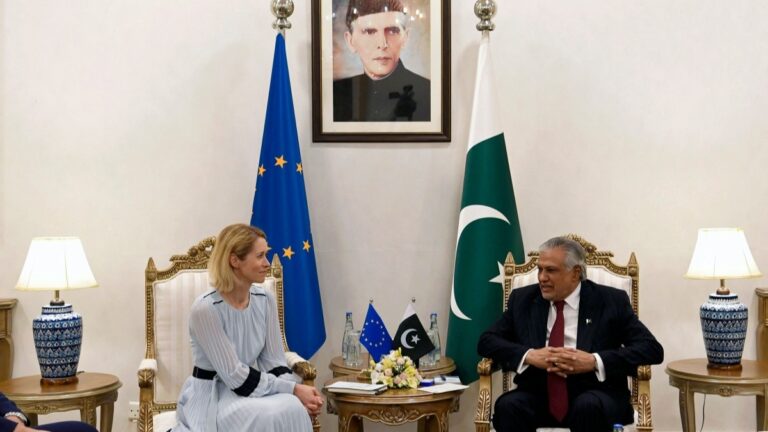
The EU’s 21st sanctions package against Russia has finally been agreed after member states overcame a last-minute dispute over Russian gas shipments and Greece secured protection for its powerful shipping industry.
EU ambassadors reached the political agreement on Thursday, ending a dispute over European companies transporting Russian liquefied natural gas (LNG) to customers outside the bloc.
The compromise keeps the price cap on Russian oil frozen at $44.10 per barrel for 12 months. Without the decision, the cap would have risen automatically to reflect the surge in global oil prices caused by the war in Iran.
The aim is to prevent Moscow from turning the energy crisis into another source of revenue.
The main opposition came from Greece. Athens resisted a ban on European companies transporting Russian LNG to countries outside the EU.
Greek officials argued that Russian exporters would simply use ships registered elsewhere or turn to Asian operators. Russia would therefore continue selling its gas, while European shipping companies lost contracts and valuable assets.
The final agreement gives certain shipping operations a renewable one-year exemption. In return, Greece accepted that the oil price cap should remain frozen.
The compromise preserves the unanimity required for EU sanctions, but it also exposes their familiar limitations. Every new package requires concessions for the national industries expected to bear the direct cost. After four years, those costs have grown while the benefits have become increasingly limited.
The package also targets Russia’s financial system. Around 90 banks will face new restrictions as Brussels tries to disrupt payments moving through smaller regional banks, institutions in other countries and cryptocurrency networks.
Is all this damaging the Russian economy? Yes, although considerably less than Brussels’ rhetoric suggests.
Russian oil and gas revenues fell by 22.7% during the first half of 2026 compared with the same period last year. Forecasts collected by the Bank of Russia put economic growth this year at just 0.6%, with inflation at 6.2% and the budget deficit at 3.2% of GDP.
But economic damage is not the same as strangulation, despite what some claims from Brussels would suggest. Russia continues to export large quantities of oil through its so-called shadow fleet and companies outside the West.
According to the Centre for Research on Energy and Clean Air, fully enforcing the $44.10 cap would have cut Russian oil revenues by around €5 billion in June alone. Much of that pressure is lost precisely because the cap is not fully enforced.
Brussels can claim that sanctions are weakening Russia’s war economy, and the figures support that conclusion. What they do not support is the idea that Russia is being economically strangled.
Russia is earning less, growing more slowly and paying more to trade. But it still has buyers, shipping networks and ways of moving money, as well as the means to continue financing the war.
The 21st package turns the screw once again, but Moscow continues to loosen it through the back door with the help of other countries. Brussels, meanwhile, cannot ultimately force the rest of the world to act against its own economic interests.