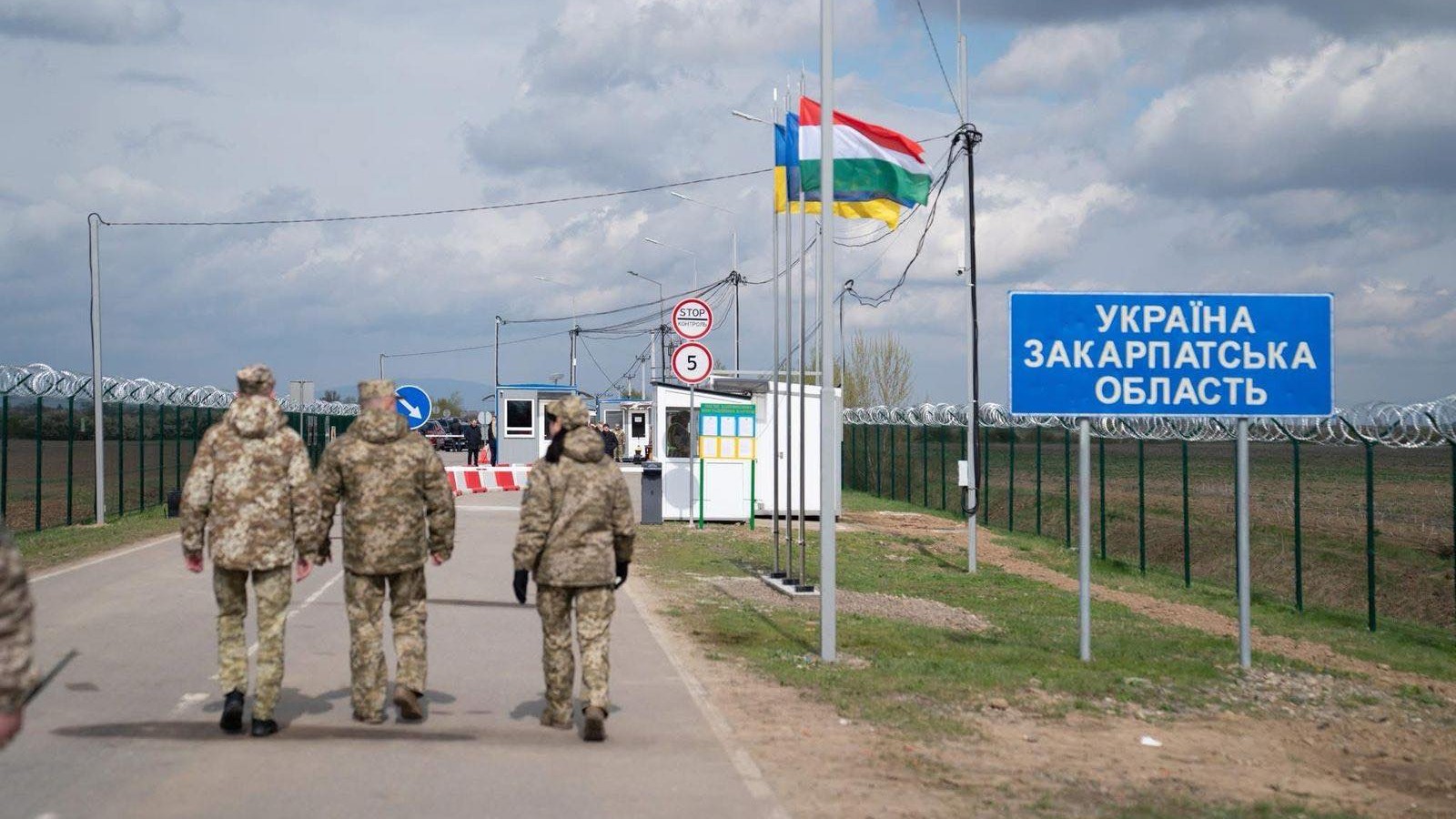
The Hungarian side of the Nagyhódos-Velyka Palad’ (Nagypalád) crossing at the Hungary-Ukraine border
Embassy of Ukraine in Hungary on Facebook on April 9, 2025
Hungary has banned three Ukrainian military officials from entering the Schengen area, citing what it describes as continued forced conscription practices that have led to the deaths of ethnic Hungarians in western Ukraine.
The move comes after Budapest’s criticism of the European Union that it is turning a blind eye to serious abuses.
Announcing the decision at a government press briefing on Thursday, February 5th, Gergely Gulyás, the minister heading the Prime Minister’s Office, said the bans were imposed on military leaders linked to conscription practices in Transcarpathia.
From a report presented to the government it is clear that forced conscription is continuing, he said, adding that “last year József Sebestyén died as a result, and now another Hungarian … suffering from heart disease has become a victim.”
Gulyás stressed that the officials would be barred not only from Hungary but from the entire Schengen zone, the system of open borders that encompass 29 European countries.
He described forced conscription as “unacceptable even on the part of a country that is under attack and at war,” and said Hungary was particularly sensitive when “the fundamental rights of the Hungarian community in Transcarpathia are not respected.”
Prime Minister Viktor Orbán echoed this stance in a post on X on Wednesday, writing:
Dragged off to war, another Hungarian has died due to Ukraine’s forced conscription. This is unacceptable… Our people cannot be used as cannon fodder.
He added that those responsible would be expelled from Hungary “without delay.”
Dragged off to war, another Hungarian has died due to Ukraine’s forced conscription. This is unacceptable. We stand with the family, and we will not let this slide. All Ukrainian officials responsible for forced conscription will be expelled from Hungary without delay. Our people… pic.twitter.com/N2m1ZwxtTb
— Orbán Viktor (@PM_ViktorOrban) February 4, 2026
The latest case highlighted by Hungarian officials concerns Zsolt Reban, a 41-year-old man who died on January 18.
According to reports based on his family’s account, Reban had suffered from heart problems since childhood and had repeatedly been declared unfit for military service. Despite this, he was allegedly stopped by law enforcement officers on January 6th while returning home from work and taken to a training centre close to Lviv.
Two days after his family last spoke to him by phone, they were informed that he had collapsed during training and died. Official documents list the cause of death as heart and respiratory failure accompanied by mild pneumonia.
Budapest links the case to the earlier death of József Sebestyén in 2025, which Hungary says followed severe abuse during forced conscription.
According to his testimony given to his family and lawyer shortly before his death, Sebestyén, who was a Hungarian-Ukrainian dual national and therefore an EU citizen, was taken to a forest and severely beaten until he signed his draft papers, and succumbed to his injuries days later.
While Brussels continues to provide large-scale financial support to Kyiv and is pushing to complete Ukraine’s EU accession by 2027, Hungary insists that acknowledging such abuses would undermine the narrative that Ukraine already meets European standards on human rights and the rule of law.
Despite the large number of videos circulating on the internet that document the brutal nature of forced mobilization in Ukraine the EU has never spoken out about it.