Grok / europeanconservative.com
The Democracy Interference Observatory (DIO), a new initiative launched by the conservative think tank MCC Brussels, has raised concerns over the emerging narrative surrounding Hungary’s upcoming parliamentary elections.
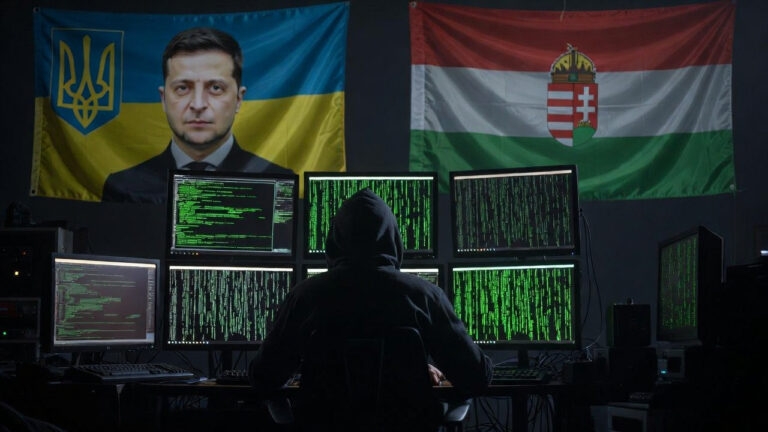
After social media posts by various anti-Orbán figures suggested the existence of some sort of a ‘collusion with Russia’ of the Hungarian ruling parties, the Financial Times on Wednesday published a piece claiming that Vladimir Putin’s administration has “endorsed a plan … to bolster Orbán’s Fidesz party by flooding social media with messages designed in Russia and posted by influential Hungarians.”
The Hungarian prime minister’s team has dismissed the claim, saying it is actually Ukraine that is trying to interfere in the election by suspending Russian crude supplies via the Druzhba pipeline.
According to the DIO, several recent media reports and political commentaries have suggested that Russia may be attempting to influence the vote in order to keep the governing Fidesz party in power. At the same time, discussions about the role of artificial intelligence in political communication and the credibility of the election process itself have intensified.
Researchers involved in the initiative argue that such allegations should be backed up by strong evidence, which they say has been lacking in public reporting. Claims about Kremlin-linked influence operations have relied heavily on anonymous sources or statements that are difficult to verify independently.
Some outlets have also repeated claims by Hungarian opposition parties that Russian intelligence services may be involved in the creation of AI-generated smear content targeting political actors. DIO analysts say no publicly available evidence has demonstrated the existence of a coordinated Russian disinformation campaign capable of shaping the outcome of the election.
Another element highlighted by researchers is the role of opinion polling in shaping the broader political narrative. Several widely circulated opinion polls have indicated a substantial lead for the opposition Tisza party.
Two of the polling organisations most frequently cited—Republikon and the 21 Research Center—operate within funding environments connected to European institutional sources. Externally funded research networks may also shape the broader narrative about which electoral outcomes are viewed as plausible or legitimate.
Richard Schenk, research fellow at MCC Brussels working on the DIO initiative, says the narrative surrounding Russian interference could itself become harmful to democratic processes.
“Claims of Russian interference in the Hungarian election are cynical, hypocritical and, above all, dangerous,” Schenk said.