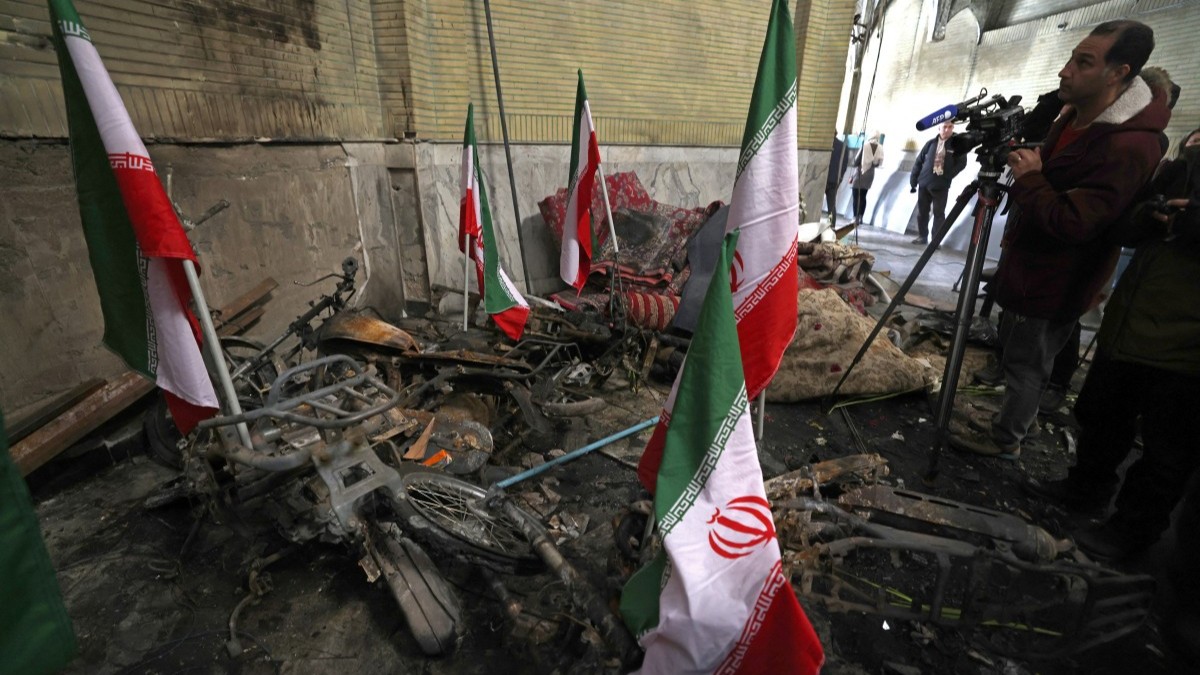
A videographer is filming during a regime-organized tour for foreign media to show the wreckage at the Al-Aqsa Mosque, damaged during recent public protests in Tehran, on January 21, 2026.
Atta Kenare / AFP
Tensions between Iran and the United States escalated sharply after Iranian military officials issued direct threats against U.S. president Donald Trump, warning of devastating retaliation if Supreme Leader Ayatollah Ali Khamenei were harmed. Speaking on Tuesday, January 20th, Gen. Abolfazl Shekarchi, a spokesman for Iran’s armed forces, said Tehran would “set fire to their world” should any aggression be directed at the country’s leader.
“Trump knows that if any hand of aggression is extended toward our leader, we not only cut that hand but also we will set fire to their world,” he said.
Trump has condemned Iran’s leadership and accused it of killing its own people. Describing Khamenei as “a sick man who should run his country properly and stop killing people,” Trump said it was time for “new leadership in Iran.”
In an interview with NewsNation, the U.S. president warned that if anything were to happen to him, Iran’s regime would be wiped “off the face of this Earth.”
The threats came as Iran’s clerical authorities faced mounting international scrutiny over their brutal response to widespread anti-government protests. After weeks of silence, the Iranian regime on Wednesday released its first official death toll from the security crackdown that followed the unrest.
According to statements aired on state television by the Interior Ministry and the Foundation of Martyrs and Veterans Affairs, a total of 3,117 people were killed during the demonstrations. The foundation, an official body that provides services to families of those killed in wars, said 2,427 of the dead were classified under Islamic law as “martyrs,” a category that included civilians and members of the security forces.
Iranian officials later claimed the remaining 690 victims were “terrorists, rioters, and those who attacked military sites.” Ali Akbar Pourjamshidian, secretary of Iran’s National Security Council, said on state television that the high number of so-called martyrs demonstrated the “restraint and tolerance of the security forces.”
Human rights organizations have reported significantly higher figures. The U.S.-based Human Rights Activists News Agency said at least 4,902 people were killed, with many more feared dead. The group also reported that nearly 26,500 people were arrested. Verifying the numbers has been difficult, as Iranian authorities imposed a sweeping internet blackout, blocked international calls, and restricted journalists’ ability to report locally.
Farah Pahlavi, the widow of Iran’s last shah, said there is “no turning back” after the latest wave of protests. Living in exile since 1979, the former empress said she is convinced the Iranian people will ultimately prevail and expressed her desire to return to Iran.
The protests began late last year amid growing frustration over economic hardship and rapidly developed into the largest anti-government demonstrations since the 1979 Islamic Revolution. As the unrest spread, security forces launched a major crackdown beginning on January 8th, largely under the cover of the communications shutdown.