On July 15th, Mario Roggero, a jeweller from Piedmont charged with fatally shooting two of the three robbers who had just raided his shop in 2021, received a final sentence of fourteen years and nine months in prison. This protracted legal battle has opened up a new political front in Italy and reignited a heated debate: to what extent does a citizen have the right to defend themselves when the state is no longer able to protect them?
With a new election cycle just a few months away, the case has become a powerful symbol for the Italian Right, which sees it as an illustration of a justice system more concerned with the rights of offenders than with those of victims. Conversely, the judiciary and the Left are defending the ruling as essential to upholding the rule of law, refusing to equate self-defence with a right to revenge.
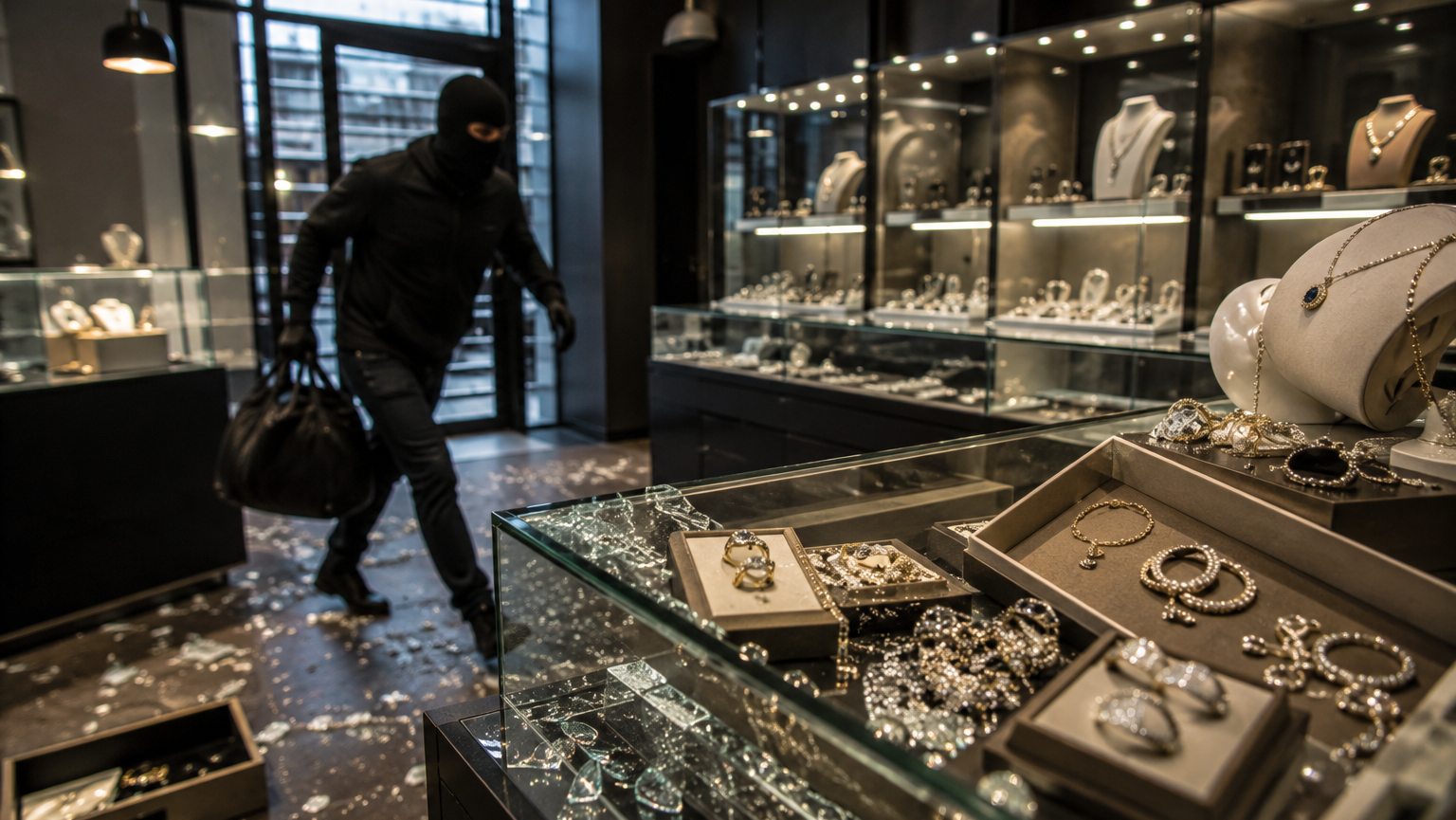
The events date back to 28 April 2021. Three armed men entered Mario Roggero’s jewellery shop in Grinzane Cavour, Piedmont. The shopkeeper, his wife, and his daughter were threatened during the robbery. When the criminals fled, Roggero grabbed his legally owned gun, chased them down the street and fired several shots at their vehicle. Two robbers were killed; the third was seriously injured.
Whilst some members of the public viewed his actions as the reaction of a traumatised man who had just experienced a few minutes of extreme violence, the Italian courts reached a radically different conclusion. In the judges’ view, the immediate danger had ceased the moment the criminals fled. The legal requirements for self-defence were therefore no longer satisfied: the issue was no longer one of preventing an attack, but of retaliation. After several years of legal proceedings, the Court of Cassation upheld the conviction handed down on appeal on July 15, making the sentence final.
From a legal perspective, the case might seem relatively straightforward. Politically, however, it has become a casus belli.
Matteo Salvini immediately sided with the jeweller, describing the decision as “unfair” and calling for a further extension of the right to self-defence. The La Lega leader argues that a shopkeeper under armed attack cannot be expected, in the heat of the moment, to judge precisely when the danger has ceased. In his view, the state is sending a disastrous message to citizens: those who work honestly are at greater risk of going to prison than those who attack them.
But this time, support was not limited to La Lega. The entire governing coalition has taken up the cause. Giorgia Meloni herself has spoken out publicly to denounce what she considers a legal aberration: that a man who was attacked should be ordered to pay compensation to the families of the robbers he killed. The prime minister has expressed her support for amending the law to prevent a criminal—or their heirs—from obtaining compensation for injuries sustained whilst committing a crime. “The state is on the side of honest people, not criminals,” she declared.
This case is all the more sensitive given that the Italian Right had already made self-defence one of its key campaign issues. In 2019, under the first Conte government—in which Matteo Salvini was a minister—Parliament had relaxed the law to better protect individuals who were victims of break-ins at their homes or businesses. Supporters of this reform saw it as recognition of citizens’ right to defend their families when the police cannot intervene immediately.
The Roggero ruling shows, however, that these reforms have their limits. Judges continue to require that the danger be imminent and that the response remain strictly necessary and proportionate. Once the attacker flees, the protection afforded by self-defence should cease to apply. It is precisely this boundary that the right wing now wishes to push back. The motivation is not a reckless deregulation of the right to revenge, but a shift in paradigm: the rights of victims must take precedence over those of offenders.
Beyond criminal law, the case reveals a much deeper divide within Italian society, in a country where the mafia’s stranglehold, for decades, has long highlighted the existence of a justice system running parallel to that of the state. The controversy pits two conceptions of the state against one another. On the Left, the view is that only the institutions’ monopoly on legitimate violence can guarantee civil peace; allowing victims to take the law into their own hands would pave the way for a dangerous escalation. From the government coalition’s perspective, this analysis is outdated. Faced with an explosion of violence, a state incapable of effectively ensuring security is gradually losing its legitimacy to prevent citizens from protecting themselves.
This issue extends far beyond Italy’s borders. In several European countries, the rise in violent assaults, burglaries, and attacks on shopkeepers is fuelling a sense of insecurity that is giving rise to similar demands. In France, a jeweller in Nice was caught up in a similar incident after being held up by two men. One of them, aged 19, fled on a scooter. The shopkeeper, having come out of his shop, shot him in the back. A CCTV video showing the sequence of events quickly went viral in the media and sparked a huge wave of support for the jeweller. A petition in his support gathered over a million signatures in just a few days, with backing from Nicolas Sarkozy, Marine Le Pen, and a large section of the French Right. In 2018, the jeweller was given a five-year suspended prison sentence for “assault resulting in death without intent to kill.”
The difference is that in the Italian case, Roggero received a heavy custodial sentence. However, the case carries particular significance because it comes against a backdrop of growing confrontation between the Meloni government and part of the judiciary. Since coming to power, the right-wing coalition has regularly accused certain judges of obstructing its policies, whether on immigration, security, or institutional reforms. The jeweller’s conviction now forms part of this political narrative, in which the justice system is portrayed as out of touch with public sentiment and the concerns of ordinary citizens.
The case has also become a powerful tool for mobilisation. Petitions, calls for a presidential pardon, social media campaigns: Mario Roggero is now portrayed by his supporters as the face of a hard-working Italy that the state has allegedly abandoned.
Roggero’s wife has submitted a request for a pardon to President Sergio Mattarella. Meanwhile, he could be released thanks to an appeal to the Court of Cassation on the grounds of procedural irregularity.