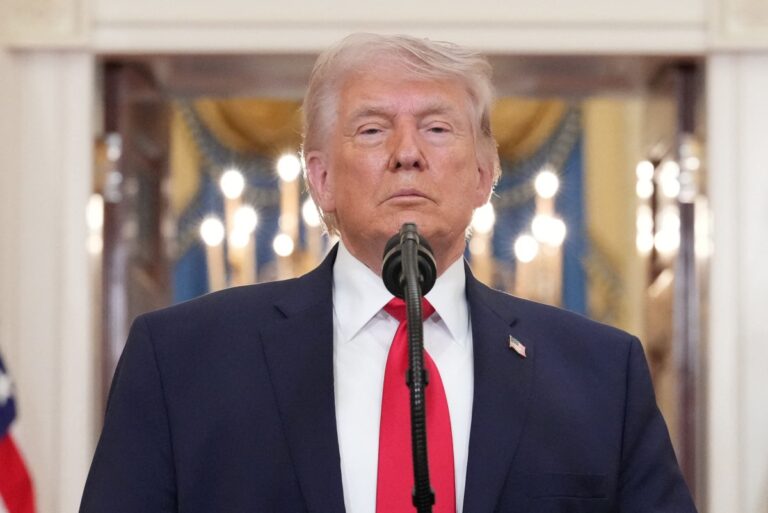
European Council President Antonio Costa, Britain’s Prime Minister Keir Starmer and European Commission President Ursula von der Leyen host a joint press conference during the UK-EU Summit at Lancaster House in London on May 19, 2025.
Carl Court / POOL / AFP
The United Kingdom and the European Union are moving in parallel when it comes to tobacco regulation. London’s proposed Tobacco and Vapes Bill—which introduces a “generational smoking ban”—has drawn the attention of Brussels not only because of its public health implications, but because it could breach post-Brexit agreements governing Northern Ireland. The case illustrates how, despite leaving the EU, British law in some areas remains intertwined with European frameworks.
Originally introduced in 2024 by the Conservative government of Rishi Sunak, the Tobacco and Vapes Bill was taken up by the Labour government following its election victory. The measure’s main objective is to create a “smoke-free generation” by prohibiting the sale of tobacco products to anyone born after 1 January 2009. That means a 16-year-old in 2025 will never be legally allowed to purchase tobacco, even once they reach adulthood.
According to the Department of Health and Social Care, the ban aims to “protect children from the harms of smoking” and “reduce pressure on the NHS.” The government argues that tobacco remains the UK’s leading cause of preventable illness and death, costing the public health system an estimated £17 billion per year.
The bill also tightens rules on vaping, introducing restrictions on flavours, packaging, and marketing. Ministers say these measures are designed to prevent nicotine addiction among teenagers, whose vaping rates have tripled in the last three years.
The bill’s most complicated aspect arises in Northern Ireland, where the Windsor Framework—the 2023 post-Brexit agreement between London and Brussels—requires alignment with parts of the EU Single Market. Annex 2 of the Framework lists the EU Tobacco Products Directive (TPD2) as one of the laws still applicable in Northern Ireland.
The TPD2 sets EU-wide standards for the manufacture, presentation, and sale of tobacco products, but it does not permit member states to ban legal sales to adults. If the Tobacco and Vapes Bill were to apply in Northern Ireland, it would therefore exceed what is allowed under TPD2 and breach the Windsor Framework.
Because of the Windsor Framework’s trade obligations, the UK was required to notify the European Commission through the Technical Regulations Information System (TRIS) before formally adopting or enforcing the law. The TRIS mechanism allows member states—and, in this case, the EU—to review proposed national measures that may affect trade within the internal market.
Precedents suggest that the Commission takes a restrictive view of national prohibitions. Denmark, for example, attempted a similar generational ban in 2022 but withdrew it after the Commission signalled that such a measure would conflict with the Single Market.
Different legal regimes on opposite sides of the Irish Sea could create a two-tier system. England, Scotland, and Wales would ban tobacco sales to future generations, while Northern Ireland—still bound by EU law—might not.
Retail groups warn this gap could fuel cross-border trade and complicate enforcement along the Irish border. Dublin has also acknowledged that a generational ban might “raise compatibility issues” with EU Single Market rules if implemented unilaterally.
The policy would also split citizens by birth year: those born before 1 January 2009 could buy tobacco for life, while younger generations would be permanently barred. Legal experts suggest this could invite challenges under the UK Equality Act 2010, which prohibits age-based discrimination.
Legal tobacco sales fell 41% between 2022 and 2024, yet smoking rates remained stable. Officials cite changing habits and anti-smoking campaigns, but industry observers point to a growing illicit market, now estimated to supply nearly one in six cigarettes.
In Australia, where strict controls and plain packaging were introduced, the illegal trade is valued at around A$5 billion, with authorities linking it to organised smuggling and over a hundred attacks on licensed retailers. Public health groups note that youth smoking has declined, even as black-market activity persists.
The tobacco issue comes at a politically sensitive time in UK–EU relations. The Windsor Framework was designed to stabilise Northern Ireland and preserve the 1998 Good Friday Agreement by avoiding a hard border. Any British action that appears to override or ignore EU-aligned obligations risks reigniting political tensions in the region.
Brussels, for its part, is cautious not to be seen as interfering in UK domestic policy while still defending the integrity of the Single Market. Senior Commission officials have emphasised that the EU’s role is “purely procedural” within the TRIS framework, though privately acknowledge that the outcome could set a precedent for other public health measures under post-Brexit arrangements.
As of late 2025, the Tobacco and Vapes Bill continues its passage through Parliament, with the government indicating that it intends to proceed despite the TRIS standstill period. Implementation will depend on negotiations with Brussels and potential legal adjustments to ensure compliance in Northern Ireland.
The debate underscores the enduring complexity of post-Brexit governance: even after leaving the European Union, the UK’s domestic legislation can still fall under EU scrutiny where Northern Ireland is concerned.For now, London and Brussels remain bound by the same regulatory logic—proof that Brexit has changed the relationship, but not the reflex.