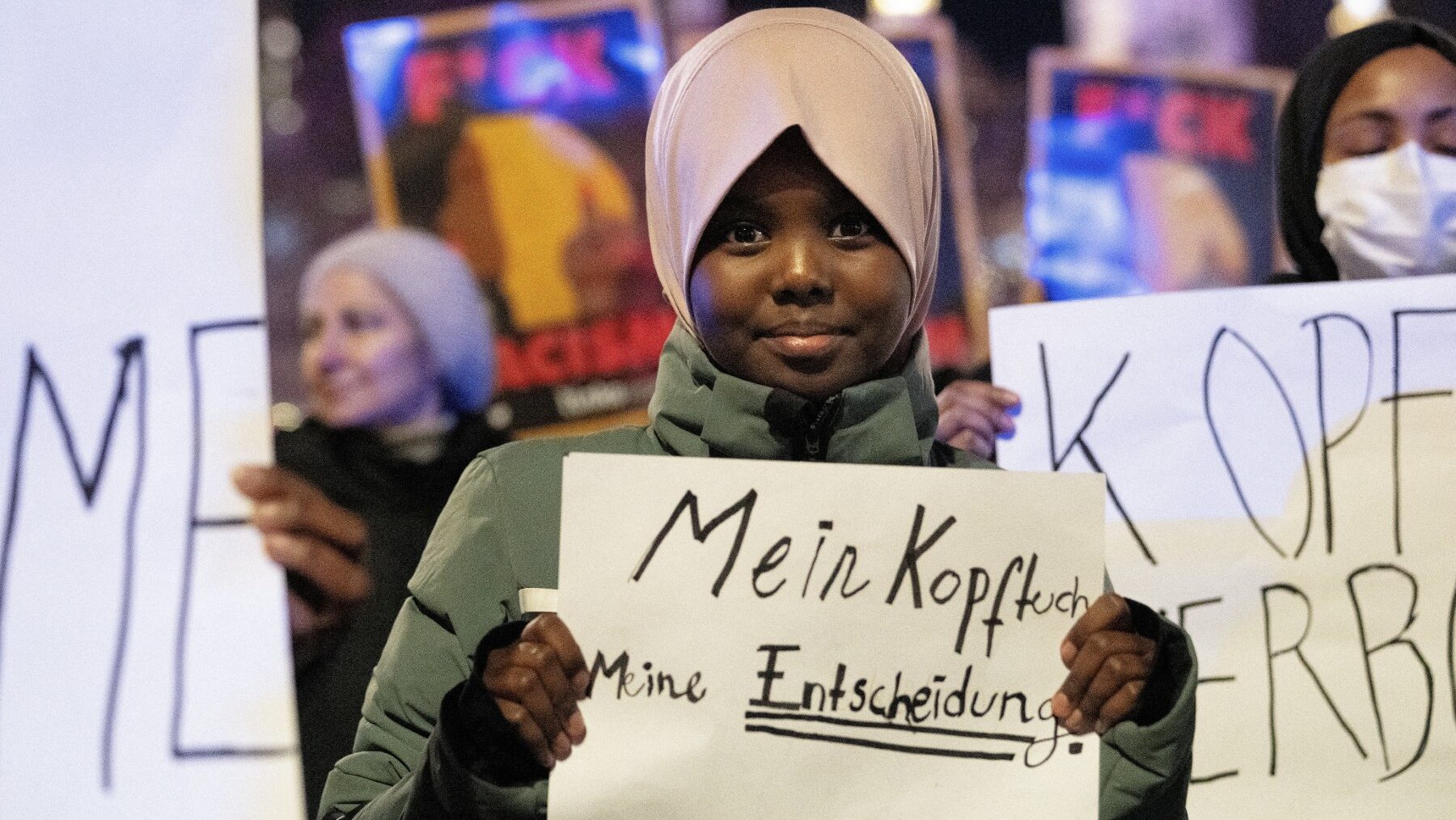
Several Muslim communities in Austria have said they intend to ignore a new ban on Islamic headscarves for girls under 14, raising fears of confrontation in schools when the new school year begins.
The ban takes effect on September 7th in Vienna, Lower Austria, and Burgenland, with the remaining federal states following a week later.
It is estimated that up to 12,000 pupils could be affected nationwide.
Paul Kimberger, chairman of the Christian trade-union teachers’ association, warned that schools could face significant disputes with parents and community leaders.
While supporting the ban as a measure against political Islam, he said teachers and headteachers must not be left to deal with potentially hostile families on their own.
It makes little sense for a headteacher to speak to the father of a girl who is a Salafist. Talking to a Salafist about the headscarf ban is unlikely to achieve anything.
Under the new rules, teachers must report violations but cannot forcibly remove a girl’s headscarf. Initially, the school leadership must speak to the pupil and her parents. If the breach continues, the relevant education authority becomes involved. Persistent refusal to comply can eventually result in administrative fines of between €150 and €800 for parents.
The education ministry has issued guidance stating that the regulation is legally binding and that schools have no choice over whether to enforce it.
Former teacher and author Susanne Wiesinger has backed the ban, citing cases of girls facing pressure over Islamic dress codes.
The girls do not do it of their own free will, but because they want to please others, because their families put pressure on them, because they want to provoke, or because they want to be good Muslims.
The debate over the ban and political Islam in general is being widely discussed in Austrian media.
Conservative outlet Exxpress cited a recent French government report which described the headscarf as having been turned into a political symbol in some Islamist movements.
German Islam researcher Susanne Schröter, who studied ten schools in Berlin-Neukölln, documented cases in which girls were criticised, excluded, threatened, or bullied over clothing considered insufficiently Islamic.
For supporters of Austria’s new law, such developments reinforce the argument that the state should intervene before religious or ideological expectations become entrenched among children.
Reports of Muslim communities rejecting the headscarf ban should come as no surprise.
A recent study in Vienna found that 41% of Muslim respondents aged 14–21 agreed that religious rules should take precedence over Austrian law, compared with 21% of Christian respondents.
In addition, 65% of Muslim youths said Islamic rules should apply strictly to all aspects of daily life, while more than half supported Muslim women wearing headscarves in public.
The first weeks of the new school year will show whether Austria can enforce the legislation without turning classrooms into battlegrounds.