Norway’s King Harald V, Europe’s oldest reigning monarch, has died at the age of 89 after a 35-year reign, the Norwegian royal palace announced on Friday August 28th. His son, Crown Prince Haakon, 53, has succeeded him as King Haakon VIII and formally announced his accession at an extraordinary Council of State on Friday.
“It is with deep sadness that we announce that His Majesty King Harald passed away today. King Harald passed away peacefully at Oslo University Hospital on Friday, August 28 at 6:35 a.m.,” the palace said in a statement.
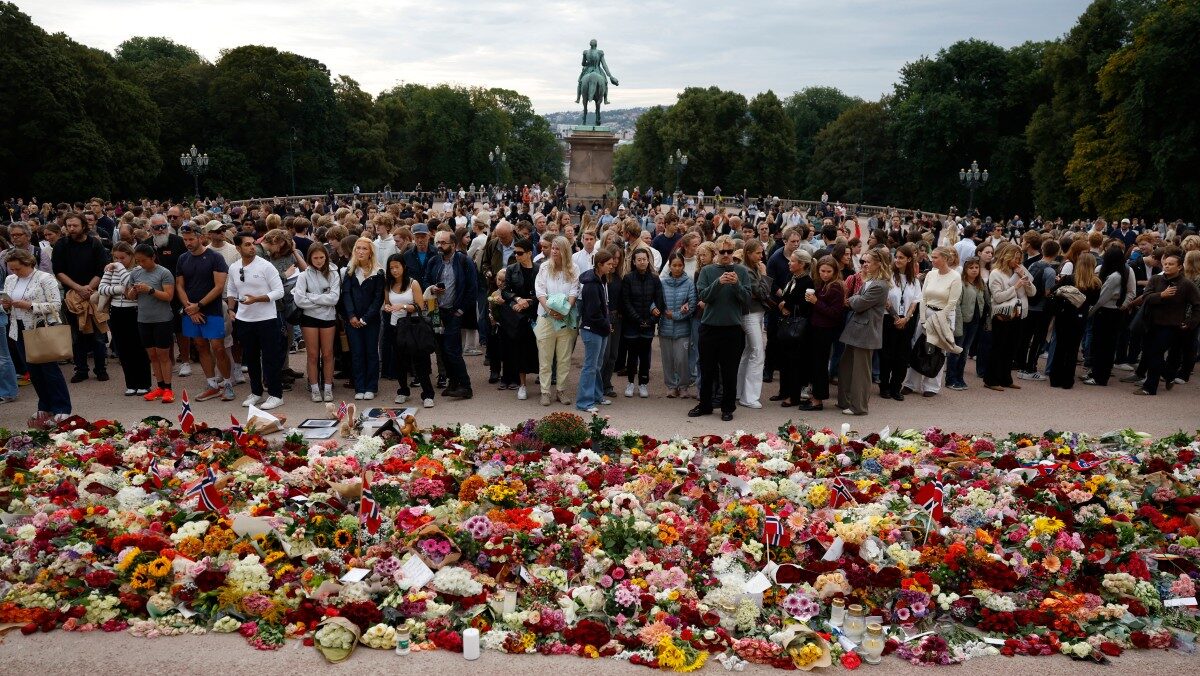
The royal standard on the roof of the palace in Oslo was lowered to half-mast as crowds of mourners gathered to lay flowers and flags. Norway has declared a period of national mourning.
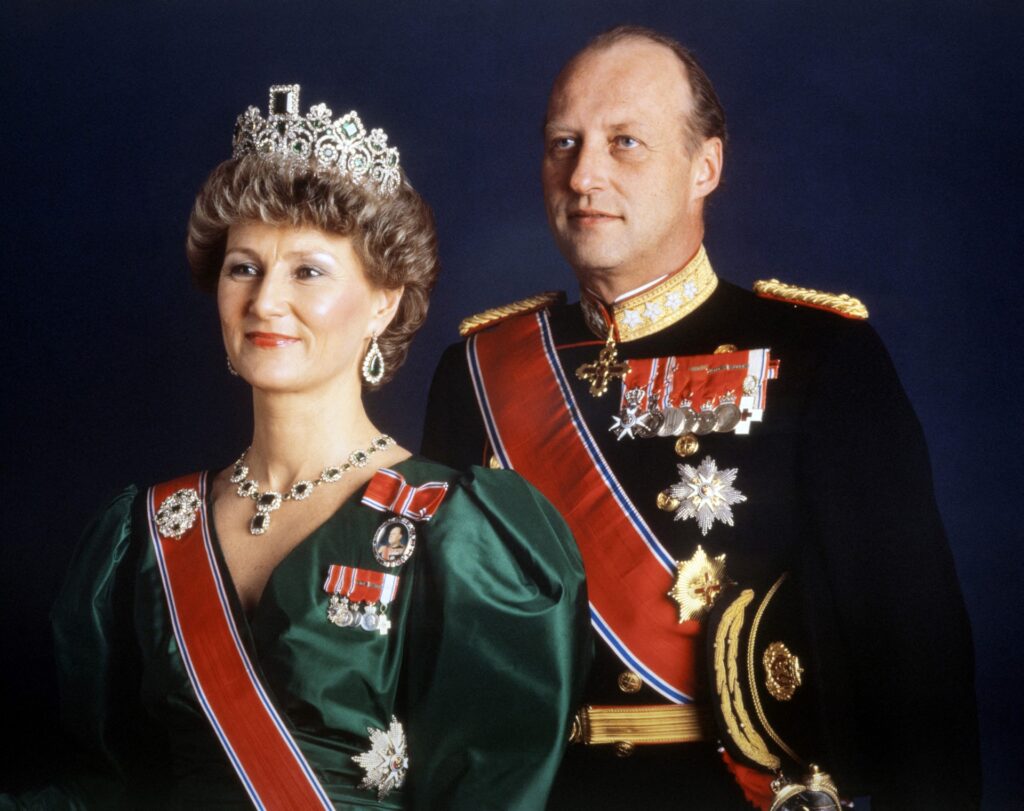
King Harald was widely regarded as the embodiment of the open, tolerant and modest Norway that emerged during his reign. Prime Minister Jonas Gahr Støre said the king had accompanied the country through decades of enormous change, during which Norway “grew richer, we became more numerous, and we became more diverse.”
European Commission President Ursula von der Leyen described Harald as a “true European” who had served his country “with warmth, humility and an unwavering sense of duty.”
Harald also became a prominent advocate of an increasingly diverse Norway. In a 2016 speech, he embraced people of different religions, ethnicities and sexual orientations. He said Norwegians came from “Afghanistan, Pakistan, and Poland, from Sweden, Somalia, and Syria”, that they “believe in God, Allah, the Universe, and nothing”, and that they “are girls who love girls, boys who love boys, and girls and boys who love each other.”
Harald was also credited with modernising the Norwegian monarchy, including by marrying Sonja Haraldsen, a commoner, in 1968 after a nine-year courtship. He became king in 1991 following the death of his father, Olav V.
His ability to unite Norwegians was particularly evident after the July 22, 2011 terrorist attacks, when far-right extremist Anders Behring Breivik killed 77 people in Norway’s worst massacre since World War II. Harald’s response became a defining moment of his reign as a king who could speak to the country in moments of crisis.
Thousands of Norwegians gathered outside the palace on Friday despite heavy rain, laying down flowers, cards and national flags. “He was the king of the people,” mourner Kristoffer Hamre told AFP. Another mourner, 65-year-old Vigdis Haug, praised Harald as a “down-to-earth king” whose speeches were “wise and so valuable.”
Harald also remained committed to the throne despite his deteriorating health. His final years were marked by repeated hospitalisations and a reduced official schedule, but he rejected calls to abdicate, saying he had taken a lifelong oath before the Norwegian parliament. He had been in Oslo University Hospital since August 17 suffering from hemolytic anemia, a condition caused by the rapid destruction of red blood cells.
Harald’s final years were also marked by controversy surrounding his family. His son Haakon’s wife, Crown Princess Mette-Marit, has faced scrutiny over her association with convicted sex offender Jeffrey Epstein, while her son from a previous relationship, Marius Borg Høiby, was convicted in June of 34 offences, including two counts of rape, and sentenced to four years in prison. He has appealed. Harald’s daughter Princess Märtha Louise has also attracted controversy over her commercial activities and marriage to American spiritualist Durek Verrett.
The events surrounding the royal family have contributed to declining support for the monarchy. One poll by the Norwegian newspaper Aftenposten found that support had fallen from 72% in 2024 to 54%. However, criticism was rarely directed personally at Harald. “He was someone who always seemed to find the words that brought us together and gave us a sense of security,” Caroline Vagle, a reporter for Norwegian celebrity magazine Se og Hør, told AFP. She said she was left with the impression that “everyone has loved King Harald.”