MEP András László
@PfEFoundation on X, 30 September 2025
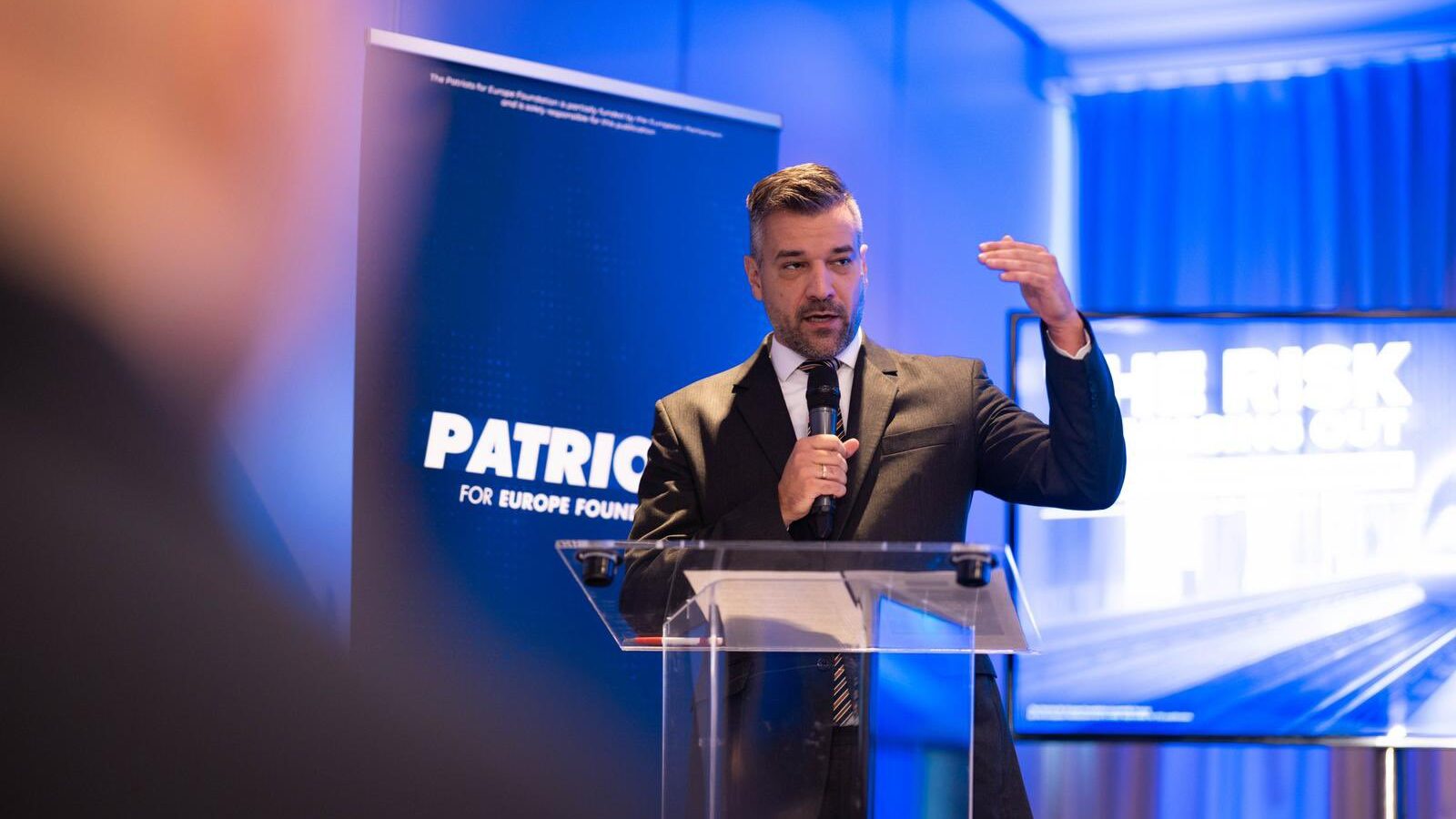
On September 30th in Brussels, the Patriots for Europe Foundation hosted a high-stakes conference titled “The Risk of Missing Out—How Will AI Transform Europe?” Bringing together lawmakers, academics, and international experts, the event tackled an urgent question: Can Europe keep pace in the global AI race? As the United States and China surge ahead, the European Union risks locking itself into a regulatory maze that stifles innovation and curtails free speech.
The opening panel highlighted the growing weight of EU frameworks such as the AI Act, the Digital Services Act, and the GDPR. Engineer and analyst Aurelio Mustacciuoli warned that this proliferation of rules is turning AI into “an instrument of control rather than development.” Drawing on his experience as an entrepreneur, he said small firms now spend more on compliance than on innovation.
Former British MP Ian Liddell-Grainger echoed this, recalling that past attempts to regulate technological revolutions—from email to smartphones—always failed. “Trying to control AI will be useless,” he said, urging European conservatives to unite to “stop the stupidity” in Brussels.
Belgian regulatory expert Philippe Defraigne pointed out that the AI Act had imposed obligations on general-purpose models such as ChatGPT, which were not initially foreseen. In his view, technical standards are still absent, leaving companies without the clarity they need to adapt.
The second panel turned to freedom of expression on social media, examining how algorithms combined with new EU laws are reshaping the digital public sphere.
French MEP Virginie Joron (Rassemblement National) accused the European Commission of outsourcing censorship to major platforms under vaguely defined terms such as ‘hate speech’ or ‘disinformation.’ She cited the Twitter Files in the U.S. as proof of how governments pressured companies to silence dissenting voices.
British sociologist Norman Lewis went further, describing European ‘pre-bunking’ projects—anticipating narratives before they spread—as nothing less than a “predictive censorship engine.” “This is no longer just about controlling speech; it is about conditioning thought itself,” he warned.
Spanish MEP Hermann Tertsch (VOX) argued that such policies reveal the elites’ fear of losing ground to rising sovereigntist parties. “They want to steal our reality with official narratives detached from people’s everyday lives,” he said.
Flemish MEP Tom Vandendriessche (Vlaams Belang) added that the EU had turned large platforms into official censors under the Digital Services Act. “The problem is not only Silicon Valley’s power but that Brussels has chosen to outsource censorship to those same companies, sacrificing citizens’ rights.”
Beyond censorship, participants also raised competitiveness concerns. Danish MEP Anders Vistisen (Danish People’s Party) stressed that while the U.S. innovates and China copies at speed, Europe confines itself to regulation. “We cannot afford to miss another technological revolution after already losing out in software, hardware, and social media,” he cautioned. He added that Europe’s high energy costs, exacerbated by the EU’s green agenda, have already become a critical barrier to AI development.
In his closing remarks, Foundation president András László called for closer cooperation with American partners. Defending free speech and democracy against the misuse of AI, he said, “will only be possible if Europe and the United States work together.”
The Brussels event underscored a deeper divide within the EU. On one side, the European Commission is positioning itself as the arbiter of digital truth, multiplying agencies and oversight bodies. On the other hand, there are strong voices calling for pluralism, deregulation, and trust in citizens’ capacity to decide for themselves.
The issue, participants argued, is not technical but political: will Europe choose to innovate and defend freedom, or entrench itself in bureaucracy that suffocates both? At stake is not only technological leadership but the very essence of Europe’s democracies.