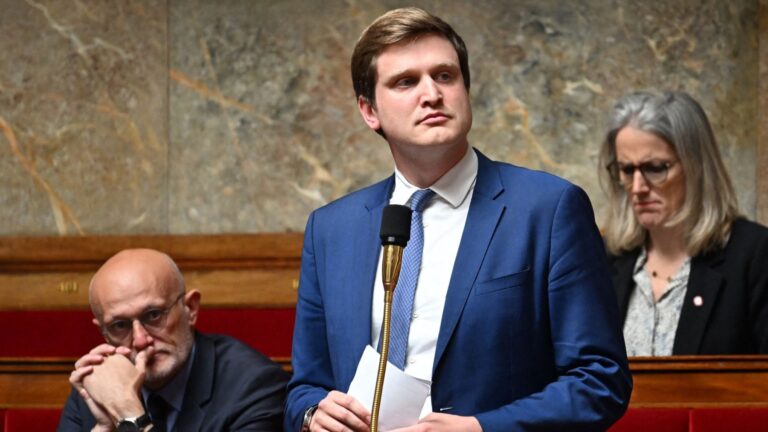
EU Commission President Ursula von der Leyen.
John Thys / AFP
After more than two years of deliberation, the General Court of the European Court of Justice (ECJ) ruled on Wednesday, May 14th, that the European Commission was wrong to refuse access to private text messages exchanged between Commission President Ursula von der Leyen and Pfizer CEO Albert Bourla, through which the two negotiated the EU’s largest and most wasteful joint procurement—up to 1.8 billion COVID-vaccine doses.
The Commission can still appeal the court’s decision—and probably will—so European taxpayers may not immediately get an answer as to whether Pfizergate really was “the biggest corruption scandal in human history.” (You can read our comprehensive Pfizergate explainer for more details here.)
Nonetheless, the landmark ruling has implications far beyond vaccines and money. It’s about finally holding the EU elite accountable to their own transparency standards, representing a chance to begin dismantling an anti-democratic culture of secrecy and systemic obstruction in Brussels.
In principle, all documents of the EU institutions related to decision-making “should be accessible to the public,” the ECJ wrote in its explanatory statement. This sentence is a victory in itself, as both the EU Ombudsman and the EU Court of Auditors (ECA) have frequently accused the Commission of systemic shortcomings in responding to freedom of information (FOI) requests—usually by refusing or delaying replies without correct justification.
It was von der Leyen herself who unwittingly revealed the existence of the Pfizer texts while bragging about her personal negotiating skills to The New York Times in early 2021. This triggered the news site’s FOI request and subsequent lawsuit. The Commission first tried to deny that the exchange took place, then claimed the texts had been accidentally lost or deleted.
The Court found these arguments to be “based either on assumptions or on changing or imprecise information,” they wrote in the statement. “By contrast, Ms Stevi [the journalist who requested the texts] and The New York Times have produced relevant and consistent evidence describing the existence of exchanges, … [and] succeeded in rebutting the presumption of non-existence and of non-possession of the requested documents.”
Furthermore, the ECJ noted that the Commission not only failed to explain why it did not have the texts, but also failed to demonstrate that it was even looking for them. It also failed to prove that their supposed deletion was accidental, and not deliberate.
Finally—and perhaps most importantly for the future—the Court found that the European Commission failed to justify its claim that the text messages about negotiating nearly two billion COVID-19 vaccine doses on behalf of EU taxpayers contained no information of public interest that would warrant disclosure.
Therefore, the ECJ considered the NYT’s complaint “well-founded” and declared the FOI rejection annulled. The European Commission “must fill any legal vacuum created by the annulment of the act,” it said, meaning it should disclose the texts as soon as possible.
Of course, von der Leyen is unlikely to give up now. A General Court ruling can be appealed within two months of the verdict, but the Commission would have to prove that the court misinterpreted EU law to stand a chance before the highest legal body, the Court of Justice of the EU (CJEU).
It’s worth remembering that the ECJ already ruled against the Commission in another case linked to ‘Pfizergate,’ ordering it to release the classified contracts personally signed by von der Leyen for up to 4.6 billion vaccine doses—roughly ten for every European—at a cost of around €71 billion. Most of these were never used and ended up in landfill. The exact price taxpayers paid, as well as other details, are still unknown, as the Commission’s appeal is pending at the CJEU at the moment.
A separate civil lawsuit filed in Belgium against von der Leyen over the withheld texts also failed earlier this year. The Liège court said the complainants—who, by the end included over 1,000 individuals, NGOs, transparency watchdogs, and even two member states—failed to demonstrate “personal harm” resulting from the Commission chief’s actions.
The lawyers involved in the Belgian case claim the verdict was influenced by political pressure coming from the top, and there’s good reason to believe the Commission will do everything in its power to pressure the CJEU to make a similar decision.
But for now, Wednesday’s ECJ decision is still a major step in the right direction. Whatever the end of this saga will be, Ursula von der Leyen will never get rid of the stain that Pfizergate has left on her presidency, and the scandal will remain a potent symbol of the never-ending fight for democracy and transparency in Brussels.