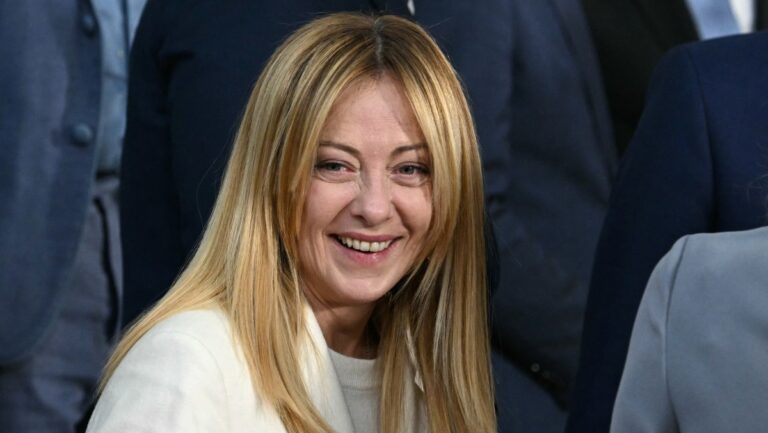
Poland’s new president Karol Nawrocki
Wojtek Radwanski / AFP
Polish President Karol Nawrocki has vetoed a bill extending the existing social benefits for Ukrainian citizens residing in Poland, arguing that public finances and “political and social emotions have changed” since the measure was introduced more than three years ago.
The veto concerns the ‘800+’ benefit—a flagship pro-demographic program that provides families with 800 zlotys (around €180) per child each month. Initially extended to Ukrainian refugees after the Russian invasion in 2022, the program was meant to guarantee stability for families displaced by the war. Poland, which welcomed at least a million Ukrainians, became one of the most generous supporters of Kyiv in both humanitarian and military terms.
In a statement reported by Do Rzeczy, Nawrocki explained that the situation today is different. The law proposed three and a half years ago should be amended today. The 800+ benefit should only be granted to refugees from Ukraine who work and pay taxes. The same should apply to healthcare.
The president highlighted that, under the current framework, Ukrainian citizens enjoy access to healthcare regardless of employment or contributions to the National Health Fund. “If we look at healthcare and notice a certain preference for Ukrainians compared to Poles, then we find ourselves in a situation in which Polish citizens are treated worse in their own country than our guests from Ukraine,” he said. He also proposed tightening the path to citizenship by increasing the residency requirement from three to ten years.
At the same time, Nawrocki insisted that Poland’s strategic commitment to Ukraine has not changed. “We are still a nation open to help. And that remains unchanged. Nor does our strategic goal—Poland’s interest is to militarily support Ukraine in this conflict, because the Russian Federation is a threat to the world.”
The president’s stance drew praise from right-wing MPs. Law and Justice (PiS) parliamentarian Janusz Kowalski hailed the veto, declaring, “Poland is for Poles! No privileges [for] temporary guests in our Polish home.” Confederation’s Michał Wawer added that it was “high time to end the privileged treatment of Ukrainians in healthcare” and argued that refugee assistance “should be rational, well-thought-out, and well-targeted.”
However, the veto sparked concerns about unintended consequences, particularly regarding Poland’s financing of Starlink services for Ukrainian forces. Starlink, the satellite internet network crucial for communications on the battlefield, has partly been covered by Polish funds. Deputy Prime Minister and Digital Affairs Minister Krzysztof Gawkowski warned that “this is the end of Starlink internet, which Poland provides to Ukraine as it wages war.”
Observers note that the issue could be resolved by separating military and technological aid from civilian welfare measures. Nawrocki’s office has already suggested preparing a revised bill to clarify this distinction.
For now, the president’s intervention marks a turning point: Poland continues to position itself as a frontline supporter of Ukraine against Russia, but at the same time is recalibrating its domestic policy to ensure that solidarity abroad does not overshadow fairness at home. The balance between these two priorities—national welfare and international responsibility—will likely remain a central theme in Polish politics in the months ahead.