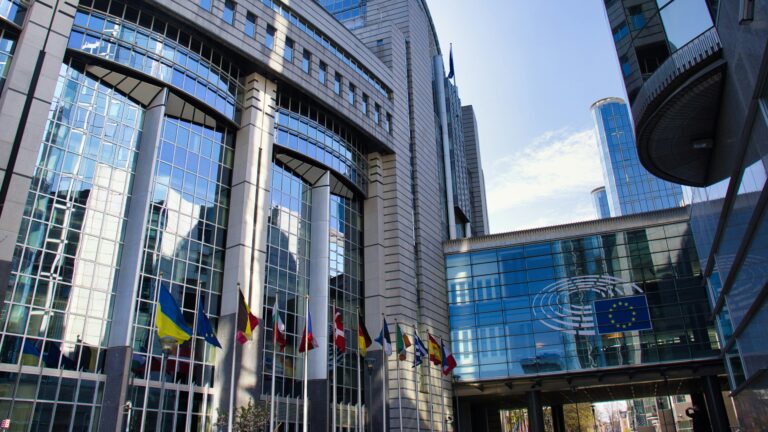
Brussels is taking a major step in defense. After months of warnings about “Europe’s vulnerability,” the European Commission has unveiled a roadmap to reach “full military readiness” by 2030. The plan includes ambitious projects like the European Space Shield and an anti-drone wall along the EU’s eastern border. Commission President Ursula von der Leyen called the initiative a “necessary response” to “growing threats,” pointing to the need to prepare for a potential conflict with Russia. The European Commission President stressed that “Europe must defend every square centimeter of its territory,” referring to recent drone incursions into the airspace of Poland, Germany, and Denmark. Von der Leyen made it clear that defense will be one of the pillars of the next multiannual financial framework (2028–2034), with a combined budget of 131 billion euros for defense and space.
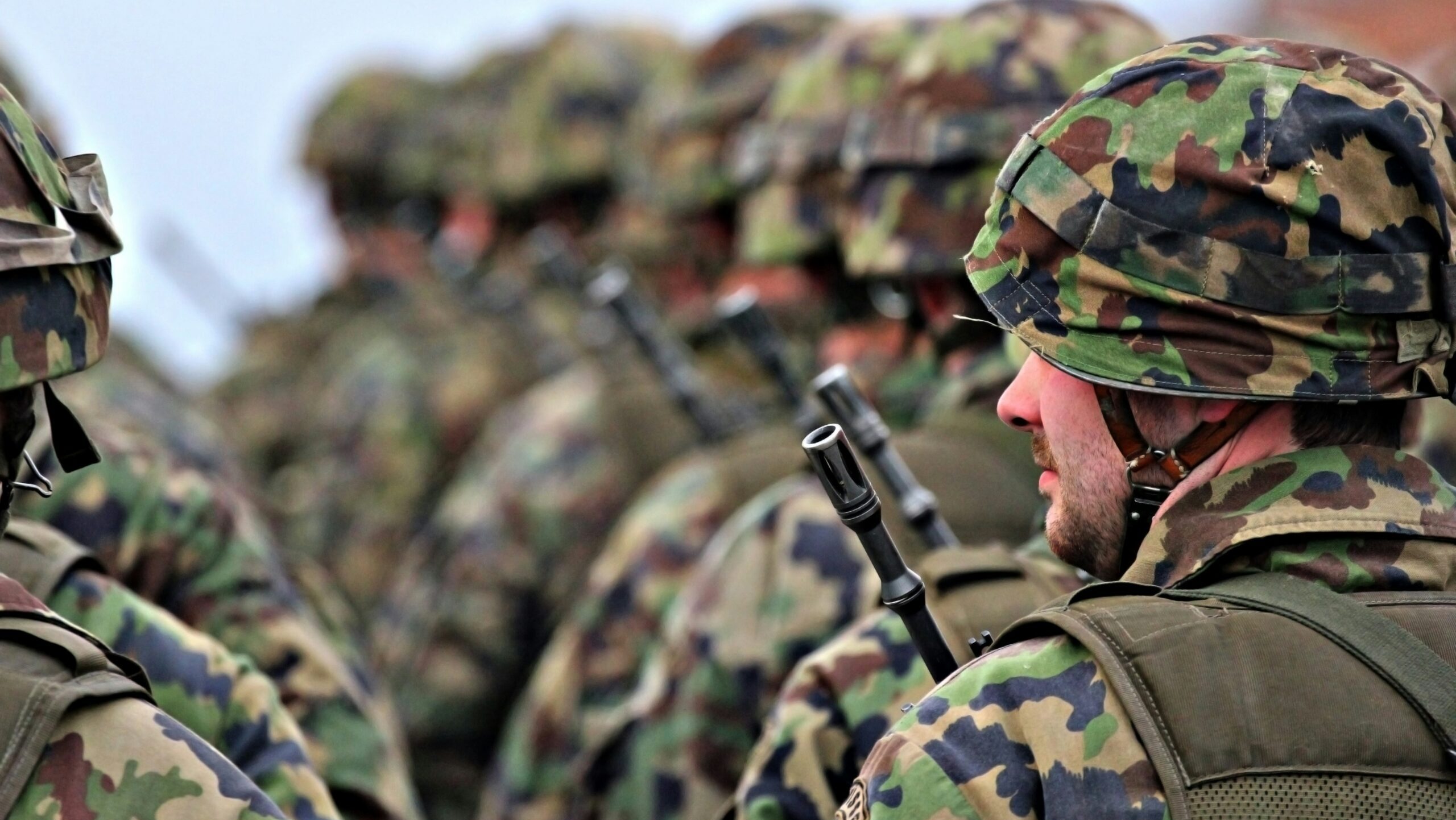
However, Brussels’ ambitious plans do not stop at the EU level. While the Commission is urging member states to move collectively toward “full military readiness,” many European countries are starting to prepare on their own. In recent months, several governments have decided to reconsider, or even partially restore, compulsory military service. In many parts of the continent, the issue of conscription has been put on the agenda. The move is a clear sign that Europe is preparing for war, not only at the level of the common defense policy but also through national initiatives.
Germany’s coalition government of the center-right CDU/CSU and the Social Democrats (SPD) has also reached a compromise on the reintroduction of military conscription. Under the new system, every young man will receive a letter with a QR code after his 18th birthday, leading to an online questionnaire that must be completed. According to Germany’s defense ministry, the measure will take effect on January 1, 2026. Starting from July 1, 2027, those who complete the form will undergo a mandatory medical examination to assess fitness, aptitude, and potential deployment roles. Women will remain exempt from the process, though they can still volunteer. The ministry said the medical examination is intended to expand the overall picture of who would be available in the event of an “emergency.”
The German Ministry of Defense said in a statement that
The new military service opens up the possibility of making a personal contribution to Germany’s security, even with short periods of commitment of six months or longer.
AfD defense spokesman Rüdiger Lucassen has criticized both governing parties, saying they were “playing with the possible deployment of German soldiers in Ukraine.” He said that while the AfD supports the reinstatement of conscription to secure the operational readiness of the armed forces, they oppose “any interventionist foreign policy beyond NATO territory.”
France, meanwhile, aims to more than double the size of its reservist force as part of a broader military buildup. Although the country abolished conscription in 1996, President Emmanuel Macron introduced the Service National Universel (SNU) in 2019—a one-month program for young people aged 15 to 17, blending military-style discipline with civic and social training.
However, the reintroduction of conscription is not yet on the agenda in France due to a lack of financial resources and political support. Instead, Paris is focusing on expanding its reserve forces, which are expected to grow from 46,000 to 105,000 by 2035.
Since Russia’s invasion of Ukraine, Poland has also been determined to strengthen its army, aiming to increase its strength from NATO’s estimate of 216,100 in 2024 to 300,000 soldiers by 2035. Moreover, the government has introduced military training in high schools, with children aged between 14 and 16 learning about national security, rescue work, and first aid. Warsaw’s message is clear: national defense must begin with education.
Sweden reintroduced conscription in 2017. All 18-year-olds must register online and provide their personal details to the army, with around 5-10% called up for service. Since late 2023, Stockholm has also launched compulsory civilian service but only in key sectors such as municipal rescue service and electricity supply.
In Denmark, military service is mandatory for 18-year-old men and, from July 2025, for 18-year-old women. Basic military service previously lasted only four months but will be extended to 11 months from 2026, reflecting rising security concerns similar to those voiced in Berlin.
Latvia also reinstated the procedure in 2023, under which all men aged 18 to 27 must serve for 11 months, while women can volunteer. The Latvian government plans to increase its army from 22,000 to 50,000 by 2027.
Croatia has also joined the wave of reinstatements, after parliament approved the return of conscription on October 24. Authorities plan to begin summoning citizens born in 2007 for medical examinations by the end of the year.
Beyond the major powers, countries like Austria, Finland, Norway, Estonia, Lithuania, Greece, and Turkey also retain some form of conscription. Taken together, the U.S.-backed push for higher NATO defense spending and the EU’s accelerated military buildup point to one conclusion: Europe is entering a new era of rearmament—a quiet but unmistakable arms race across the continent.
Lukács Fux is currently a law student at Pázmány Péter Catholic University in Budapest. He served as an intern during the Hungarian Council Presidency and completed a separate internship in the European Parliament.