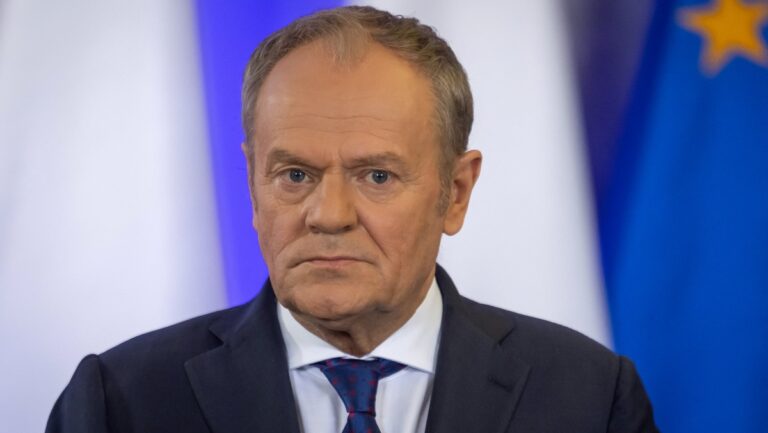
Ukraine’s President Volodymyr Zelensky holds a press conference in Kyiv on May 13, 2025.
Photo: Genya SAVILOV / AFP
Vladimir Putin chose not to attend peace negotiations in Turkey on May 15th, despite the presence of Ukrainian President Volodymyr Zelensky and the diplomatic support of Ankara and Washington. His absence cast doubt on the possibility of resuming direct dialogue between the warring sides for the first time since 2022.
Although the Kremlin had announced that talks would take place in Istanbul, the Russian delegation was composed solely of second-tier officials: a presidential adviser, a deputy defense minister, a deputy foreign minister, and the head of military intelligence. Upon arriving in Ankara, Zelensky described the delegation as “decorative” and warned that Ukraine would not make any decisions until it is clear whether these envoys have real authority to negotiate. “If there is no ceasefire and no serious decisions, we call for appropriate sanctions,” he declared at a press conference alongside Turkish President Recep Tayyip Erdoğan.
Meanwhile, Russia insisted that its team was “ready to work,” but without offering any clear indication that Putin was willing to personally engage. Kremlin spokesman Dmitry Peskov said only that it was “too early” to confirm whether the president would take part in future rounds. Confusion extended to the venue itself, where more than 200 journalists waited near the Dolmabahçe Palace with no certainty about whether the meeting would go ahead.
Putin’s staying away was widely interpreted as a clear signal of political unwillingness. From Paris, French Foreign Minister Jean-Noel Barrot stated that “Zelensky has shown good faith by attending, but there is an empty chair where Putin should be.” Russia’s stance was reinforced by military gestures: that same day, Moscow announced the capture of two additional settlements in the Donetsk region. The spokesman for Russia’s foreign ministry reminded reporters that “Ukraine is getting smaller” in the absence of an agreement, which is also true.
Zelensky proposed an immediate 30-day ceasefire, while Russia insisted on first negotiating the terms of any truce. Moscow maintains its long-standing demands: recognition of the annexed territories, Ukraine’s permanent neutrality, and renunciation of NATO membership aspirations. Kyiv rejects these terms as tantamount to capitulation and is seeking international security guarantees, especially from the United States.
U.S. President Donald Trump—currently touring the Gulf—added to the confusion by stating that “nothing is going to happen until Putin and I get together.” His remark, made aboard Air Force One before landing in Dubai the previous day, appeared to undermine any diplomatic initiative not involving him directly.
Meanwhile, European leaders seem more concerned with photos than with a realistic resolution of the conflict—beyond messages that are empty gestures rather than concrete proposals.