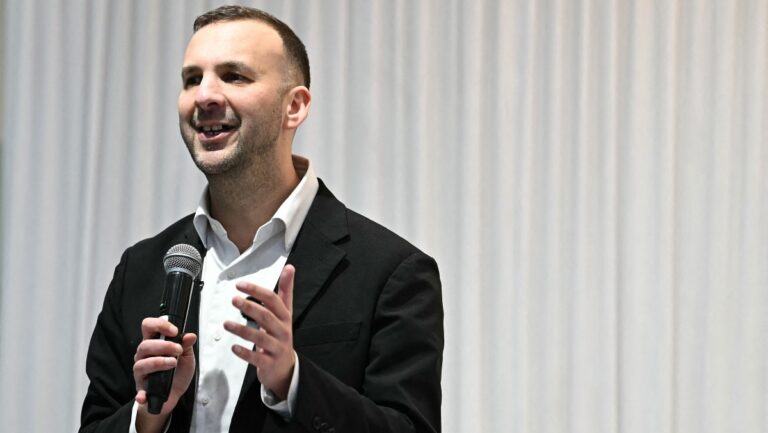
A screenshot from the television interview with Pedro Sánchez on September1, 2025
Spanish Prime Minister Pedro Sánchez returned to television after a year of silence. Speaking in prime time on a left-leaning TV channel on Monday, September 1st, the beleaguered Socialist PM appeared calculated and at unease, regurgitating his tired old mantras, like ecological transition, interterritorial solidarity, and the fight against inequality.
When asked about the slim chances of the draft budget his unpopular government would present in parliament passing, he confirmed that, should the budget be axed by the opposition, he would continue governing with the extended 2023 budget, and ruled out calling early elections, arguing it would put the country “into paralysis.” This is in stark contrast with his position in 2018, when he demanded that Mariano Rajoy submit to a vote of confidence after failing to pass his budget.
The PM was also asked about the apparent normalization of Catalan separatism. Speaking about Tuesday’s meeting in Brussels between Salvador Illa and Carles Puigdemont, Sánchez said “I think it’s the right thing to do.”
The whitewashing of the Catalan separatist leader was presented under the euphemism of “institutional normalization,” although the most widespread reading is that of “political calculation.” Sánchez avoided admitting it, but smiled when the interviewer suggested a direct link between Illa’s meeting and the need for parliamentary support.
Another of the tensest moments came when he addressed the legal cases against his wife, Begoña Gómez; his brother, David Sánchez; and the attorney general, Álvaro García Ortiz. The president proclaimed the innocence in all three cases and accused certain judges of “doing politics,” which in his view causes “terrible damage” to democracy. “This is a textbook case of trial by media,” he declared, seeking to portray the proceedings as political persecution.
He even called on the General Council of the Judiciary to reflect on how to avoid “flawed proceedings, in substance and form.” This intervention escalated institutional confrontation at a time when his own government is under corruption suspicion and former close collaborators of Sánchez, such as former party secretaries José Luis Ábalos and Santos Cerdán, are at the center of judicial investigations.
The president’s final message was clear: he will resist with whatever support he can weave together and, if he fails, will govern with what he already has. Sánchez is clearly determined to prolong his mandate at all cost, without committing to the political responsibility he once demanded when in opposition.