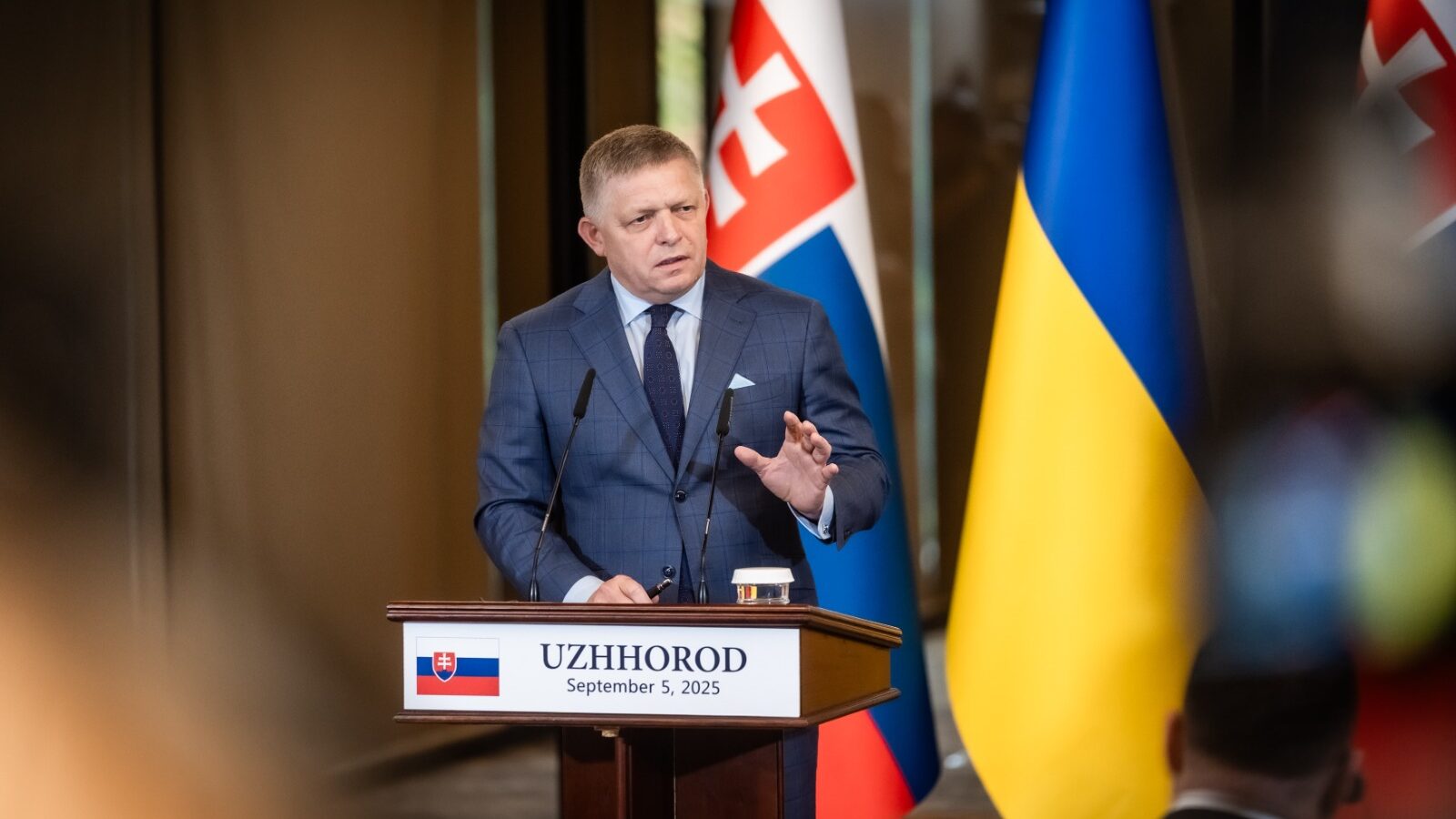
Robert Fico on Facebook, 5 September 2025
A new round of European Union sanctions against Russia has hit a dead end after Slovakia and Austria refused to give their approval, exposing once again the widening cracks within the bloc over its Russia and Ukraine policy.
Slovak Prime Minister Robert Fico used his veto to block the 19th sanctions package, insisting that the EU must first address what he calls its “fundamental challenges”—high energy costs and a deepening crisis in the automotive industry.
Austria, meanwhile, has sought compensation for losses suffered by its Raiffeisen Bank International in Russia, further complicating the negotiations.
The sanctions package, under discussion for nearly a month, targets Russia’s liquefied natural gas (LNG) sector, oil infrastructure, ‘shadow fleet’ of tankers, cryptocurrency platforms, and the movement of Russian diplomats across the bloc.
Diplomats in Brussels say all technical details have been agreed upon, but the deal remains blocked by the two countries’ objections.
After speaking with European Council (EC) President António Costa on Wednesday, October 15th, Fico said:
By constantly discussing Ukraine, we in the EU are covering up our inability to deal with our most fundamental challenges and problems.
I am not interested in dealing with new sanctions packages against Russia until I see, in the conclusions of the EC summit, political instructions for the European Commission on how to address the crisis in the automotive industry and the high energy prices that are making the European economy completely uncompetitive.
I AM MORE AND MORE CONVINCED THAT BY CONSTANTLY DISCUSSING UKRAINE, WE IN THE EU ARE COVERING UP OUR INABILITY TO DEAL WITH OUR MOST FUNDAMENTAL CHALLENGES AND PROBLEMS.
— Robert Fico 🇸🇰 (@RobertFicoSVK) October 15, 2025
As part of the preparations for the European Council (EC), I had a long phone call with the President of the… pic.twitter.com/vZKdVhuqlU
He announced that Slovakia will submit “substantially more concrete proposals” on energy and industrial competitiveness for the EU summit on October 23.
Bratislava’s position reflects growing frustration in parts of Central Europe that the EU’s green and sanctions policies are damaging local economies.
Slovakia, one of the most car-dependent countries in the world, produces more than one million vehicles annually—10% of its GDP and 44% of exports. Fico argues that the EU’s 2035 ban on combustion-engine cars threatens tens of thousands of jobs and must be revised.
In recent weeks, Fico has called on Hungary’s Viktor Orbán—a close ally—to convene a Visegrád Four summit before next week’s meeting in Brussels, aiming to push back against what both leaders view as ideological overreach in EU energy and climate policy.
Orbán, who has also voiced objections to the EU’s plan to seize frozen Russian assets, is expected to let Fico represent Hungary’s stance during part of the summit due to a scheduling conflict with Hungary’s national holiday.
Both Slovakia and Hungary vehemently oppose EU plans to phase out the import of Russian gas by 2028, as both countries are heavily reliant on the energy source.
Earlier this year, Fico initially blocked the 18th round of sanctions against Russia, but later received guarantees from Brussels to protect its energy security.
Austria’s position has also stirred controversy. Vienna wants to unfreeze the shares of the blacklisted Russian company Rasperia Trading to compensate Raiffeisen Bank International after it lost a €2.1 billion lawsuit in Moscow. Other member states have rejected the request, warning it could set a dangerous precedent.
“Austria continues to support Ukraine and the sanctions regime against Russia,” the Austrian foreign ministry said in a statement. “But we also want to ensure that sanctions imposed by Europe to weaken Russia do not indirectly benefit the aggressor twice over.”
EU ambassadors will meet again on Friday to attempt to break the deadlock before next week’s leaders’ summit. But with Bratislava and Vienna holding firm, another confrontation at the European Council appears inevitable.