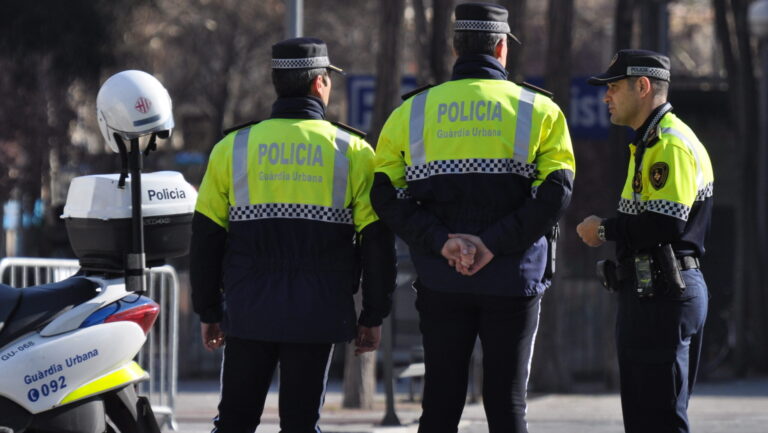
October 15 strike in Madrid for Palestine.
@Takis1X2 on X, 15 October 2025
Spain experienced a day of strikes and demonstrations on Tuesday, October 15, organized by the country’s main trade unions under the slogan “End the genocide in Palestine.” The walkouts took place without major incidents, participation was limited, and the call has sparked broad political debate about its timing and purpose.
According to data from the Community of Madrid and other regional administrations, participation in the strikes was “practically nonexistent” across most sectors. In education, for example, the Balearic Islands reported less than 4% participation, while transportation—a sector with guaranteed minimum service requirements—operated at 50% to 75% of normal capacity. Only in Catalonia and at some universities were there reports of traffic blockades and pickets, with isolated incidents of tension at the University of the Basque Country.
The strike was promoted by the General Confederation of Workers (CGT) as a 24-hour general walkout and partially supported by Workers’ Commissions (CCOO) and the General Union of Workers (UGT). More than 500 union branches and around fifty pro-Palestinian and student associations joined the call.
El relevo generacional de España.
— Acción y Comunicación sobre Oriente Medio – ACOM (@ACOM_es) October 15, 2025
Hoy, en plena huelga general ilegal, vemos a adolescentes abandonando las aulas para repetir consignas políticas contra Israel, animados y amparados por un Gobierno que ha hecho del adoctrinamiento una herramienta de poder. pic.twitter.com/VGDemgwcLl
Organizers denounced “the illegal occupation of Palestinian territories” and demanded a permanent ceasefire, immediate access for humanitarian aid, the suspension of trade agreements with Israel, and the creation of a sovereign Palestinian state. “The world of work must also take a stand against genocide,” declared UGT’s secretary general, Pepe Álvarez. Unai Sordo, his counterpart in CCOO, added that the goal was to “give the conflict a labor dimension.”
Despite these explanations, various sectors criticized the decision to call the strike immediately after the announcement of a peace agreement in Gaza. For its detractors, the day had a political rather than labor character and served to reinforce the alignment between the government and the major unions—something increasingly common in Spanish politics.
The day of protest coincided with the court appearance of former Socialist minister José Luis Ábalos before the Supreme Court in corruption cases linked to the Socialist Party—a coincidence that did not go unnoticed in the media or on social networks. Some analysts interpreted the strike as “a distraction maneuver” that provided the government with an alternative agenda to dominate the news cycle.
At the same time, the strike comes amid growing economic discontent. The new contribution system for self-employed workers, in force since 2023, together with the latest measures announced by the Ministry of Inclusion for 2029, has been described by business associations as “an unsustainable burden” on Spain’s small business network. In this context, the union call has been perceived by the business community as “disconnected from the real concerns of workers.”
Sources from the Ministry of Labor noted that “international or political” strikes are not prohibited in Spain, provided they are linked to the defense of human rights. However, the low participation and lack of economic impact have cast doubt on the usefulness of a mobilization that, beyond its symbolism, had limited reach.
The unions described it as a “moral success” for having “placed the Palestinian cause on the social agenda.” Their critics, however, view it as evidence of the Spanish labor movement’s loss of independence, ever closer to political power, and increasingly detached from the country’s internal problems.