Donald Trump
Mandel NGAN / AFP
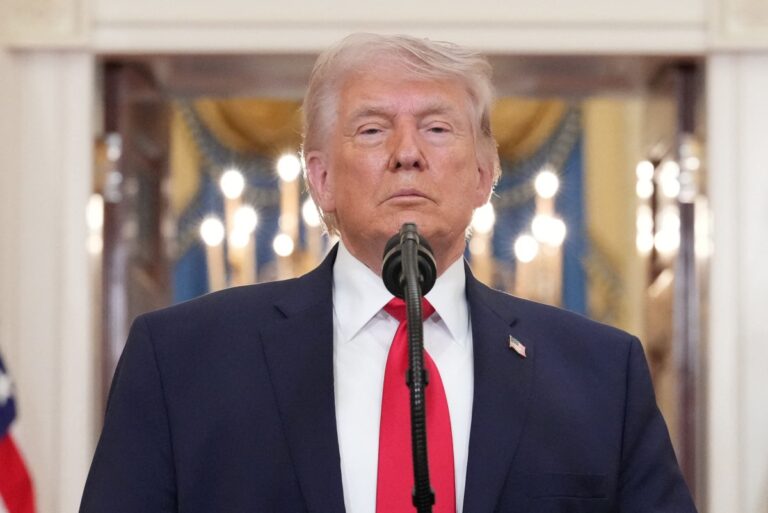
U.S. President Donald Trump warned on Friday there “could be big trouble” after three Russian MiG-31 fighter jets violated Estonian airspace, prompting NATO to scramble interceptors and Estonia to demand urgent alliance talks on collective security.
Estonian officials said the jets spent 12 minutes inside its territory over the Gulf of Finland with transponders off, no flight plans, and no radio contact. Tallinn summoned Russia’s charge d’affaires to lodge a formal protest and confirmed it would invoke NATO’s Article 4 clause, allowing any member state to call consultations when it feels its security is at risk.
“I don’t love it. I don’t like it when that happens,” Trump told reporters at the White House. “It could be big trouble.” He said he would be briefed on the incident and made clear he was “not pleased” with Moscow’s actions.
The violation triggered a rapid allied response, with Italian F-35s under the Baltic Air Policing mission intercepting the Russian jets, joined by Swedish and Finnish fighters. NATO Secretary-General Mark Rutte praised the “quick and decisive” reaction, while alliance spokesperson Allison Hart called the event “yet another example of reckless Russian behaviour.”
Moscow denied any wrongdoing, claiming the jets flew “over neutral waters” on a “scheduled flight” between Karelia and Kaliningrad and never crossed into Estonia.
Former RAF Deputy Commander Air Marshal Greg Bagwell urged NATO to set a “clear red line” for Russia, warning that future incursions could require “lethal force after a clear warning.” MI6 chief Sir Richard Moore accused Russian President Vladimir Putin of testing NATO’s defences while seeking to “impose his imperial will by all means at his disposal.”
The incident came amid wider escalation across Eastern Europe. Two Russian jets flew low over a Polish oil platform in the Baltic on the same day, violating its safety zone. Earlier this month, Poland reported 20 Russian drones crossing its territory, while Romania reported similar intrusions last weekend.
Ukrainian President Volodymyr Zelensky accused Moscow of “deliberately expanding its destabilising activity” as Russia launched a massive overnight strike on Ukraine, firing 580 drones and 40 missiles at infrastructure and residential areas, killing at least three people.
European Commission President Ursula von der Leyen vowed to escalate sanctions on Moscow, while EU foreign policy chief Kaja Kallas called the airspace violation “an extremely dangerous provocation” and urged the West to “show no weakness.”