Juan BARRETO / AFP
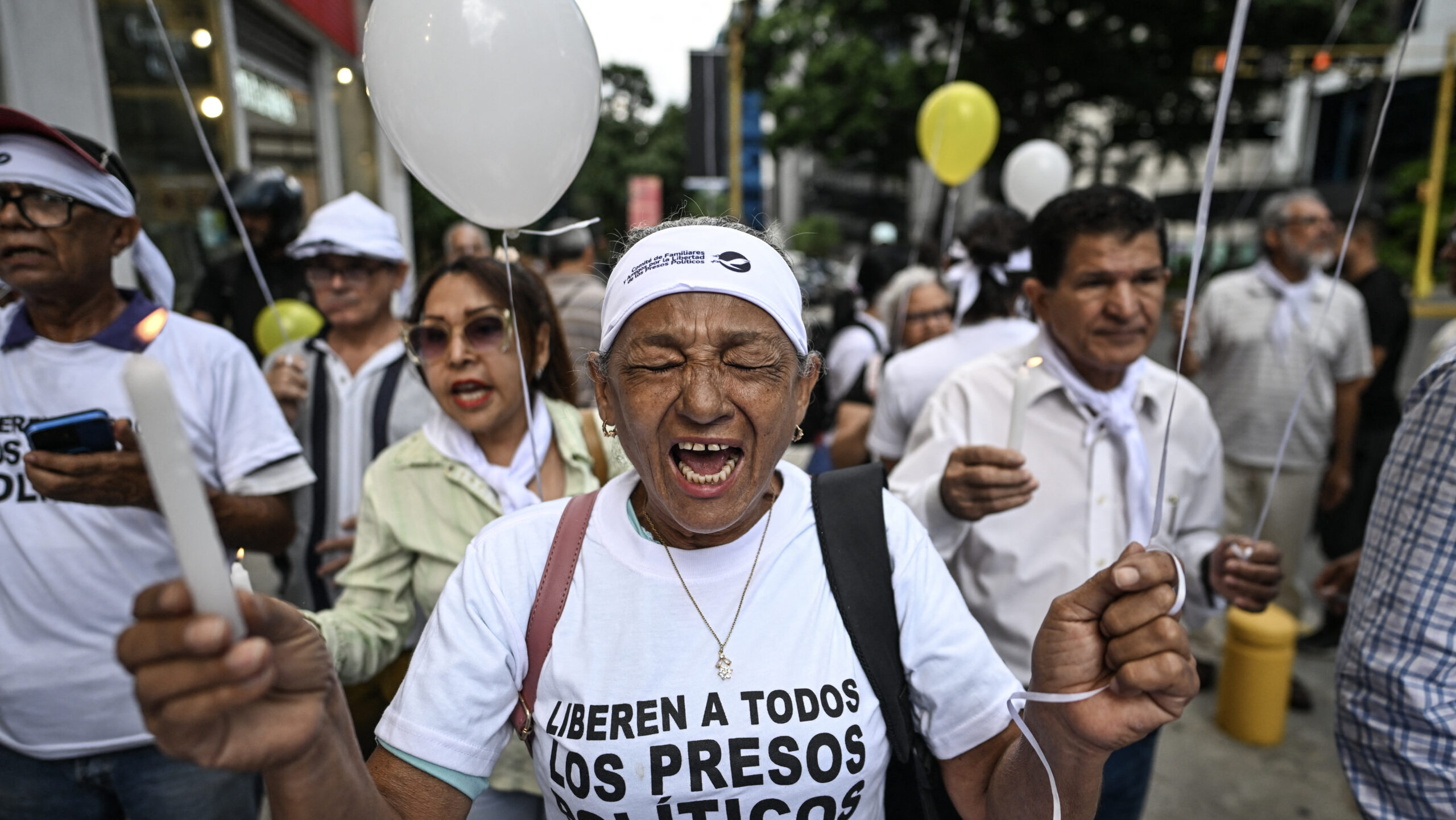
The recent release of political prisoners in Venezuela—including European citizens—is not merely a long-awaited humanitarian breakthrough. It delivers a blunt political lesson: when real pressure is applied, and power is used decisively, the Venezuelan regime backs down. When the response is limited to rhetoric, symbolic resolutions, and comfortable progressive posturing, the results are nil. Brussels should take note.
What happened next is clear. After the capture and removal of Nicolás Maduro by U.S. forces, the transitional government led by Delcy Rodríguez opened the doors of the prisons where chavismo had kept opponents, activists, and foreign nationals locked up as leverage. According to the NGO Foro Penal, Venezuela held 863 political prisoners at that time, including 86 foreign citizens or dual nationals. Most had been ignored for years by European diplomats.
Those released include key figures from the Venezuelan opposition and civil society. Among them is Rocío San Miguel, a Spanish-Venezuelan lawyer and head of the NGO Control Ciudadano, detained in February 2024 for documenting abuses of power. Alongside her are five Spanish citizens who are returning home today—something neither the Spanish government nor the European External Action Service managed to achieve after years of quiet diplomatic efforts.
Also freed were Rafael Tudares, son-in-law of president-elect Edmundo González Urrutia, sentenced to 30 years in a trial without basic legal safeguards; Juan Pablo Guanipa, a central figure in the opposition’s victory in the July 2024 elections and later jailed without a fair trial; former presidential candidate Enrique Márquez, jailed for demanding the release of election results; former army captain Juan Caguaripano, a symbol of military dissent; and activist Jesús Armas, abducted by hooded agents in December 2024.
This is not a goodwill gesture by the regime, nor a spontaneous step toward “peaceful coexistence,” as Bolivarian propaganda insists. It is the direct result of U.S. pressure exerted by Donald Trump, who has unambiguously tied Venezuela’s political and economic normalization to clear, measurable actions.
The contrast with Europe’s approach is stark. For years, the European Union multiplied statements, dispatched toothless observation missions, and funded so-called “inclusive dialogue” programs while European citizens languished in Venezuelan prisons. All of this was done in the name of a progressive diplomacy obsessed with climate policy, language, and social engineering, yet incapable of defending fundamental rights when the political cost was real.
The release of prisoners—including Europeans—has taken place without mediation from Brussels, without any leading role for the High Representative, and without any European government taking the lead. Washington acted; Europe watched. Once again.
In this context, the announcement of an upcoming meeting in Washington between Trump and María Corina Machado, the opposition leader and 2025 Nobel Peace Prize laureate, matters for one clear reason. The gesture is not trivial. It signals who holds real leverage today and who is now shaping Venezuela’s political transition. It also makes clear that political change will not come from processes overseen by European bureaucrats, but from a clear shift in power.
Trump has made it plain that the United States “is in charge.” One may like the style or not, but the results are undeniable: prisoners freed, the regime on the defensive, and a political reopening that would have been unthinkable just a few months ago.