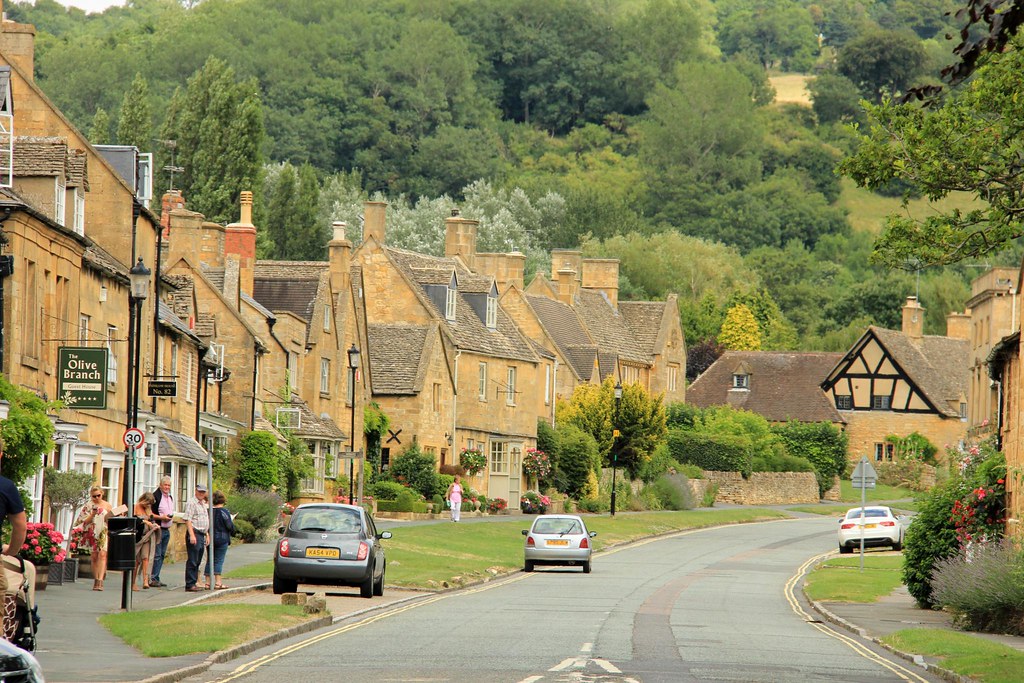
Broadway, often described as the “Quintessential Cotswold Village,” England.
The Labour government has drawn up plans to make Britain’s countryside “less white,” after government-commissioned reports claimed rural England could become “irrelevant” in an increasingly multicultural society.
The proposals, coordinated by the Department for Environment, Food and Rural Affairs (Defra), have been taken up by officials running England’s protected landscapes, including the Chilterns, the Cotswolds, and the Malvern Hills.
Internal documents describe rural England as a “white environment” dominated by the “white middle class”, and argue that urgent action is needed to attract more ethnic minority visitors.
Under the plans, landscape authorities have committed to diversity targets, outreach programmes, and recruitment drives designed to change both who visits the countryside and how it is presented. Marketing material will be altered to feature more ethnic minority visitors, while information will be produced in multiple “community languages.”
In the Chilterns, officials have developed engagement schemes aimed specifically at Muslim communities in nearby Luton. Other areas have pledged to review their facilities and staffing to ensure they better reflect Britain’s “multicultural reality.”.
The push follows a series of Defra-commissioned reports, including a 2019 review overseen by author Julian Glover and a £108,000 (€125,000) study published in 2022. These warned that many first-generation immigrants see protected landscapes as spaces designed for white, middle-class people— and therefore feel unwelcome.
Traditional rural pubs were singled out as a particular problem. According to the research, Muslims from Pakistani and Bangladeshi backgrounds said pubs—associated with alcohol and limited food options—contributed to a feeling of exclusion when visiting the countryside.
Other recommendations focus on everyday rural life. One suggests dogs should be kept under stricter control, citing fears of these animals among some communities. Another claims that while “white English” visitors value solitude and quiet contemplation, ethnic minority visitors tend to prefer social or group activities.
The Malvern Hills National Landscape said many minority families “have no connection to nature in the UK” because previous generations “did not feel safe enough” to visit or had other “survival preoccupations”. Similar language appears across management plans nationwide.
Defra insists the plans are about access rather than ideology. A spokesman said the government wants to support people engaging with nature “in their own ways” and ensure publicly funded landscapes are open to everyone.
However, critics argue the scheme amounts to social engineering of rural England—recasting centuries-old landscapes, village pubs, and countryside traditions as obstacles to be corrected in the name of diversity.