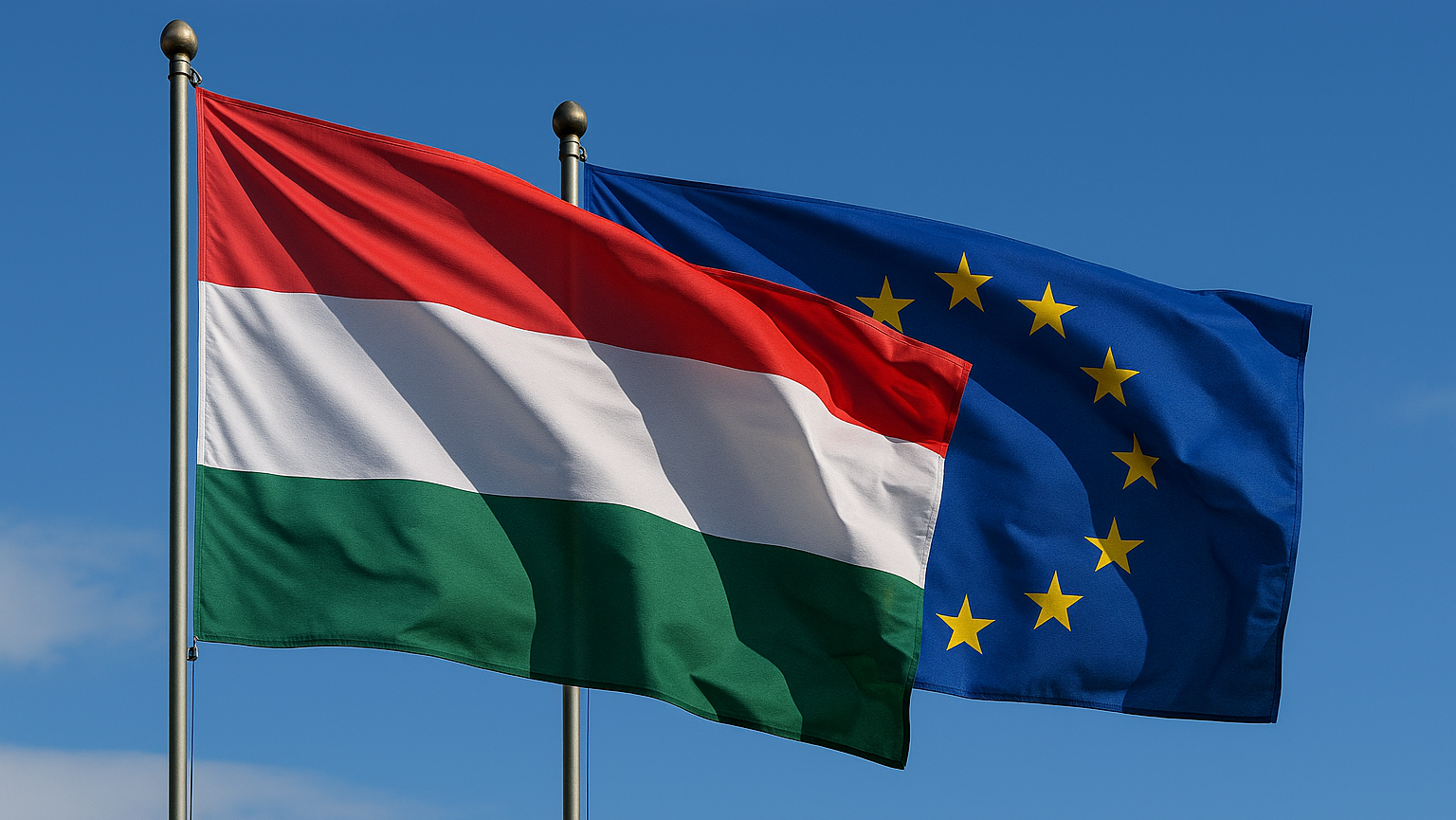
Two decades after its accession, Hungary continues to reflect on the impact of EU membership. A Monday event organized by the Oeconomus Foundation and hosted by the Egmont Foundation at Brussels’ Egmont Palace brought together diplomats, academics, and experts to discuss the achievements and tensions shaping Budapest’s relationship with the Union and the challenges of enlargement and cohesion policy.
The economic record is undeniably positive: since 2004, Hungary has doubled wages, reduced poverty, and expanded trade with its EU partners. Germany, Italy, Austria, and neighboring states are now its main markets. Foreign investment—particularly in the automotive and pharmaceutical sectors—has turned the country into a key hub within Europe’s production chains.
Yet frictions remain alongside the benefits. Budapest often highlights political pressure from Brussels and warns against a ‘federalist’ drift that, according to several speakers, weakens both the bloc’s global competitiveness and its internal cohesion. Hungary argues that cultural diversity and national sovereignty must be preserved, even within an integrated economic framework.
Hungarian Ambassador Károly Grúber stressed that Serbia and other candidates have been waiting for over two decades, eroding the EU’s credibility and leaving a vacuum that other powers are ready to fill. The message was clear: indefinitely postponing the integration of the Western Balkans only fuels disaffection and instability.
From the European Policy Center, Berta López Doménech outlined scenarios combining institutional reform with enlargement. She warned that while there is a rhetorical consensus on enlargement, no concrete plan or timeline exists. Establishing verifiable roadmaps, she argued, is essential if “candidate countries are to regain confidence in the process.”
Speakers also asked whether the model of uniform integration is sustainable or whether Europe should embrace a “multi-speed” approach, especially when it comes to Ukraine. The discussion even touched on Schengen: With 11 states having reinstated internal border controls, some experts cautioned that, without a common migration pact, Europe may have to “organize a farewell to Schengen”—not as a dramatic rupture but with clear rules.
The Egmont debate revealed two competing visions of the EU’s future. On one side, those calling for greater centralization to give the Union more weight in a hostile geopolitical environment; on the other, those who see such centralization as a threat to member state sovereignty argue that believing there is no future without it is dangerous.
Anton Bendarzsevskij, director of Oeconomus, closed his presentation with a cautious note of optimism: “Europe has always been able to renew itself. But we must identify and address the real problems without sacrificing what makes us different.” “Unity in diversity,” he added, reminding the audience of the Union’s guiding principle.
Ultimately, the event showed that many of Brussels’ critics do not reject the European project itself but demand that the stages of enlargement and cohesion respect diversity and avoid a homogenization that, in Budapest’s view, would endanger the Union’s strength.