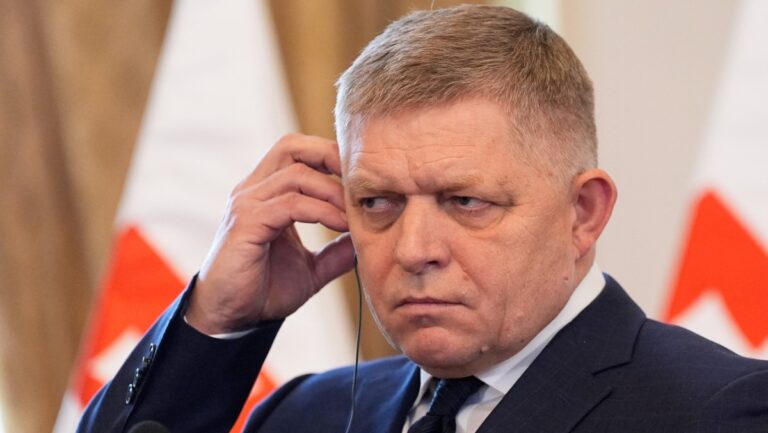
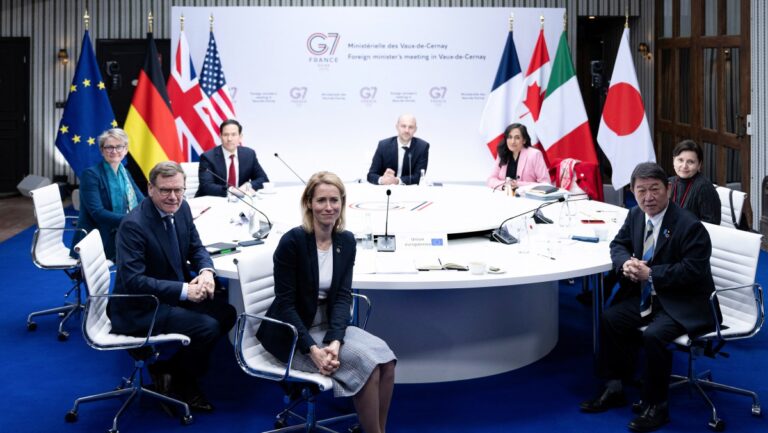
Viktor Orbán and part of the Hungarian delegation in Washington D.C., November 7, 2025.
Viktor Orbán on Facebook, 7 November 2025
Hungarian Prime Minister Viktor Orbán arrived in Washington on Thursday for a high-profile meeting with U.S. President Donald Trump. The encounter—the sixth between the two leaders since 2019—seeks to deepen bilateral cooperation and address two pressing issues: Europe’s energy crisis and the path toward peace in Ukraine.
Before leaving Budapest, Orbán stated that he intended to “open a new chapter in the relationship between Hungary and the United States.” His visit, however, goes far beyond diplomatic symbolism. It embodies a distinctly realist approach to foreign policy—one that prioritizes national sovereignty, pragmatic partnerships, and the protection of citizens’ economic interests over ideological conformity.
Our reporter @JavierVillamor is bringing you the latest updates from the summit between @realDonaldTrump and @PM_ViktorOrban
— The European Conservative (@EuroConOfficial) November 7, 2025
Follow for more updates pic.twitter.com/luc9GlDSOn
Hungary’s energy dependency has long shaped its geopolitical posture. Around 85% of the gas and 65% of the oil the country consumes comes from Russia—a reliance that places Budapest in a difficult position amid Western sanctions against Moscow.
Washington recently expanded those measures, targeting Russia’s main oil companies, Rosneft and Lukoil, in an effort to pressure the Kremlin and halt its war effort. Yet the unintended consequence, Orbán argues, is economic pain for European families and industries.
“Hungary is a landlocked country, without ports or maritime routes,” he reminded listeners during his weekly address on Kossuth Radio. “We cannot simply turn to new suppliers overnight. Sanctions that ignore this reality hurt Hungarians first.”
His government introduced a price cap on household energy back in 2013—one of his signature domestic policies—and he now fears that U.S. sanctions could undermine that stability. According to Budapest, any increase in energy costs risks eroding the social consensus that has sustained Hungary’s economic growth and family-centered welfare model for over a decade.
For that reason, Orbán is expected to press Trump for flexibility—or at least understanding—regarding the impact of U.S. energy sanctions on smaller European economies.
Beyond energy, Orbán’s Washington visit highlights a diplomatic objective that has made him a controversial figure within the European Union: advocating for an immediate ceasefire and negotiations between Russia and Ukraine.
Hungary remains one of the few EU member states calling for a diplomatic—rather than military—resolution to the conflict. “The war will not end on the battlefield,” Orbán said recently. “It will end when the great powers decide to talk.”
Foreign Minister Péter Szijjártó, who accompanied Orbán to Washington, confirmed that the summit’s two main topics would be “the establishment of peace in Ukraine and bilateral cooperation in the fields of energy and defense.” Among the initiatives on the table is the potential installation of American-made modular nuclear reactors in Hungary, an idea seen as a sign of deepening technical and strategic ties.
Still, the Hungarian government faces skepticism—not only in Brussels but potentially in Washington as well. Despite his friendship with Orbán, Trump said last week that he would not offer exemptions for continued Russian oil and gas imports. Yet, in the same breath, he praised the Hungarian leader as “a strong, smart man who defends his people’s interests.”
The broader significance of the Orbán–Trump meeting lies in what it represents for Europe: the reemergence of political realism. After years of sanctions, economic strain, and diplomatic paralysis, many European governments find themselves caught between moral rhetoric and material necessity.
Orbán’s stance—grounded in pragmatism and national sovereignty—challenges the dominant EU narrative that frames all engagement with Russia as moral compromise. Instead, he argues, true peace and stability require dialogue with all sides, not isolation.
That approach resonates with an increasing number of Europeans who see the limits of punitive diplomacy. For them, Hungary’s insistence on defending its energy security and its right to pursue peace talks offers a model of what a more balanced and sovereign Europe could look like.
The timing of the Washington summit has also revived speculation about a postponed meeting between Trump and Russian President Vladimir Putin, initially planned to take place in Budapest. While no date has been confirmed, Orbán expressed optimism: “I think we are getting closer,” he said.
Whether that optimism proves justified or not, Orbán’s presence in Washington signals that Hungary—a small, landlocked nation—continues to punch above its weight in global affairs. In a world polarized by ideological posturing, the Hungarian leader presents an alternative vision: one that seeks peace without surrender, cooperation without dependency, and realism over rhetoric.
As Orbán meets Trump in the U.S. capital, the symbolism is clear. For Hungary, this trip is about ensuring that its citizens can heat their homes and secure their future without being collateral damage in great-power rivalries.
For Washington, it’s a test of whether transatlantic relations can adapt to a multipolar world where interests—not slogans—drive diplomacy. And for Europe, it’s a reminder that the path to peace may yet run through those willing to speak to everyone—even when it’s unpopular.