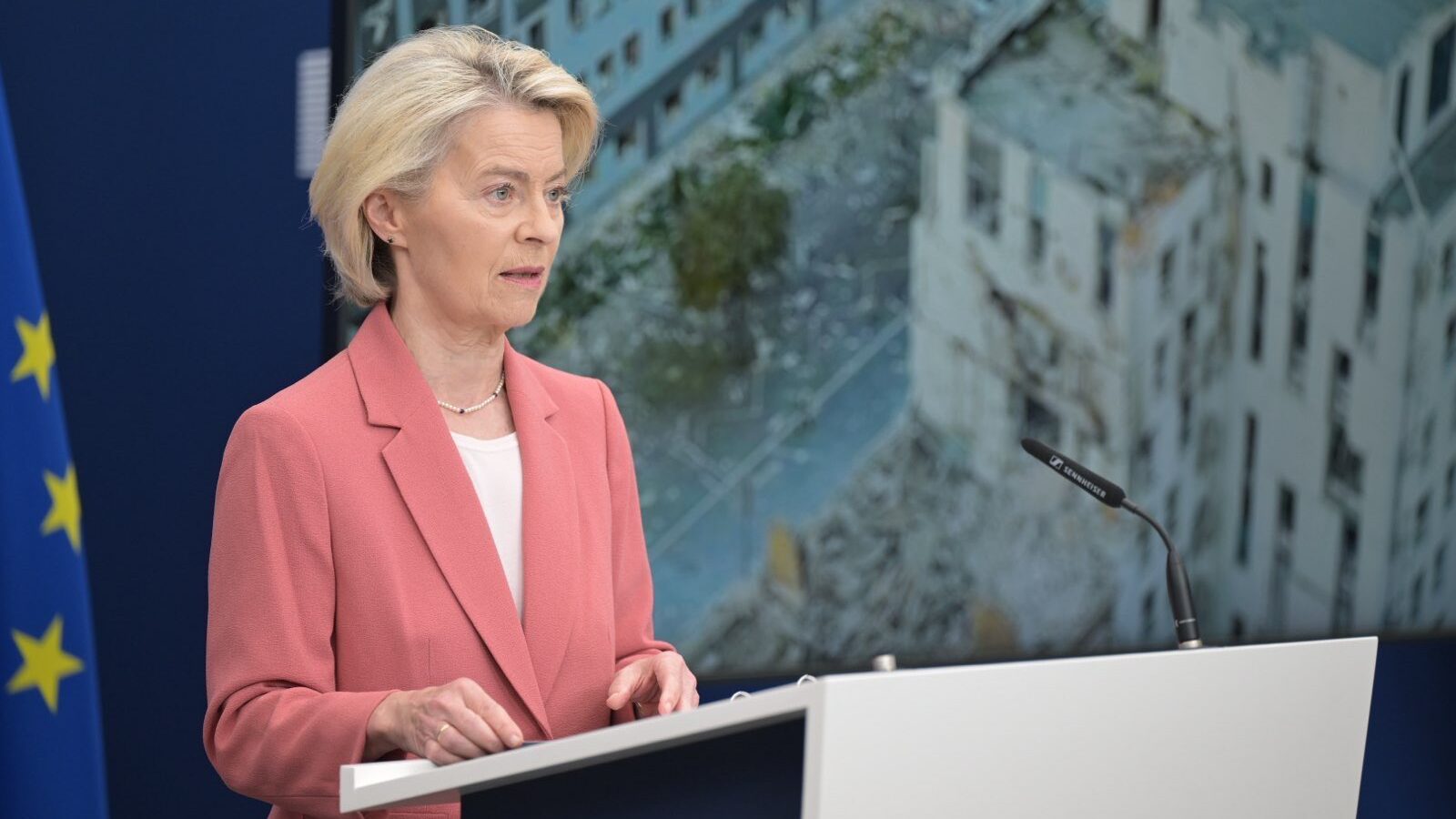
Ursula von der Leyen
@vonderleyen on X, 28 August 2025
Hungarian conservative MEP András László has accused the European Commission of launching “a new era of weaponisation of government” after European Commission President Ursula von der Leyen unveiled new initiatives to “protect” democracy and the media.
However, far from protecting democracy, the Commission is constructing an apparatus of censorship designed to silence opposition.
In a post on his X account on September 16th, László warned that the measures—presented by von der Leyen in her annual State of the Union address last week—would drastically expand Brussels’ ability to police online speech.
“Censorship and the weaponisation of government against conservatives will soon be on a whole new level in the EU. All under the pretext of disinformation and democracy being under attack. Very Orwellian,” he wrote.
Media hardly reported about it but Ursula von der Leyen announced a new era of weaponization of government in the EU.
— András LÁSZLÓ MEP 🇭🇺 (@laszloan) September 16, 2025
Elites in Brussels and many capitals fear the political challenge European patriots pose for the corrupt establishment in the EU.
If you thought the Digital… pic.twitter.com/7at3jAVWtj
The initiatives include the creation of a European Democracy Shield, a European Centre for Democratic Resilience, and a Media Resilience Programme.
Von der Leyen justified the proposals by claiming that “our democracy is under attack” from rising levels of “information manipulation and disinformation.” She said the new structures would monitor harmful narratives, support struggling local media, and boost funding for “independent” journalism.
Critics, however, argue that the real aim is to centralise control of public debate.
Writing for europeanconservative.com, Richard J. Schenk, a Research Fellow at MCC Brussels, said von der Leyen’s rhetoric had “backfired spectacularly,” claiming that her warning about autocrats capturing media applied equally to her own Commission.
One of the most controversial proposals is the creation of a European Centre for Democratic Resilience, which would be tasked with monitoring “disinformation” across member states. In reality, this would be an office to control free speech.
The European Democracy Shield, unveiled last year, builds directly on the Digital Services Act. It promises to fight foreign interference and protect elections, but critics describe it as another EU censorship tool. Earlier this year right-wing MEPs warned that instead of strengthening democracy, the measure risked undermining European democracy by funding partisan fact-checkers and deciding which news outlets count as “trustworthy.”
They are “basically setting the ground rules for the EU to have more interference in national elections. But this is national competency, and they have no business meddling in there,” German MEP Christine Anderson previously told europeanconservative.com.
The Media Resilience Programme has similarly raised alarms among conservatives, who argue it will channel yet more EU taxpayer money into compliant outlets while sidelining dissenting voices.
Concerns over transparency are not new. Conservative MEPs have repeatedly highlighted revelations that the Commission funnelled hundreds of millions of euros into NGOs and media groups under the guise of fighting “hate speech” and “disinformation.” Critics say such subsidies have blurred the line between journalism and political propaganda.