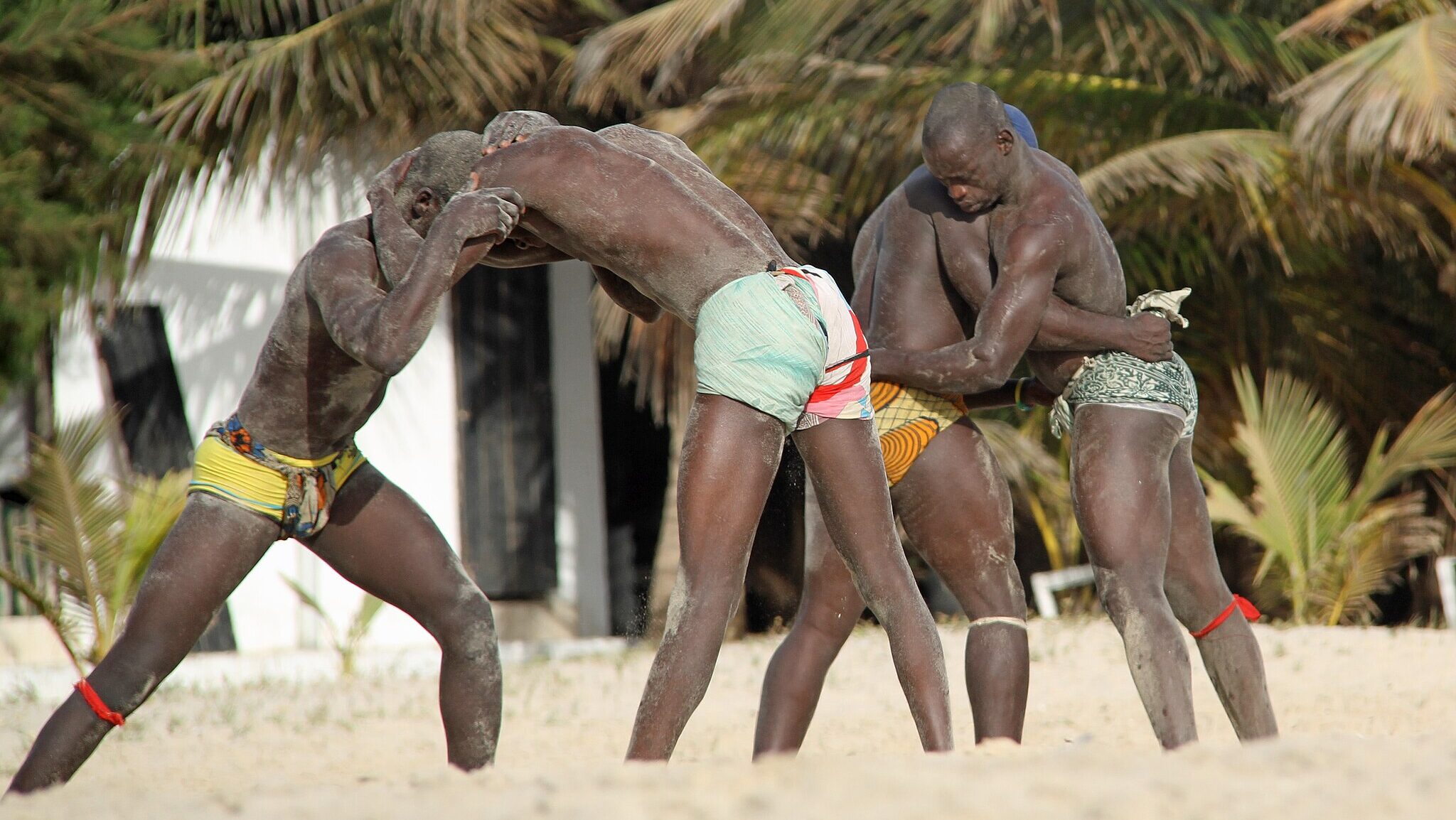
Gambian wrestlers on the beach.
gisela gerson lohman-braun, CC BY-SA 2.0, via Wikimedia Commons
Yes, you read that right: the European Union has allocated nearly half a million euros to promote wrestling in Gambia to combat the effects of climate change. This is neither satire nor a disinformation campaign; it’s a real initiative, signed and sealed under the International Development Cooperation programme. And though it may sound like something from a comedy sketch, the move has sparked reactions of all kinds across the old continent.
Between 2020 and 2023, the European Commission transferred exactly €499,950 to the Gambia Wrestling Forum to construct three traditional wrestling arenas. The official justification? To “strengthen the resilience of local communities to climate change” by encouraging “cultural enrichment and sports development.” An interpretation of sustainability that, apparently, requires neither solar panels nor tree planting.
According to documents and local media like The Standard, the logic behind the project is that keeping the tradition of Gambian wrestling alive promotes social cohesion, cultural identity, and an active environment, which, somehow—yet to be proven—can empower communities to face the effects of the climate crisis. At least that’s what Brussels maintains.
German MP Wolfgang Kubicki (FDP) was far from enthusiastic. “People are starting to despair and think madmen are governing us,” he told Die Welt. Across Europe, there are debates about cuts to pensions and healthcare, “and then we hear that half a million euros have been spent on macho wrestling bouts in Africa,” he added, without irony.
Traditional wrestling in Gambia—where muscular, sand-covered men face off clad in loincloths, sometimes to impress potential wives—is indeed a deep-rooted and widespread practice. But turning it into a climate tool is a conceptual leap worthy of academic study.
The programme may not reduce CO2 emissions, but it has certainly increased scepticism in Europe. And while the planet keeps warming, the mood in Brussels seems to have adopted folklore as a thermometer for climate resilience.
Who knows—perhaps in the next budget cycle we’ll see funding for carbon-neutral bullfights or inclusive medieval festivals as a strategy against drought. All in the name of the climate, of course.