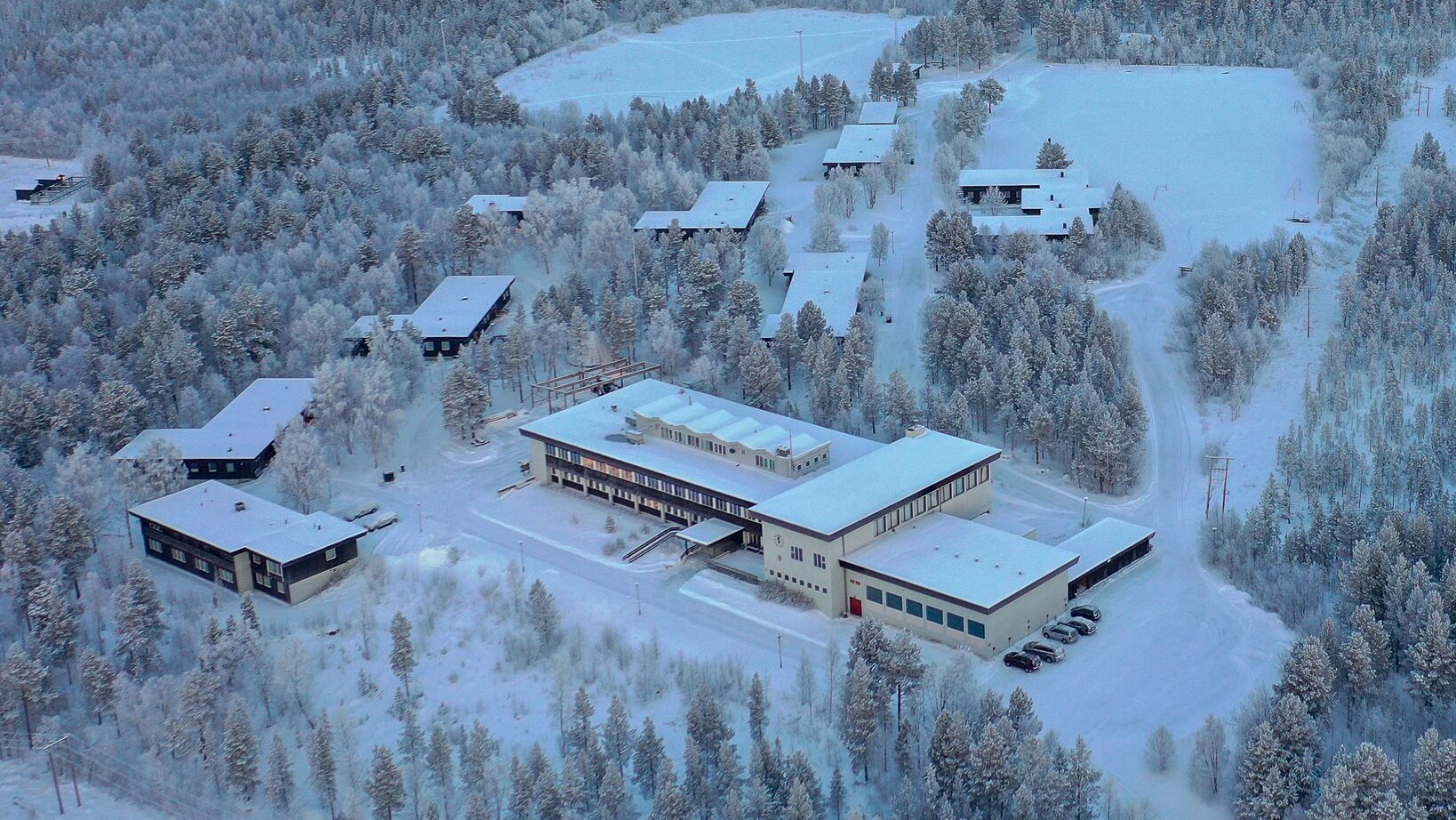
Pasvik folkehøgskole on Facebook, 16 June 2025
“To be a young woman is chaos,” 19-year-old Hege tells the camera. “There is no other word that fits.” Scenes flash past: Jarring strobe-lit nightclubs throbbing with house music and filled with pulsating youth taking drugs to speed things up, booze to slow things down. Infinite doomscrolling on smartphones. A world of desperately addictive noise.
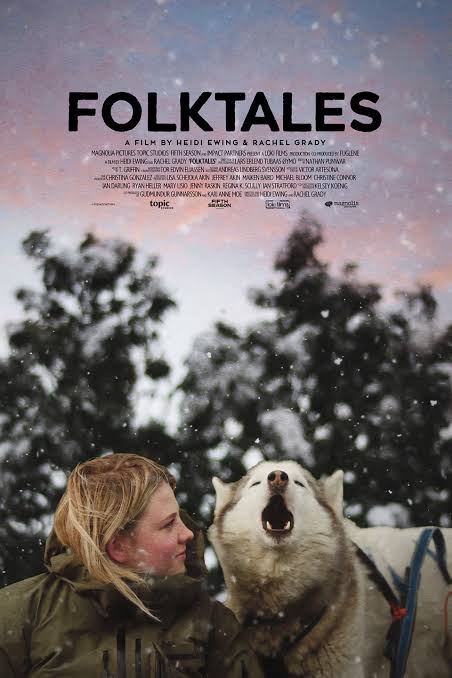
Hege is one of three teens featured in Folktales, a 2025 documentary released to much acclaim by American filmmakers Heidi Ewing and Rachel Grady. The subject is Pasvik Folk High School, located 200 miles above the Arctic Circle in Finnmark, Norway—a mere 40 km south of Kirkenes, which sits on the shore of the Barents Sea.
Pasvik offers teens Arctic survival skills, dog sledding, and an opportunity to detox from the digital matrix that has become their primary habitat.
“Folk high schools,” the film explains, “began in Scandinavia in the 1840s as a way to offer rural people free access to education. Today, folk high schools welcome anyone seeking a year of independence before embarking on adulthood.” Students at Pasvik are asked to give up their technological devices so that they can “wake up your Stone Age brain,” as one instructor puts it.
Ewing and Grady got famous with the 2006 documentary Jesus Camp, a harsh look at an evangelical summer camp in the U.S. The Guardian noted that 40% of Norway’s “folk high schools” are Christian; in a recent paper for the Journal of the Royal Anthropological Institute, James Glisson argues that folk high schools play a potent role in introducing students to Norway’s Lutheran heritage by integrating religious rituals into the programming. Ewing and Grady leave this aspect of folk high schools untouched.
Indeed, Folktales avoids any mention of Norway’s Christian heritage; instead, Ewing and Grady skip back a thousand years and reach for the Norse god Odin, opening the film with a retelling of an ancient pagan myth. If the documentary had been made about a Christian folk high school, Ewing and Grady would no doubt have felt obliged to frame the story as a breathless, cautionary tale about the resuscitation of ‘Christian nationalism.’ A millennium after being conquered by missionaries, Odin is a safely gutted symbol.
Pasvik and other folk high schools specialize in reintroducing digital natives to the natural habitat of their ancestors. Without smartphones, they learn to talk to each other—awkwardly at first but helped by shared experiences. Their dopamine-jacked systems are forced to adjust to patience. The teens trap, hunt, gut fish, and take their screen-burned eyes and tech-cramped fingers outdoors to learn new patterns, squinting as they grow accustomed to the soft glare of sun on frost-silvered forests.
The documentary Folktales reminded me of an observation made recently by the scholar Joseph Minich in his book Bulwarks of Unbelief: Atheism and Divine Absence in a Secular Age. There are consequences, Minich noted, to mediating our reality through technology rather than the natural world that we do not yet fully understand:
If human beings are fundamentally practical creatures, what are the implications? In the practical experience of those who live in the West, the ubiquity of technological artifice renders it barely even a background noise. It is rather tacitly imbibed as reality itself. We experience the world as what is revealed and presented to us in our technologies. We automatically engage it this way, even without thinking about it. Nature, for us, becomes an abstraction. For us, technology is what nature was to many generations of our ancestors.
Minich is a Reformed Protestant, not a pantheist arguing for a return to the worship of Mother Nature. His point is not that nature is God, but that our digital world so often obscures God by layering our existence with layers of unreality. To peel away those layers is to gain access to the awe that so often comes with witnessing Creation up close. The scenes in Folktales of the Northern Lights illuminating the bowl-shaped sky with emerald green are a case in point.
The wilderness is hard work, of course. The students are challenged to spend a night in the snowy forest, building their own campsites from scratch. I empathized with the frustration of one teen; when I was 12, our Boy Scout troop was sent snowshoeing into the forest with supplies on our backs. We had to make quinzies—packed piles of snow large enough to be hollowed out into sleeping quarters for several boys. We were still burrowing when night arrived, but when we crawled in, the darkness and warmth were a triumph.
Each accomplishment for the students becomes a personal triumph rather than online content. They care for gorgeous Siberian huskies, an essential part of the program, that become their companions in wilderness treks. As one student sits in front of the fire in the forest in the dark, an instructor reminds her that sitting and staring at the embers of a fire is something that human beings have done since the dawn of time. “It’s something to think about,” the instructor comments, watching the flames. It is, and they do. The digital matrix melts away in the flickering shadows.
What struck me about Folktales is the extent to which technology has spun a web around us that is so all-encompassing that for many young people, a campfire in a snowy forest feels like a different world. We could, of course, simply put our smartphones down and walk into the woods. But for many digital natives, this seems so impossible that a boarding school on the frozen edge of civilization is necessary to accomplish it. We were not designed to live like this. That might not be the point that Ewing and Grady were trying to make, but that is the inescapable truth of their beautiful film.